
European Economic
and Social Committee
EDITORIAL: Towards more resilient communities and sustainable development goals beyond 2030
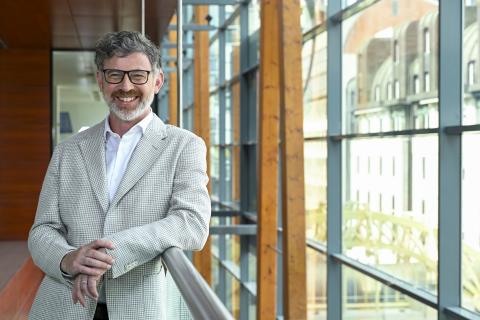
It has been an incredibly busy week for us in the EESC Civil Society Organisations’ Group (CSO Group), and for the EESC in general, with the culmination of Civil Society Week 2026 today. This week is always a chance for us to throw open the doors of our premises in Brussels and welcome a wide range of civil society actors from all over Europe and neighbouring countries – and the response this year was impressive.
Our CSO Group aims to amplify the voices of all civil society organisations, which we do by continually empowering our members to be active and engaged in the EESC’s work. But we also achieve this by building our alliances and connections with those civil society organisations that are not directly represented at the EESC. This week has been a great opportunity to make that a reality. You will see in this month’s edition of our bulletin that much work was done and many areas of follow-up work identified.
The theme of Civil Society Week 2026 was ‘People, Democracy and Resilience – Our Future!’. This aligns very well with our CSO Group work programme. Working to make our communities more resilient in terms of different sectors is a critical goal for us. Whether in agriculture and fisheries or consumers and the environment, we have a broad range of topics and interest groups represented in the Group, which all combine to give us a true picture of what is needed to make our communities resilient.
These priorities are laid down in more detail in this month’s bulletin. We want you to discover them and to join us on our journey to make an impact, to create the type of future that we all want to see.
We have a particular focus on sustainability as a concept, working on what will happen after 2030 – a year that will mark the end of the United Nations 2030 Agenda for Sustainable Development and the current Sustainable Development Goals (SDGs). It will take strong engagement from civil society to ensure that the ambitions set out in these goals do not disappear from the highest political agendas post-2030.
Earlier this month, one of the key players in negotiating the SDGs in 2015 joined us to explain the process of getting 193 countries to agree a text and an ambition with practical targets. Ambassador David Donoghue, who was Ireland’s Permanent Representative to the United Nations until August 2017, shared with us his hope that we will succeed in ensuring that the SDG ambitions live on beyond 2030 by designing a new framework or prolonging the current one.
We are most effective when we communicate with each other, clarify our messages, and work collaboratively to drive change for a brighter future and a vibrant European Union.
President, EESC Civil Society Organisations’ Group