
European Economic
and Social Committee
Impact assessments and active involvement of civil society should be guiding principles for the Global Gateway strategy
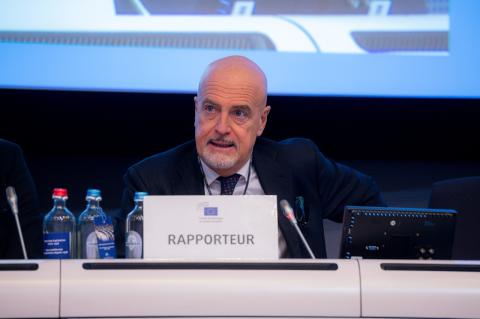
The Global Gateway initiative aims to secure the EU's open strategic autonomy, but must be based on impact assessments, as underlined by the European Economic and Social Committee in its opinion adopted at its December plenary. The EESC proposes to play a more active role in the key stages of the decision-making process for development projects associated with the Global Gateway.
The launch of the Global Gateway strategy comes some ten years after the launch of the Belt and Road Initiative (BRI); a soft-power tool through which China carved for itself a new strategic geopolitical position in the world. The Global Gateway strategy pledges to mobilise up to EUR 300 billion in investments between 2021 and 2027 to fight climate change; improve digital, energy and transport connectivity; and to strengthen health, education and research infrastructure worldwide.
In the current geopolitical context, the EESC believes that this initiative has the potential to become a tool for facilitating the political, economic and security stability of the EU's neighbourhood and beyond. However, the opinion questions the feasibility of mobilising the necessary funding, given that it is not quite clear how many of the pledged investments will actually materialise.
The EESC stresses that investment programmes within the Global Gateway initiative must be based on impact assessments, ensuring democratic ownership of development initiatives in partner countries, as well as the economic, social and environmental sustainability of the projects. At the same time, it expresses its reservations about projects financed by other EU funds, which could deviate from the standard monitoring process due to a lack of clarity of the procedures for assessing the impact of each project.
This gives rise to the concern that EU Member States could promote infrastructure and investment projects financed unilaterally or bilaterally without the direct supervision of the EU institutions in cases where no EU funds have been requested.
EESC member and opinion rapporteur Stefano Palmieri highlighted the need for Global Gateway projects to respect a number of principles and objectives, stating that compliance with EU values and the submission of detailed impact assessments are important for ensuring the sustainability of these projects.
Civil society ready to engage in the overall development process
The EESC regrets the lack of meaningful involvement of local European stakeholders in the overall development process. It has also noticed that information on the composition and the first meeting of the Global Gateway Committee on 11 December 2022 has been insufficient, both quantitatively and qualitatively.
The EESC would like to play a more active role in the key stages of the decision-making process for development projects associated with the Global Gateway, starting with the organisation of regular meetings between the Global Gateway Committee and civil society organisations and social partners. In this way, local stakeholders will be guaranteed a constant flow of information on the initiative and could assess and highlight the strategic nature of the Global Gateway.
Additionally, the EESC is willing to organise regular meetings with the EU-China Round Table to discuss BRI and Global Gateway projects with representatives of civil society organisations. This will add to a more inclusive approach on highlighting the opportunities and the problems of the two programmes, along with potential solutions.
Work organisation
Downloads
-
Impact assessments and active involvement of civil society should be guiding principles for the Global Gateway strategy
Recommended for you
Bearta trédhearcachta
Basic Page
Rinne Biúró CESE cinneadh i bprionsabal an 25 Deireadh Fómhair 2022 go nglacfadh CESE páirt i gClár Trédhearcachta an Aontais Eorpaigh a bunaíodh faoi Chomhaontú Idirinstitiúideach an 20 Bealtaine…
Litir oscailte chomhpháirteach ó Ghrúpa Eagraíochtaí na Sochaí Sibhialta in CESE agus ó Shochaí Shibhialta na hEorpa #EUCivilDialogueNow
Event
PREASEISIÚINT Ní mór d’institiúidí an Aontais an Conradh ar an Aontas Eorpach a urramú agus idirphlé sibhialta struchtúrtha a chur chun feidhme An 24 Eanáir, sheol sochaí shibhialta na hEorpa litir…
Toghadh Séamus Boland ina Uachtarán ar Choiste Eacnamaíoch agus Sóisialta na hEorpa, agus gheall sé go gcuirfear an tsochaí shibhialta i gcroílár na hEorpa
News
Toghadh Séamus Boland na hÉireann ar an 35ú Uachtarán ar Choiste Eacnamaíoch agus Sóisialta na hEorpa (CESE) le haghaidh an téarma oifige 2025-2028. Is urlabhra riamh anall é do phobail na tuaithe…
Eolas faoi CESE
Basic Page
‘Beidh Coiste Eacnamaíoch agus Sóisialta (...) a fheidhmeoidh feidhmeanna comhairliúcháin de chúnamh ag Parlaimint na hEorpa, ag an gComhairle agus ag an gCoimisiún.’1957, Airteagal 13 den Chonradh…
CESE, Uachtarántacht na hÉireann agus an fhís choiteann atá acu
News
I ndiaidh na díospóireachta a reáchtáladh le Comhaltaí CESE le linn sheisiún iomlánach mhí Iúil, níl aon dabht faoi ach go bhfuil clár Uachtaránacht reatha an Aontais ag freagairt go mór do na…