
European Economic
and Social Committee
EU take steps forward prohibiting products made with forced labour
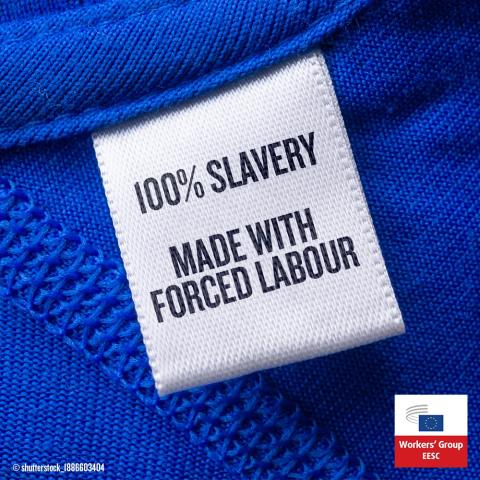
The regulation banning products made with slave labour from the EU market is one step closer to being adopted, after the evening on the 4th of March, when Parliament and Council reached a provisional agreement on the text.
Forced labour accounts for more than 25 million people around the world, 70% being women and girls, and one in four being a child, as the ILO explains. Despite the many corporate pledges and political declarations to end modern slavery, the results so far have plenty of room for improvement: only 50% of companies have commitments to ILO core labour standards in agriculture, going down to 45% in garments and 48% for extractive industries. In 2023, imports from Xinjiang, well known for its repression against Muslim Uyghurs and suspected forced labour in labour camps, increased by 39%.
Against this backdrop of effective inaction, the now possible adoption of the regulation is a key step forward.
“The ban on forced labour-produced goods is a humanitarian duty if the EU wants to live up to its words on fundamental rights. It is also key to ensure our economies enjoy healthy competition, based upon strong social rights, and that honest companies are not undercut by ones circumventing human rights. Now the member states need to enforce this ban', Lucie Studničná, Workers' Group president, said.
Together with this piece of legislation, the Workers' Group reiterate the urgent need to adopt an effective and non-watered-down Corporate Sustainability Due Diligence Directive, to close any legal gap through which modern slavery might slip.
Work organisation
Related content

Recommended for you
Decision repealing Directive 89/629/EEC
Opinion
ОСНОВНИ АСПЕКТИ ЕИСК: прецени, че съдържанието на предложението е напълно задоволително и не изисква никакви бележки от негова страна, и реши да приеме положително становище по…
Цифровият преход трябва да бъде справедлив: правата на човека и човешкият надзор трябва да продължат да заемат централно място
News
Европейският икономически и социален комитет (ЕИСК) привлича вниманието върху възможностите, които предлага цифровата революция, но предупреждава и за заплахите: ако бъдат приложени твърде бързо,…
RePowerEU Plan
Opinion
PRACTICAL INFORMATION Administrator: Layla REITER, Assistant: Virginie ANDRÉ ОСНОВНИ АСПЕКТИ: ЕИСК: счита, че планът REPowerEU на Европейската комисия е стъпка в правилната посока за…
Individual and collective energy self-consumption as a factor in the fight for the green and energy transition, and for economic and social balance
Opinion
„Индивидуалното и колективното потребление на собствена енергия като фактор в борбата за екологичен и енергиен преход и за постигането на икономически и социален баланс“ Основни аспекти ЕИСК:…
Equity and efficiency considerations for maritime transportation
Opinion
„Съображения за справедливост и ефективност на морския транспорт“ Основни аспекти ЕИСК: подчертава, че при екологичния преход на сектора на корабоплаването трябва да се вземат предвид…