
European Economic
and Social Committee
EU take steps forward prohibiting products made with forced labour
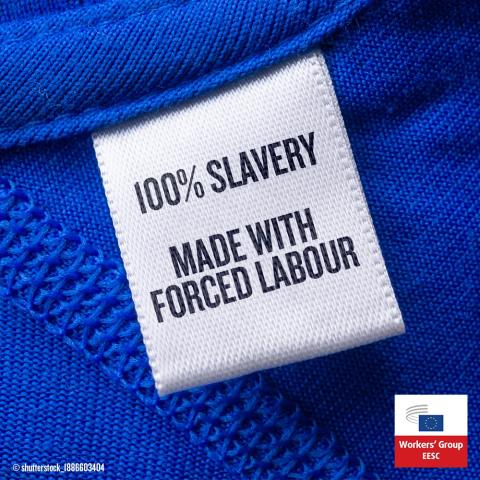
The regulation banning products made with slave labour from the EU market is one step closer to being adopted, after the evening on the 4th of March, when Parliament and Council reached a provisional agreement on the text.
Forced labour accounts for more than 25 million people around the world, 70% being women and girls, and one in four being a child, as the ILO explains. Despite the many corporate pledges and political declarations to end modern slavery, the results so far have plenty of room for improvement: only 50% of companies have commitments to ILO core labour standards in agriculture, going down to 45% in garments and 48% for extractive industries. In 2023, imports from Xinjiang, well known for its repression against Muslim Uyghurs and suspected forced labour in labour camps, increased by 39%.
Against this backdrop of effective inaction, the now possible adoption of the regulation is a key step forward.
“The ban on forced labour-produced goods is a humanitarian duty if the EU wants to live up to its words on fundamental rights. It is also key to ensure our economies enjoy healthy competition, based upon strong social rights, and that honest companies are not undercut by ones circumventing human rights. Now the member states need to enforce this ban', Lucie Studničná, Workers' Group president, said.
Together with this piece of legislation, the Workers' Group reiterate the urgent need to adopt an effective and non-watered-down Corporate Sustainability Due Diligence Directive, to close any legal gap through which modern slavery might slip.
Work organisation
Related content

Recommended for you
Decision repealing Directive 89/629/EEC
Opinion
HOOFDPUNTEN Het EESC: stemt in met het voorstel, heeft er geen commentaar op en heeft daarom besloten er een positief advies over uit te brengen.
RePowerEU Plan
Opinion
HOOFDPUNTEN Het EESC: beschouwt het REPowerEU-plan van de Europese Commissie als een stap in de goede richting om de EU onafhankelijk te maken van de Russische gas- en olielevering; wijst erop…
Individual and collective energy self-consumption as a factor in the fight for the green and energy transition, and for economic and social balance
Opinion
Individueel en collectief zelfverbruik van energie als factor in de strijd voor de groene en energietransitie en voor economisch en sociaal evenwicht Hoofdpunten Het EESC: is van mening dat de…
Equity and efficiency considerations for maritime transportation
Opinion
Rechtvaardigheid en efficiëntie in het zeevervoer Hoofdpunten Het EESC: onderstreept dat de groene transitie van de scheepvaartsector rekening moet houden met landspecifieke, sectorspecifieke en…
Open Dag van de Europese instellingen
Event
Op zaterdag 6 mei kon het Europees Economisch en Sociaal Comité (EESC) samen met de andere EU-instellingen in Brussel voor het eerst sinds de COVID-19-crisis zijn deuren weer openen ter gelegenheid…