
European Economic
and Social Committee
ENDING POVERTY BY 2050: PUTTING PEOPLE BEFORE GROWTH
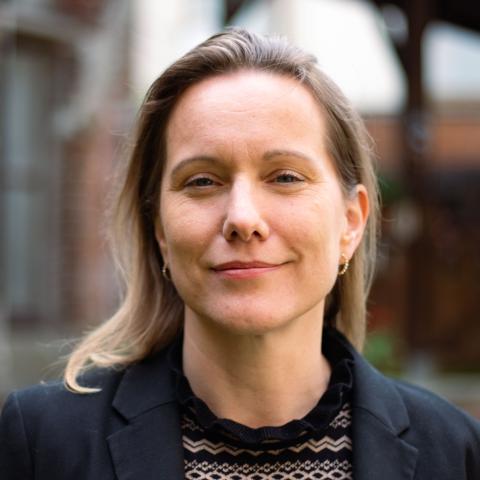
Poverty is not inevitable. It reflects how we relate to and take responsibility for one another, how our economies are organised, how resources are shared and whose interests are prioritised. Different choices are possible. Ending poverty requires listening to people experiencing poverty and marginalisation, upholding their dignity and ensuring that their voices shape decisions that affect their lives. It also means moving beyond economic growth as the primary answer and putting human dignity, rather than profit, at the heart of all policies in Europe and beyond. Because growth can, and often does, leave poverty untouched and can coexist with inequality and exclusion, writes Maria Nyman, Secretary General of Caritas Europa.
For Caritas, ending poverty means more than addressing a lack of income. It means recognising people’s lives and experiences, upholding their dignity and respecting their rights. This requires a culture of encounter that recognises people experiencing poverty and exclusion as active participants in shaping their futures.
One fundamental barrier to ending poverty is the gap between political ambitions and the economic and political choices that continue to reproduce it. Addressing this gap requires action on two fronts.
First, people experiencing poverty must be at the centre of policymaking. Poverty is multidimensional, encompassing not only income and access to basic needs, but also inequality, discrimination, marginalisation, loneliness, broken relationships, powerlessness and limited choices. Policymakers must listen directly to people experiencing poverty, meet them in their communities and learn from their experiences and proposed solutions. Their participation, alongside that of civil society organisations and social service providers such as Caritas, must meaningfully shape the design, implementation, monitoring and evaluation of anti-poverty policies. Consultation must be serious and authentic, ensuring people’s voices genuinely influence decisions affecting their lives.
Second, we must move beyond economic growth and employment as the primary responses to poverty. Economic growth alone does not eradicate poverty or ensure that everyone benefits equally. Economic growth can, and often does, coexist with deep inequalities and social exclusion. Decent work and social protection must be recognised as fundamental rights, not merely tools for growth and competitiveness. Ending poverty requires addressing its structural causes, including unequal access to quality education, labour market discrimination, unaffordable housing, inadequate social protection, intergenerational disadvantage and the breakdown of families, social relationships and support networks. It also requires greater public investment in essential services and support for local businesses and the social economy.
These priorities must guide EU external policies as well as its domestic agenda. Cooperation with countries in Africa, Latin America and the wider Global South must respond to their priorities and reduce poverty and inequality, rather than primarily serving European economic and geopolitical interests. Initiatives such as Global Gateway must demonstrate their contribution to wellbeing, local economic development and access to essential services. This means addressing unequal trade relations, international taxation imbalances, debt and constraints on countries’ ability to invest in their populations. International development cooperation remains essential, but aid alone cannot resolve the structural inequalities that perpetuate poverty.
Ending poverty must go hand in hand with protecting our common home. The current economic model puts increasing pressure on natural resources and communities, particularly in the Global South, where people often suffer the most severe consequences of climate change despite contributing least to it. Social and environmental policies must reinforce one another, ensuring the green transition protects livelihoods, reduces inequalities and does not leave people experiencing poverty further behind.
Turning commitments into action requires adequate funding and stronger EU–Member State coordination. As negotiations begin on the 2028–2034 Multiannual Financial Framework, social investment must be prioritised across relevant EU funding instruments, including cohesion funds. Funding must reach frontline not-for-profit organisations, with administrative and reporting requirements that do not divert resources from essential services. Clear responsibilities and effective coordination between European and national anti-poverty policies are equally necessary.
Finally, the EU must maintain its commitment to international development cooperation, recognising that poverty within Europe cannot be addressed in isolation from global inequalities and environmental challenges.
For Caritas, the principle is simple: people and the planet must come before profits. Ending poverty by 2050, in Europe and beyond, requires the courage to change the systems that perpetuate it, share resources more fairly and listen to people experiencing poverty and exclusion as active participants in shaping their futures.
More information is available in the Caritas publication Going beyond economic growth.
Maria Nyman is Secretary General of Caritas Europa, one of the seven regions of Caritas Internationalis, the global confederation of Catholic charity organisations. She took up the position in May 2019, after being elected the previous year by Caritas Europa’s 49 member organisations, which work with and for people in the most marginalised and vulnerable situations across 46 European countries. Based in Brussels, the Caritas Europa secretariat conducts advocacy at European and international level, supports capacity building for the network and coordinates humanitarian support when an emergency hits Europe. Maria previously led Mental Health Europe and worked at the European Disability Forum. She holds a Master’s in Law from the University of Uppsala in Sweden.