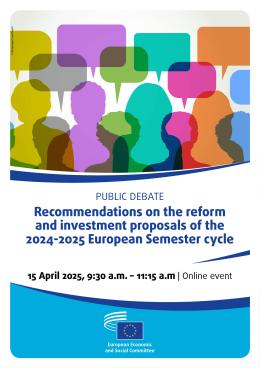
The upcoming Commission-proposal and subsequent negotiations surrounding the post-2027 Multiannual Financial Framework (MFF) will take place at a crucial moment of heightened tensions between the EU’s strategic objectives and the size and allocation of its budget.
The 12th meeting of the EU Domestic Advisory Group (DAG) under the EU-Japan Economic Partnership Agreement (EPA) took place on 10 April, 2025 at the EESC.
Medical University of Warsaw, 2a Księcia Trojdena Street
Warsaw
Poland
The European Economic and Social Committee (EESC), the Polish Ministry of Health, and the Medical University of Warsaw is holding a major conference entitled Towards an EU Action Plan on Rare Diseases on 10 April 2025 at 9 a.m. at the Medical University in Warsaw, Poland.
Partnership event by the EAPN and the Civil Society Organisations' Group
Event type
Conference
Location
Rue Van Maerlant 2
Brussels
Belgium
The European Anti-Poverty Network (EAPN) will launch its latest Poverty Watch Report at an event co-organised by the EAPN and the EESC Civil Society Organisations' Group. This is an in-person event that will take place at the EESC in Brussels and be webstreamed.
The EU-Serbia Joint Consultative Committee (JCC) held its 19th meeting on 7 April 2025 at the EESC in Brussels. This platform, established within the institutional framework of the EU-Serbia Stabilisation and Association Agreement (SAA), will enable representatives from both the EU and Serbian civil society to monitor the country's accession negotiations, discuss issues of common interest, and highlight concerns to be addressed on Serbia's path towards the European Union.
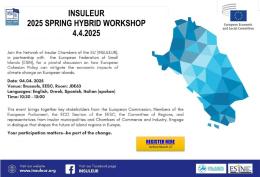
Hybrid workshop organized by the Network of the Insular Chambers of Commerce and Industry of the EU (INSULEUR) in partnership with the EESC #EESCPartnership
Location
EESC
Brussels
Belgium
Islands are on the front lines of climate change, yet they remain underrepresented in policy discussions. Their unique vulnerabilities-geographic isolation, extensive coastlines, and economic dependence on tourism and maritime transport-make adaptation a top priority. Research shows that economic losses for islands could more than double under all climate scenarios, threatening their economic and social stability.
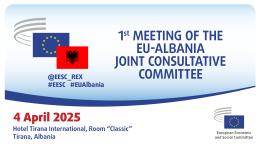
The first meeting of the EU-Albania Joint Consultative Committee (JCC) took place on 4 April 2025 in Tirana, Albania. This platform, established within the institutional framework of the EU-Albania Stabilisation and Association Agreement (SAA), will enable representatives from both the EU and Albanian civil society to monitor the country's accession negotiations, discuss issues of common interest, and highlight concerns to be addressed on Albanian's path towards the European Union.
The European Foundation for the Improvement of Living and Working Conditions (Eurofound), the European Training Foundation (ETF) and the European Economic and Social Committee (EESC) are jointly organising an event on social dialogue in the Western Balkans. This initiative, led by the EESC President and the directors of the two agencies, will focus on the quality of life and work, youth, and the exchange of experiences on social dialogue between the EU and the Western Balkans.