
European Economic
and Social Committee
Deeper EU capital markets need stronger supervision and integration
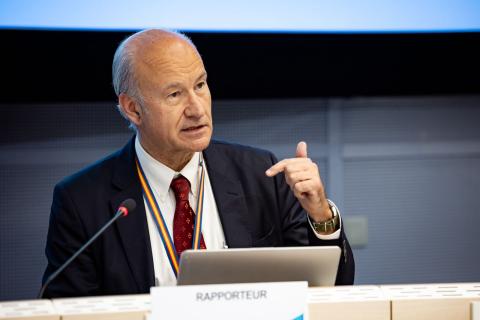
In an opinion adopted at its March plenary session, the EESC calls for more ambitious reforms to integrate Europe’s capital markets and reinforce EU-level supervision, warning that persistent fragmentation is holding back investment, competitiveness and growth. Supporting the European Commission’s proposals for greater integration of capital markets and an efficient supervision system, the Committee stresses that only deeper market integration and coherent, streamlined supervision will allow EU capital markets to compete globally and allocate investment efficiently across the EU.
Despite the size of the EU economy, European capital markets remain less integrated and less dynamic than those in other major economies, limiting companies’ access to finance and reducing investment opportunities for savers. Fragmented rules, differing national practices and uneven supervision continue to create barriers to cross-border investment.
The Commission’s proposals aim to address these issues by strengthening cross-border market access, simplifying regulatory requirements and reinforcing the supervisory role of the European Securities and Markets Authority (ESMA) for market infrastructures operating across borders.
The EESC supports this direction, emphasising that well-functioning capital markets play a key role in allocating investment and supporting economic growth, but warns that the current reform package must go further to tackle structural weaknesses.
'European capital markets remain fragmented and underperforming. Deeper integration and more coherent supervision are essential if Europe wants to mobilise the investment needed for competitiveness and innovation,' says EESC rapporteur Antonio García del Riego.
Stronger supervision for cross-border markets
A central element of the opinion is the call for more integrated supervision of market infrastructures with significant cross-border activity. The Committee supports placing such operators under ESMA’s supervision, arguing that consistent oversight across the EU would reduce regulatory divergence and lower compliance costs.
At the same time, the EESC stresses that the responsibilities of the EU and the national supervisors must be clearly demarcated to avoid duplication, overlapping requirements and additional administrative burdens for financial institutions, while ensuring that the results of supervision are the same all across the EU.
Reducing fragmentation and boosting transparency
The Committee also calls for measures to reduce liquidity fragmentation in EU equity markets and strengthen transparency, which remain major obstacles to building deeper and more efficient capital pools in Europe.
Among the proposals supported by the EESC are stronger passporting regimes for financial services, easier access to financial market infrastructures and the development of a consolidated tape for equity markets, which would improve market transparency and price formation.
Revitalising Europe’s listing markets
Another key concern highlighted in the opinion is the weak performance of Europe’s initial public offering (IPO) markets, which continue to lag behind those in the United States and other global financial centres.
To address this, the EESC calls for further initiatives to revitalise Europe’s listing ecosystem, including measures to make public markets more attractive for growing companies and investors.
Supporting innovation while safeguarding stability
The Committee also welcomes efforts to facilitate innovation in financial markets, particularly through the development of distributed ledger technology (DLT) and other digital solutions.
However, it stresses that innovation must be accompanied by clear regulatory pathways, strong cybersecurity safeguards and consistent supervision, to protect financial stability and maintain trust in EU markets.
Across its recommendations, the EESC sends a clear message: Europe needs deeper, more integrated capital markets if it wants to finance innovation, support growth and remain competitive globally.
Work organisation
Recommended for you
Toghadh Séamus Boland ina Uachtarán ar Choiste Eacnamaíoch agus Sóisialta na hEorpa, agus gheall sé go gcuirfear an tsochaí shibhialta i gcroílár na hEorpa
News
Toghadh Séamus Boland na hÉireann ar an 35ú Uachtarán ar Choiste Eacnamaíoch agus Sóisialta na hEorpa (CESE) le haghaidh an téarma oifige 2025-2028. Is urlabhra riamh anall é do phobail na tuaithe…
CESE, Uachtarántacht na hÉireann agus an fhís choiteann atá acu
News
I ndiaidh na díospóireachta a reáchtáladh le Comhaltaí CESE le linn sheisiún iomlánach mhí Iúil, níl aon dabht faoi ach go bhfuil clár Uachtaránacht reatha an Aontais ag freagairt go mór do na…
#YEYS2022: Ceist na bréagaisnéise pléite ag aos óg na hEorpa agus a dtuairimí ina leith curtha in iúl acu don Leas-Uachtarán Jourová
News
Chuir daltaí meánscoile ó gach cearn den Eoraip ocht gcinn de thograí nithiúla faoi bhráid Leas-Uachtarán an Choimisiúin Eorpaigh um Luachanna agus um Thrédhearcacht, Věra Jourová. Bhí páirt á…
#CivilsocietyforUkraine
News
Cáineann CESE ionradh Rialtas na Rúise ar an Úcráin, ionradh atá gan údar agus gan chúis Rún ó Choiste Eacnamaíoch agus Sóisialta na hEorpa (CESE) maidir leis an gcogadh san Úcráin agus an tionchar…
Eagrán speisialta de CESE info
News
Eagrán speisialta de CESE info atá dírithe ar an Úcráin. Is féidir scéal Tetyana Ogarkova a léamh, bean a chuala fuaim ionradh na Rúise ar dhúiseacht di an 24 Feabhra.