
European Economic
and Social Committee
Deeper EU capital markets need stronger supervision and integration
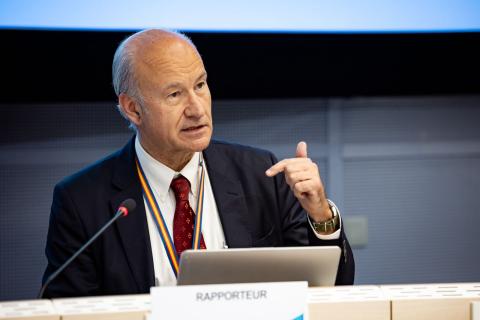
In an opinion adopted at its March plenary session, the EESC calls for more ambitious reforms to integrate Europe’s capital markets and reinforce EU-level supervision, warning that persistent fragmentation is holding back investment, competitiveness and growth. Supporting the European Commission’s proposals for greater integration of capital markets and an efficient supervision system, the Committee stresses that only deeper market integration and coherent, streamlined supervision will allow EU capital markets to compete globally and allocate investment efficiently across the EU.
Despite the size of the EU economy, European capital markets remain less integrated and less dynamic than those in other major economies, limiting companies’ access to finance and reducing investment opportunities for savers. Fragmented rules, differing national practices and uneven supervision continue to create barriers to cross-border investment.
The Commission’s proposals aim to address these issues by strengthening cross-border market access, simplifying regulatory requirements and reinforcing the supervisory role of the European Securities and Markets Authority (ESMA) for market infrastructures operating across borders.
The EESC supports this direction, emphasising that well-functioning capital markets play a key role in allocating investment and supporting economic growth, but warns that the current reform package must go further to tackle structural weaknesses.
'European capital markets remain fragmented and underperforming. Deeper integration and more coherent supervision are essential if Europe wants to mobilise the investment needed for competitiveness and innovation,' says EESC rapporteur Antonio García del Riego.
Stronger supervision for cross-border markets
A central element of the opinion is the call for more integrated supervision of market infrastructures with significant cross-border activity. The Committee supports placing such operators under ESMA’s supervision, arguing that consistent oversight across the EU would reduce regulatory divergence and lower compliance costs.
At the same time, the EESC stresses that the responsibilities of the EU and the national supervisors must be clearly demarcated to avoid duplication, overlapping requirements and additional administrative burdens for financial institutions, while ensuring that the results of supervision are the same all across the EU.
Reducing fragmentation and boosting transparency
The Committee also calls for measures to reduce liquidity fragmentation in EU equity markets and strengthen transparency, which remain major obstacles to building deeper and more efficient capital pools in Europe.
Among the proposals supported by the EESC are stronger passporting regimes for financial services, easier access to financial market infrastructures and the development of a consolidated tape for equity markets, which would improve market transparency and price formation.
Revitalising Europe’s listing markets
Another key concern highlighted in the opinion is the weak performance of Europe’s initial public offering (IPO) markets, which continue to lag behind those in the United States and other global financial centres.
To address this, the EESC calls for further initiatives to revitalise Europe’s listing ecosystem, including measures to make public markets more attractive for growing companies and investors.
Supporting innovation while safeguarding stability
The Committee also welcomes efforts to facilitate innovation in financial markets, particularly through the development of distributed ledger technology (DLT) and other digital solutions.
However, it stresses that innovation must be accompanied by clear regulatory pathways, strong cybersecurity safeguards and consistent supervision, to protect financial stability and maintain trust in EU markets.
Across its recommendations, the EESC sends a clear message: Europe needs deeper, more integrated capital markets if it wants to finance innovation, support growth and remain competitive globally.
Work organisation
Recommended for you
La UE necesita más inversión pública en infraestructuras energéticas para luchar contra el cambio climático
News
En un Dictamen aprobado en el pleno de septiembre, el Comité Económico y Social Europeo (CESE) afirma que se necesita una inversión pública masiva para lograr la transición energética y cumplir los…
Energía: el CESE advierte contra la creación de nuevas dependencias
News
El Comité Económico y Social Europeo (CESE) se pronuncia con firmeza sobre la energía en un Dictamen aprobado en su pleno de septiembre: la propuesta de la Comisión es un paso en la dirección…
La transición digital debe ser justa: los derechos humanos y el control humano deben seguir teniendo una importancia fundamental
News
El Comité Económico y Social Europeo (CESE) señala las oportunidades que presenta la revolución digital, pero también advierte de sus peligros: si se implantan con demasiada rapidez, las soluciones…
La UE necesita ya un plan de acción para ofrecer una vivienda asequible y digna
News
En la conferencia de alto nivel que el Comité Económico y Social Europeo (CESE) celebró en Riga los participantes dieron la voz de alarma por la crisis de la vivienda asequible y advirtieron que ya…
La Presidencia checa de la UE replanteará, reconstruirá y reactivará Europa
News
En el pleno de julio del Comité Económico y Social Europeo (CESE) se celebró un debate con el ministro checo de Asuntos Exteriores, Jan Lipavský, para debatir las prioridades de la Presidencia checa…