Interactio and Room JDE 60, EESC building, Rue Belliard 99, 1040
Brussels
Belgium
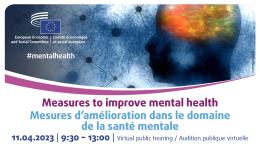
In order to prepare the exploratory opinion requested by the future Spanish presidency of the EU on "Measures to improve mental health", the EESC is organising a hybrid public hearing on 11 April 2023 from 9:30 am to 1 pm.
The aim of the event is to gather input from policy makers, civil society organisations and social partners, which will feed into the EESC's opinion.
In the context of the own-initiative opinion on Volunteers – Citizens building the future of Europe, the European Economic and Social Committee (EESC) is organising a remote public hearing on Monday 20 September 2021. The aim of the hearing is to gather the points of view of social partners and other civil society organisations, experts and coordinators of projects related to volunteering, on the topic, and to hold a discussion on the impact of civil society trends for volunteering and the current state of play of volunteering at European level.
The Strategy on the Rights of the Child and the Child Guarantee aim to provide better protection to children. The Strategy on the rights of the child focuses on six thematic areas, amongst which socioeconomic inclusion and combatting violence against children. The Child Guarantee aims to fight against child poverty and social exclusion by guaranteeing access to basic rights and services for children in need, amongst which healthcare and education.
The hearing aims to gather viewpoints on these initiatives, with the participation of organisations and other stakeholders working in the field.
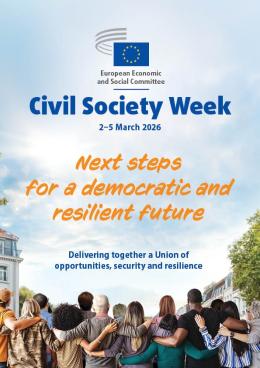
Europe is facing a pivotal moment. Social and economic inequalities, rapid technological change, anti-democratic forces and geopolitical instability are straining the foundations of the European project.
With democracy and civic space under mounting pressure, civil society organisations, human rights defenders and free media face growing constraints - from restrictive laws and disinformation campaigns to underfunding and public distrust. Deepening polarisation and eroding trust in institutions further undermine Europe’s democratic model.
This study explores effective practices for youth participation in policy and decision-making processes, providing a comprehensive overview of what youth participation means and its key characteristics
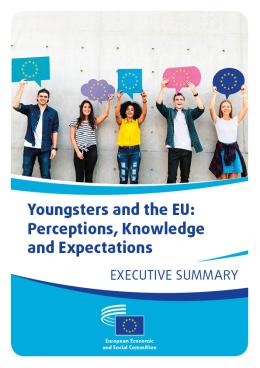
This study is conducted to better understand youngsters' relationship with the EU. The study examines 14- to 18-year-old youngsters' perceptions, and knowledge of the EU as well as their expectations towards the EU, and openness to the European diversity.
This study is conducted to better understand youngsters' relationship with the EU. The study examines 14- to 18-year-old youngsters' perceptions, and knowledge of the EU as well as their expectations towards the EU, and openness to the European diversity.
Ensuring health security for future generations within the EU
In this issue:
Members on ways to ensure (mental) health security
Guest articles by Lejla Šehić Relić (Centre for European Volunteering), Ian Mostert (Dutch Institute for Nature Education) and Christelle Savall (Young European Federalists)
Interview with rapporteur Miguel Ángel Cabra de Luna on how to address loneliness (EESC opinion SOC/813)