
European Economic
and Social Committee
The island dimension: when geography can drive competitiveness
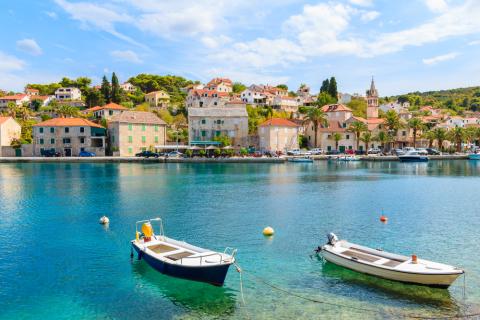
The island dimension is a geographic feature that has lasting effects on the functioning of the Single Market, social cohesion, and the ability of local businesses to compete on equal terms. Territorial discontinuity, distance from service and supply hubs, and the higher costs of transport and energy shape an environment in which the same rules produce different outcomes. The pressure is particularly acute on small islands.
Despite being recognised in the EU Treaties, the integration of the island dimension into EU policies remains insufficient: implementation is often fragmented and synergies between funding instruments, rules, and sectoral policies are not systematically leveraged.
For businesses, the footprint of the island dimension is evident: higher supply and distribution costs, the small scale of local markets, limited access to specialised skills, pronounced seasonality, and pressures on infrastructure and housing create disadvantages that cannot be addressed through standardised solutions. The absence of targeted policies means weaker investment activity, lower productivity, and reduced resilience of local economies, with consequences for employment and population retention.
From the perspective of the EESC Employers’ Group, the key priority is to create a coherent European framework that reduces additional costs and strengthens predictability for investment. Our Opinion proposes the development of a European “Islands Pact” and an “Islands Act”, alongside an island-proofing clause, so that the impacts on islands are taken into account horizontally across core policies: cohesion, transport, energy, environment, maritime affairs, and State aid.
For businesses, this approach implies better targeting of resources, simpler and more tailored rules, and instruments that support genuine convergence between island and mainland territories.
This is why we recommend prioritising five pillars:
- Year-round connectivity, with reliable maritime and air links, modern port infrastructure, clear public service obligations, and strong digital access.
- Energy security and affordability: resilient grids, storage, and the deployment of renewable energy sources, so that the green transition does not place a disproportionate burden on islands and local businesses.
- Integrated solutions for water and waste, reducing risks, costs, and environmental pressures while supporting the circular economy.
- Economic diversification, as a sustainable blue economy, innovation, local value chains, and cooperative schemes among islands can generate stable jobs and year-round income, provided they are linked to smart specialisation and access to financing suited to the island scale.
- Human capital and social cohesion: skills, mobility, and housing policies, combined with equal access to services, to support the functioning of the economy and the retention of the population on the islands.
In addition, it is important to adapt State aid rules and funding tools to the extra costs brought about by the island dimension. Having this flexibility helps make it easier to invest in upgrades, energy, infrastructure, and new services, especially for small and medium-sized enterprises. In parallel, simplifying procedures and strengthening administrative capacity at local level is key to making sure resources are used for long-term growth. Regular progress reviews, supported by common indicators that capture the key burdens linked to the island dimension, can help update policies quickly when needed.
In conclusion, establishing a unified European framework that fully integrates the unique needs of island regions into EU policy is crucial for ensuring these areas can thrive within the Single Market on equal terms and for cohesion policy to deliver meaningful results. In this way, competitiveness, resilience, and convergence can be strengthened at the same time, with real benefits for businesses, workers, and local communities.
Kostantinos Moussouroulis, EESC Employers' Group member and Study Group member of Opinion ECO/689 The Island Dimension in European Cohesion, Competitiveness and Sustainable Development Policies.