
European Economic
and Social Committee
EESC brings civil society's voice to global food security discussions at FAO in Rome
Participating as an official observer at the UN Committee on World Food Security, the European Economic and Social Committee calls for stronger international cooperation, fairer food systems and concrete action to ensure access to healthy and affordable food for all.
The European Economic and Social Committee (EESC) is participating in the 54th Plenary Session of the UN Committee on World Food Security (CFS54), taking place at the headquarters of the Food and Agriculture Organization (FAO) in Rome from 19 to 23 October.
As an official observer at the CFS plenary, the EESC brings the perspectives of European farmers, workers, businesses and civil society organisations to international discussions on food security, nutrition and sustainable agrifood systems.
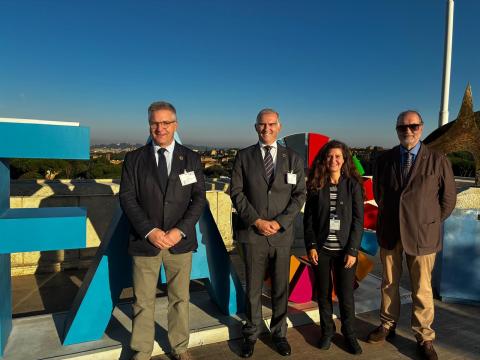
The EESC delegation includes Stoyan Tchoukanov, President of the Section for Agriculture, Rural Development and the Environment (NAT); Maria Nikolopoulou, President of the Sustainable Development Observatory (SDO); and EESC members Maurizio Reale, President of the Sustainable Food systems group and Nuno Serra.
From global commitments to practical solutions
The EESC calls for food policies that address the entire food system, from agricultural production and farmers' livelihoods to food affordability, environmental sustainability and social inclusion.
At the heart of its message is the right to adequate food as a fundamental human right, alongside the need to ensure fair incomes and practical support for farmers transitioning towards more sustainable and resilient agricultural practices.
Through its work on the future Common Agricultural Policy, regenerative agriculture and sustainable food systems, the EESC advocates stronger cooperation between public institutions, farmers, businesses and civil society to turn international commitments into concrete solutions.
Global hunger is declining, but progress remains fragile.The opening of CFS54 included discussions on The State of Food Security and Nutrition in the World 2026 (SOFI), published in July.
According to the report, around 645 million people experienced hunger in 2025, down from 2024, but progress remains slow and uneven. Africa now accounts for more people experiencing hunger than Asia, while 2.69 billion people worldwide still cannot afford a healthy diet.
These figures highlight that food security is not only about producing enough food, but also about ensuring access to nutritious and affordable food. The world remains off track to achieve Zero Hunger by 2030.
Empowering women farmers to build resilient food systems
The role of women in agriculture and food security is another important priority of the EESC's participation in Rome, particularly as 2026 marks the International Year of the Woman Farmer, proclaimed by the United Nations.
On 21 October, Maria Nikolopoulou, President of the EESC's Sustainable Development Observatory and member of the EESC's equality group, will contribute to a side event co-organised by the EESC and dedicated to gender-transformative approaches to building resilient agrifood systems.
The discussion will explore how to move from policy commitments to collective action, addressing the barriers women farmers face in accessing land, finance, knowledge and decision-making opportunities.
Strengthening women's participation and leadership is essential not only for gender equality but also for more resilient rural communities and sustainable food production.
Bringing civil society into global food governance
Through its observer role at CFS54, the EESC contributes to connecting international food security policies with the realities experienced by EU farmers, rural communities and citizens.
Its message from Rome is clear: building fair, resilient and sustainable food systems and ensuring the right to food requires turning global commitments into practical solutions, with civil society actively involved at every stage. (ks)
Work organisation
Recommended for you
Цифровият преход трябва да бъде справедлив: правата на човека и човешкият надзор трябва да продължат да заемат централно място
News
Европейският икономически и социален комитет (ЕИСК) привлича вниманието върху възможностите, които предлага цифровата революция, но предупреждава и за заплахите: ако бъдат приложени твърде бързо,…
Организациите на гражданското общество са първите точки за контакт по време на криза и те могат да помогнат за сплотеността на ЕС
News
На годишното си заседание Европейският икономически и социален комитет (ЕИСК) и националните икономически и социални съвети на ЕС обсъдиха интеграцията на хората, бягащи от войната в Украйна,…
YEYS! 2023: Младите хора искат по-прозрачен, цифров и опростен ЕС
News
На 23 и 24 март Европейският икономически и социален комитет (ЕИСК) беше домакин на 14-ото издание на проявата „Твоята Европа, твоето мнение!“ (YEYS!), която събра в Брюксел 105 ученици от 35 училища…
Участници от гражданското общество — незаменими съюзници за изпълнението на целите за устойчиво развитие
News
На пленарната си сесия през март Европейският икономически и социален комитет (ЕИСК) прие посланика Лъчезара Стоева, председател на Икономическия и социален съвет на ООН. Посланик Стоева изрази…
ЕС ще бъде по-конкурентоспособен, като подкрепя малките и средните предприятия
News
По време на пленарната си сесия през февруари Европейският икономически и социален комитет (ЕИСК) зае твърда позиция в полза на създаването на по-добра бизнес среда за МСП в Европа: законодателството…