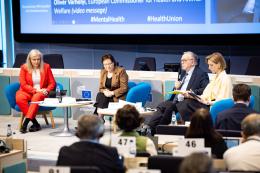
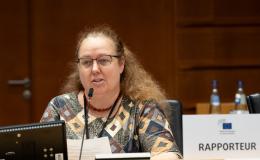
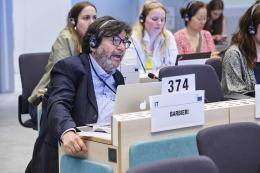
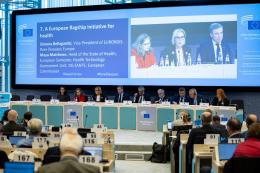
The European Economic and Social Committee (EESC) placed the emotional well-being of children and young people at the centre of its March plenary session, holding a major three-part flagship debate that brought together EU institutions, international organisations, civil society and youth representatives. Speakers urged a coordinated push for prevention, safer digital spaces and stronger community support to protect young people’s emotional well-being.
At its September 2025 plenary session, the European Economic and Social Committee (EESC) adopted a pioneering opinion on the use of Artificial Intelligence (AI) and Big Data in rare disease diagnosis and treatment. It sets out a comprehensive vision for harnessing digital innovation to improve the lives of rare disease patients.
stresses the urgent need to take a comprehensive, preventive approach based on fundamental human rights to the commercial determinants of health, which are defined as strategies of private actors that negatively influence health and democratic checks and balances;
calls on the EU and its Member States to adopt ambitious policies and strategic funding – including under the next Multiannual Financial Framework for 2028-2034 – to make health a central pillar of European resilience, particularly with a view to prevention;
encourages the establishment of a balanced regulatory framework that allows businesses to transition towards models that respect public health, by including the precautionary principle, transparency and due diligence clauses in public policies.
At its July 2025 plenary session, the European Economic and Social Committee (EESC) adopted an own-initiative opinion calling for urgent action to address growing inequalities in access to healthcare across the EU. The opinion highlights how inflation, poverty, and systemic barriers are deepening health disparities, and urges both Member States and the European Commission to act decisively.
At its June plenary session, the European Economic and Social Committee (EESC) adopted two opinions calling for bold EU steps to protect public health by boosting cybersecurity in hospitals and securing supplies of critical medicines. These challenges demand concrete investment, smarter cooperation, and a rights-based approach that puts people’s well-being first.
The topic of the conference was the mental and physical condition of young Europeans and the role of civil society organisations in supporting it. The event was organised as part of the Polish presidency of the EU Council on the initiative of the Minister for Civil Society, Adriana Porowska, and the Civil Society Organisations' Group of the EESC.
Conference on 'The role of civil society organisations in ensuring the health security of children and young people within the EU' co-organised by the European Economic and Social Committee's Civil Society Organisations' Group and the Minister for Civil Society of the Republic of Poland,on 15 May in Warsaw, Poland
The European Economic and Social Committee (EESC) calls for a European flagship initiative for health, aiming to build a cross-cutting health architecture within the European Union. It also calls on the European Commission to publish an Action Plan on Rare Diseases with clearly achievable targets.