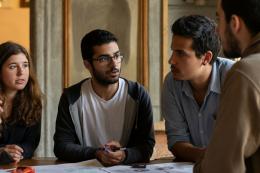
recommends including youth representatives in every youth-focused legal activity and involving young people in all stages of the policy-making process, from decision-making to the implementation and evaluation of policies;
estimates that civil society and social partner organisations should further support young people by providing capacity-building workshops, making it easier for them to connect with resources and opportunities for involvement;
calls on the European Commission to support a third phase of the South Mediterranean Social Dialogue (SOLiD) project, which should be used to develop a Youth Charter, while also exploring the establishment of youth-focused consultative mechanisms.
emphasizes that Mediterranean countries are often characterised by a lack of adequate frameworks for effective social dialogue and therefore stresses the need to strengthen social dialogue in particular at national, sectoral and company levels through the full implementation of the key ILO Conventions on social dialogue.
In its own-initiative opinion on the new European Pillar of Social Rights (EPSR) Action Plan, the European Economic and Social Committee (EESC) welcomes the European Commission’s initiative and urges a renewed and ambitious approach. The EESC highlights the need to reinforce the social dimension of the EU, particularly in light of ongoing green and digital transitions and persistent inequalities. It calls for a stronger focus on social investment, quality employment, inclusive labour markets, fair mobility and accessible social protection systems. The Committee underlines the importance of involving civil society and social partners at all levels and recommends establishing clear targets, effective monitoring and adequate funding to ensure the full implementation of the EPSR principles.
The European Economic and Social Committee (EESC) is actively participating in COP29 in Baku, Azerbaijan, from November 11–22, 2024. Representing the voices of civil society, the EESC is committed to ensuring that marginalized and vulnerable groups are included in global climate solutions.
This resolution presents recommendations of the European Economic and Social Committee to the legislature 2024-2029. They are based on discussions with social partners and civil society organizations from all walks of life, including young people during the first EESC Civil Society Week, and contain a comprehensive set of actionable steps to strengthen and safeguard democratic principles.
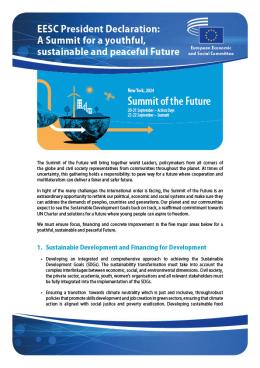
Between 20-23 September, EESC President Oliver Röpke led a delegation of the European Economic and Social Committee to the United Nations Summit of the Future, which took place in New York. The event, a cornerstone in discussions about the future of multilateral cooperation, focused on urgent global challenges including sustainable development, peace, security, and digital governance.
This study explores effective practices for youth participation in policy and decision-making processes, providing a comprehensive overview of what youth participation means and its key characteristics
On 13-14 March 2025, the European Economic and Social Committee (EESC) will bring together nearly 100 young participants from youth organisations, national youth councils and secondary schools as well as 37 teachers from EU Member States, candidate countries and the UK for its annual Your Europe, Your Say! (YEYS) event. This year, YEYS will focus on the role of young people in collectively shaping a resilient future. It aims to equip them to engage in civic action and continue to contribute to participatory democracy activities in their communities and beyond.
Section debate on A step forward in meaningful youth participation organised by the EESC during the NAT Section meeting on 2 October 2024 (14:30 - 16:00 CEST).
Cohesion policy in its current form has had positive impact on the socio-economic development of the EU, individual countries and regions. However, the Polish presidency points out that there is a need to improve the effectiveness of the mechanisms supporting the transformational objectives of cohesion policy. In the discussion of its future, there are ideas aimed at reforming the implementation mechanisms with the approach used in the implementation of the Recovery and Resilience Facility (RRF) implemented since 2021 as a response to the challenges arising from the COVID-19 pandemic and to support the transformation processes of economies.