
European Economic
and Social Committee
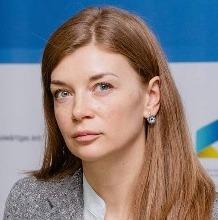
The Director of the Ukrainian Institute for International Politics, Nadija Afanasieva, reflects on Ukraine’s path towards EU membership. She serves as an enlargement candidate member (ECM) at the European Economic and Social Committee.
When discussing Ukraine’s EU accession, the debate often centres on negotiation chapters, legislative alignment and compliance with the acquis. However, for those working inside the process, the story is broader and more deeply human. In December 2023, the European Council formally opened accession negotiations with Ukraine, with bilateral screening across 33 chapters of EU law now underway– a major institutional milestone.
But anyone following the process understands that accession is far more than a technical checklist.
For Ukraine, European integration has evolved into a profound societal transformation unfolding under extraordinary conditions. Since receiving candidate status in 2022, in the midst of a full-scale invasion, the country has continued to advance reforms in judicial governance, anti-corruption institutions, media regulation and minority rights. Progress under such pressure is unprecedented in the history of EU enlargement.
Over the past decade, Ukraine’s civil society has not simply observed reform – it has often driven it, especially in moments when institutional momentum has been fragile. Since 2014, decentralisation, anti corruption and public administration reforms have been shaped, monitored and defended by civic actors. Today, this involvement is more structured: NGOs, think tanks and business associations participate in thematic working and advisory groups set up by ministries to prepare negotiation positions under specific chapters. Civic experts review legislation, provide analysis and monitor implementation.
European integration is increasingly a shared responsibility rather than a closed governmental process. This is crucial because EU membership is not only about adopting laws – it is about functioning within a system built on multilevel governance and cohesion policy. Decentralisation reforms illustrate this clearly. Since 2014, more than 1 470 amalgamated territorial communities have been established, significantly increasing local fiscal autonomy. Between 2014 and 2021, local budget revenues rose more than threefold.
Equally important, local civil society organisations now act as partners in community development, participatory planning and oversight of public spending. Across many regions, NGOs help municipalities prepare strategies, engage stakeholders and align local priorities with national and European frameworks. In practice, effective decentralisation depends not only on empowered local authorities but on communities that feel ownership of change. This partnership forms the practical foundation for managing future EU cohesion funds in line with the partnership principle.
Economic integration is also well advanced. The EU now accounts for roughly 55–60% of Ukraine’s trade in goods, compared with less than 30% in 2013 – a dramatic structural shift long preceding formal accession.
At the same time, Ukraine is negotiating accession while undertaking the largest reconstruction effort in Europe since the mid-20th century. According to the latest joint Rapid Damage and Needs Assessment by the World Bank, the European Commission and the United Nations, reconstruction needs exceed USD 400 billion and continue to grow following recent attacks on energy infrastructure. Reconstruction is not only about rebuilding infrastructure – it is about restoring trust, institutions and confidence in the future. It demands clarity about the economic and governance model Ukraine will bring into the EU. If investments prioritise productivity, the green transition, digital innovation and regional resilience, they can accelerate convergence; if fragmented, they risk entrenching weaknesses.
The EU’s EUR 50 billion Ukraine Facility for 2024–2027 reinforces the link between recovery and reform by tying assistance to governance benchmarks and reform milestones. Enlargement is already shaping Ukraine’s institutional trajectory.
Ukraine’s accession also unfolds within a broader enlargement agenda involving Moldova, Albania, North Macedonia, Montenegro, Serbia, Bosnia and Herzegovina and Georgia. Enlargement today requires adaptation not only from candidate countries but also from the EU’s institutional and budgetary architecture.
A particularly important bridge between Ukrainian civil society and the EU institutions is the EESC’s enlargement candidate member (ECM) framework. Since 2022, Ukrainian representatives have participated in advisory discussions within the Committee, gaining early exposure to EU procedures and structured social dialogue. While ECMs do not have voting rights, the mechanism is an essential preparatory step toward full membership.
Civil society and social partners also take part in sectoral negotiation groups established by ministries to support the screening process and the development of negotiating frameworks. These groups assess legislative gaps, analyse implementation capacity and provide policy recommendations, ensuring that preparations reflect both technical requirements and wider societal needs.
Public attitudes toward EU integration have transformed dramatically. In 2013, support stood at about 40–45%. After 2022, it rose to around 80–85% in national surveys. More than 4 million Ukrainians have gained temporary protection in EU Member States, acquiring firsthand experiences with European labour markets, education systems and social services. Europe is no longer an abstract aspiration – it is lived daily in classrooms, workplaces and neighbourhoods across the continent.
How close is Ukraine to membership? Politically, progress has been remarkable despite wartime conditions. Institutionally, the work ahead remains demanding: rule of law implementation, judicial independence, anti-corruption enforcement and the administrative capacity to manage EU funds at scale will be decisive.
However, enlargement is no longer a distant prospect. Through civic participation in negotiation preparations, decentralisation reform, trade integration, reconstruction aligned with EU standards and engagement in formats such as the ECM framework, integration is already taking shape. The next step should be deeper, more systematic cooperation between Ukrainian civil society and the EU institutions, particularly within the EESC. Building joint initiatives and sustained platforms for cooperation between civil societies in Member States and candidate countries can transform enlargement into a shared civic endeavour, strengthening participation, accountability and resilience across the Union.
If this collaborative approach continues, Ukraine’s accession will not only formalise its place in Europe – it will demonstrate that enlargement can strengthen the Union from within by connecting civil societies more closely and making Europe more resilient, participatory and united.
Nadija Afanasieva is the Director of the Ukrainian Institute for International Politics (Kyiv, Ukraine) and serves as an enlargement candidate member (ECM) at the European Economic and Social Committee (EESC), and member of the EU-Ukraine CSP. She has extensive experience in EU enlargement, regional policy and smart specialisation, contributing to institutional dialogue between Ukrainian stakeholders and European institutions.