
European Economic
and Social Committee
NEWS ON OUR ACTIVITIES: Christian Moos at Second World Social Summit
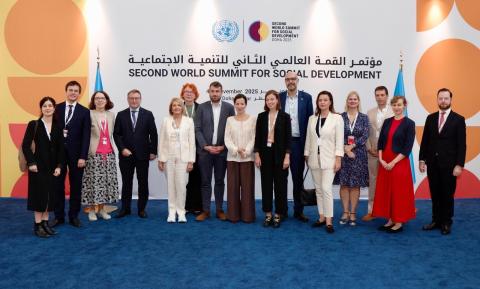
Thirty Years On: the world reaffirms its social promise — and its divides
Thirty years after the 1995 Copenhagen Summit declared poverty eradication, full employment and social integration the pillars of social progress, the international community reconvened in Doha (4-6 November 2025). The Second World Summit for Social Development – chaired by UN General Assembly President Annalena Baerbock – sought to renew that promise in a fractured world.
Forty heads of state and government, and over 200 ministers, gathered to adopt the Doha Political Declaration, reaffirming that social justice and human rights remain inseparable from peace and sustainability. The declaration calls for universal social protection, fairer global financial systems and a five-year review under the UN Commission for Social Development. At a time of polarisation and inequality, this consensus is no small feat.
Yet the debates exposed widening ideological rifts. China’s sovereignty-based, state-led model clashed with liberal democracies’ insistence on universal rights and freedoms. The Global South, often aligning with Beijing, framed development as economic modernisation over democratic participation. Meanwhile, Europe — represented by a delegation including my EESC colleagues María del Carmen Barrera Chamorro, Marya Mincheva and myself – defended a human-centred multilateralism grounded in democracy, accountability and social partnership.
The side events revealed a world struggling to reconcile ideals and realities. Civil society warned of shrinking civic space. Economists urged a new social contract for public services. Demographers reframed ageing as potential, not decline. Technologists debated AI’s ethical fault lines, while discussions on religious tolerance showed how easily freedom of belief and freedom of expression collide.
The Doha Summit thus became a mirror of the century’s contradictions: material prosperity alongside democratic retreat, moral consensus amid geopolitical fragmentation. The challenge is no longer defining ‘social development’, but defending it against cynicism and authoritarian convenience.
For Europe, Doha’s message is clear: liberal democracy must prove its relevance again – not as a regional ideal, but as a universal path to dignity and participation. Social justice cannot survive as rhetoric; it must be lived through trust, solidarity and freedom: thirty years after Copenhagen, this remains humanity’s unfinished promise.
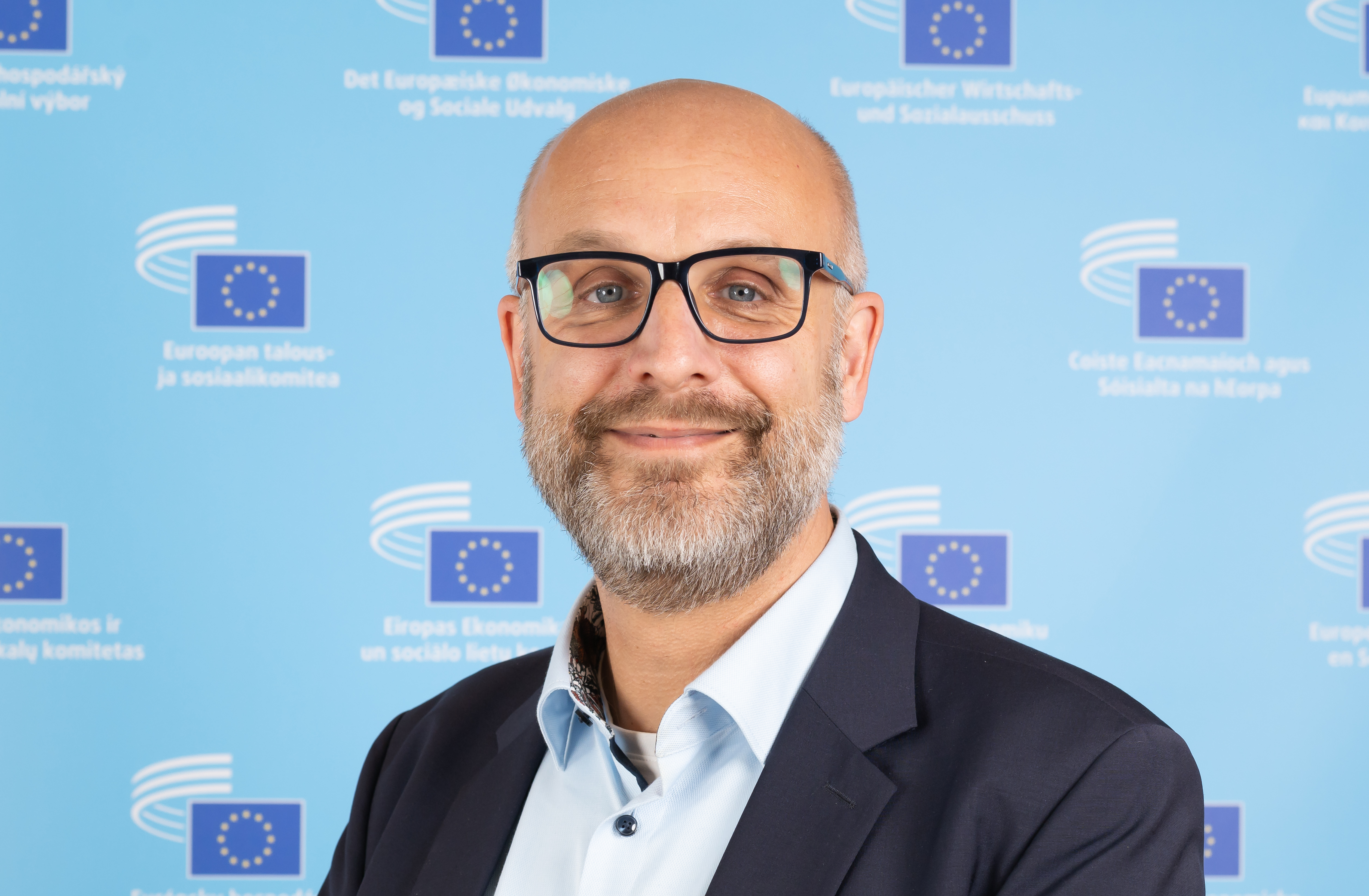
Christian MOOS (Germany)
Member, EESC Civil Society Organisations' Group
Divisional Director (European and International Affairs), German Civil Service Association (dbb)
© EU/EESC