The Europe Sustainable Development Report 2026 (ESDR 2026), a new report released today by the UN Sustainable Development Solutions Network (SDSN), shows that progress on the Sustainable Development Goals (SDGs) has stalled in Europe, with stagnation or even reversal on some environmental and socio-economic targets, and declining political prioritization of the SDGs within EU leadership.
Reimagining the design of cities, communities and housing is essential to face the current challenges. Civil society organisations have a key role to play in steering this transformation. Sustainability and the right to housing must be at the heart of future strategies. The EU could contribute to this by increasing European funding for affordable housing and supporting the social economy.
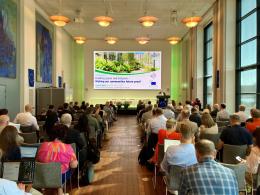
Conference of the EESC Civil Society Organisations' Group in the framework of the Danish Presidency of the Council of the European Union, Copenhagen, Danish Society of Engineers (IDA), 2 July 2025
A new report on Europe’s progress toward the Sustainable Development Goals (SDGs) highlights a significant slowdown, raising concerns about the EU’s ability to meet the 2030 targets. The Europe Sustainable Development Report 2025 (ESDR), published by the UN Sustainable Development Solutions Network (SDSN), finds that the pace of SDG progress between 2020 and 2023 was more than twice as slow as in the previous period.
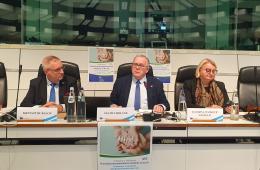
Greater use of digitalisation in the construction and housing industry and the involvement of social economy actors in housing provision can bring opportunities to address current challenges in the area of housing affordability and sustainability in Europe. Since housing is not just a need but a human right, a pan-European response to the various challenges is needed, according to a conference organised by the Civil Society Organisations’ Group of the European Economic and Social Committee (EESC) on 21 November, at which a new EESC study on the subject was presented.
The European Economic and Social Committee (EESC) is actively participating in COP29 in Baku, Azerbaijan, from November 11–22, 2024. Representing the voices of civil society, the EESC is committed to ensuring that marginalized and vulnerable groups are included in global climate solutions.
Across a wide range of issues, including employment, pension systems, climate change, health and care services, and political participation, both younger and older generations feel inadequately represented in the current policy responses. This is contributing to growing political disillusionment and jeopardising the cohesion of European societies.
World leaders met at UN Headquarters in New York for the Summit of the Future on 22-23 September where the much-awaited Pact for the Future was adopted. Ahead of the summit, an EESC delegation actively participated in the Summit's Action Days reiterating several key messages in the five major areas of the Summit of the Future, building on adopted opinions and several months of cross-cutting preparatory work.