
European Economic
and Social Committee
Boosting productivity with a stronger workers’ voice
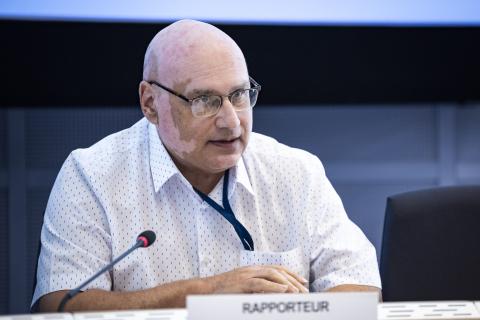
At a time when the EU is grappling with slow productivity growth and rising global competition, the European Economic and Social Committee (EESC) has adopted a set of recommendations highlighting the important role trade unions can play in helping Europe close the productivity gap, especially with the United States. The opinion argues that boosting productivity is not just about investing in technology and capital, but also about empowering workers, strengthening social dialogue and supporting workplace innovation.
The EESC stresses that productivity and wage growth can go hand in hand and that collective bargaining, employee consultation and worker participation can significantly enhance business performance. Trade unions are well placed to shape workplace practices in ways that drive long-term value, from collaborative team structures to jointly developed training programmes.
By involving workers in shaping decisions, we are not just protecting rights, we are unlocking potential,"said rapporteur Philip von Brockdorff. "Stronger trade unions can help businesses innovate, reduce absenteeism and retain skilled employees.
According to the opinion, unions can contribute directly to workplace innovation, fairer wage structures and more stable employment, all of which are essential for building a resilient economy. They can also help address some of the EU’s most pressing labour market challenges, such as high absenteeism, skills mismatches and limited labour mobility, through cooperation with employers and public authorities.
More than just pay
The EESC sees trade unions as key players in helping companies adapt to technological change. It calls for stronger collaboration between employers and unions to develop ongoing training and upskilling programmes, especially in sectors undergoing rapid transformation. It also supports involving trade unions in setting productivity benchmarks that reflect quality, sustainability and innovation rather than focusing only on short-term cost savings.
The opinion further highlights the positive impact of workplace bodies such as works councils, which have been shown to improve job satisfaction, raise wages and reduce staff turnover. These findings, the EESC notes, reflect the strength of the European social model, where meaningful worker participation and decent working conditions help drive productivity and economic performance.
A strategic partnership for growth
To close the productivity gap with the United States, the Committee calls for coordinated efforts that combine public investment, private innovation and social dialogue. Governments, businesses and trade unions must work together to ensure that productivity gains result in fair wages, good jobs and sustainable growth. This includes recognising the role of trade unions in supporting workforce mobility, retaining experienced workers and promoting worker-focused digital and artificial intelligence tools in the workplace.
The opinion concludes with a clear message: in today’s competitive global economy, workers are not a cost to be reduced but a resource to be valued. Trade unions, through dialogue, participation and partnership, are essential to achieving that goal.
Work organisation
Recommended for you
Toghadh Séamus Boland ina Uachtarán ar Choiste Eacnamaíoch agus Sóisialta na hEorpa, agus gheall sé go gcuirfear an tsochaí shibhialta i gcroílár na hEorpa
News
Toghadh Séamus Boland na hÉireann ar an 35ú Uachtarán ar Choiste Eacnamaíoch agus Sóisialta na hEorpa (CESE) le haghaidh an téarma oifige 2025-2028. Is urlabhra riamh anall é do phobail na tuaithe…
CESE, Uachtarántacht na hÉireann agus an fhís choiteann atá acu
News
I ndiaidh na díospóireachta a reáchtáladh le Comhaltaí CESE le linn sheisiún iomlánach mhí Iúil, níl aon dabht faoi ach go bhfuil clár Uachtaránacht reatha an Aontais ag freagairt go mór do na…
#YEYS2022: Ceist na bréagaisnéise pléite ag aos óg na hEorpa agus a dtuairimí ina leith curtha in iúl acu don Leas-Uachtarán Jourová
News
Chuir daltaí meánscoile ó gach cearn den Eoraip ocht gcinn de thograí nithiúla faoi bhráid Leas-Uachtarán an Choimisiúin Eorpaigh um Luachanna agus um Thrédhearcacht, Věra Jourová. Bhí páirt á…
#CivilsocietyforUkraine
News
Cáineann CESE ionradh Rialtas na Rúise ar an Úcráin, ionradh atá gan údar agus gan chúis Rún ó Choiste Eacnamaíoch agus Sóisialta na hEorpa (CESE) maidir leis an gcogadh san Úcráin agus an tionchar…
Eagrán speisialta de CESE info
News
Eagrán speisialta de CESE info atá dírithe ar an Úcráin. Is féidir scéal Tetyana Ogarkova a léamh, bean a chuala fuaim ionradh na Rúise ar dhúiseacht di an 24 Feabhra.