Europe is facing a pivotal moment. Social and economic inequalities, rapid technological change, anti-democratic forces and geopolitical instability are straining the foundations of the European project.
With democracy and civic space under mounting pressure, civil society organisations, human rights defenders and free media face growing constraints - from restrictive laws and disinformation campaigns to underfunding and public distrust. Deepening polarisation and eroding trust in institutions further undermine Europe’s democratic model.
At its December 2025 plenary session, the European Economic and Social Committee (EESC) adopted an opinion supporting the European Commission’s proposals for the AgoraEU and Justice programmes for 2028–2034. The EESC calls for robust support for civil society, enhanced democratic participation, and a stronger European Area of Justice, in the pursuit of a free and democratic Europe.
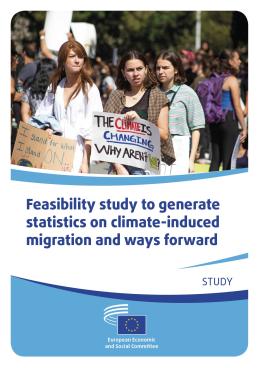
This feasibility study to generate statistics on climate-induced migration and ways forward sought to gather and review existing data on climate-induced migration, focussing on five Member States (France, Germany, Greece, Italy and Spain) and one candidate country (Türkiye), to inform an effective EU response. There is no universally agreed definition of climate-induced migration. The majority of population movements as a result of rapid onset events takes place within a country as opposed to across borders.
Across a wide range of issues, including employment, pension systems, climate change, health and care services, and political participation, both younger and older generations feel inadequately represented in the current policy responses. This is contributing to growing political disillusionment and jeopardising the cohesion of European societies.
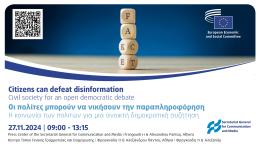
Press Center of the Secretariat General for Communication and Media, Frangoudi 11 & Alexandrou Pantou | Athens, Greece
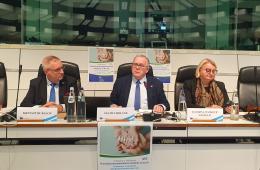
This conference in Athens is the third event on disinformation being hosted by the European Economic and Social Committee (EESC) as part of its ongoing project aiming to fight disinformation with the help of civil society.