European Economic
and Social Committee
European Economic
and Social Committee
The European Economic and Social Committee (EESC) is the voice of organised civil society in Europe.
Find out more about its role and structure at http://www.eesc.europa.eu/en/about
The EESC issues between 160 and 190 opinions, evaluation and information reports a year.
It also organises several annual initiatives and events with a focus on civil society and citizens’ participation such as the Civil Society Prize, the Civil Society Days, the Your Europe, Your Say youth plenary and the ECI Day.
Find the latest EESC opinions and publications at http://www.eesc.europa.eu/en/our-work/opinions-information-reports/opinions and http://www.eesc.europa.eu/en/our-work/publications-other-work/publications respectively.
The EESC is active in a wide range of areas, from social affairs to economy, energy and sustainability.
Learn more about our policy areas and policy highlights at http://www.eesc.europa.eu/en/policies
The EESC holds nine plenary sessions per year. It also organises many conferences, public hearings and high-level debates related to its work.
Find out more about our upcoming events at http://www.eesc.europa.eu/en/agenda/our-events/upcoming-events
Here you can find news and information about the EESC'swork, including its social media accounts, the EESC Info newsletter, photo galleries and videos.
Read the latest EESC news http://www.eesc.europa.eu/en/news-media/news and press releases http://www.eesc.europa.eu/en/news-media/press-releases
The EESC brings together representatives from all areas of organised civil society, who give their independent advice on EU policies and legislation. The EESC's326 Members are organised into three groups: Employers, Workers and Various Interests.
Find out more about our Members and groups at http://www.eesc.europa.eu/en/members-groups
The EESC has six sections, specialising in concrete topics of relevance to the citizens of the European Union, ranging from social to economic affairs, energy, environment, external relations or the internal market.
Find out more at http://www.eesc.europa.eu/en/sections-other-bodies
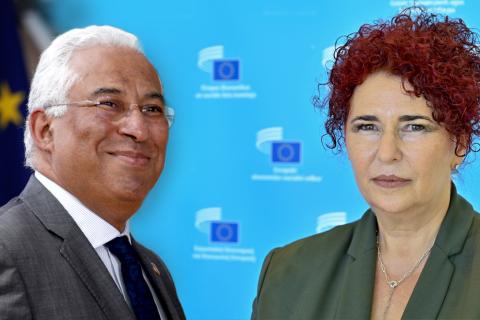
Den 27. januar fremlagde Portugals premierminister, António Costa, prioriteterne for landets EU-formandskab på EØSU's plenarforsamling. Portugal har sat den sociale dagsorden øverst på sit formandskabsprogram og anmodet EØSU om at stille sin ekspertise til rådighed vedrørende syv emner, der er vigtige for EU's fremtid.
Under mottoet "Tid til resultater: en retfærdig, grøn og digital genopretning" vil formandskabet fokusere på tre overordnede prioriteter: fremme af en genopretning, der har klimaomstillingen og den digitale omstilling som drivkraft, gennemførelse af den europæiske søjle for sociale rettigheder og styrkelse af Europas autonomi, samtidig med at Unionen forbliver åben over for verden.
"Disse prioriteter stemmer perfekt overens med EØSU's ønsker: Vi går ind for et økonomisk velstående Europa, et socialt rummeligt Europa og et miljømæssigt bæredygtigt Europa," sagde EØSU's formand Christa Schweng.
"Bekæmpelsen af covid-19-pandemien har bevist EU's merværdi. Opstarten af vaccinationsprocessen på den ene side og godkendelsen af FFR og Next Generation EU-programmet på den anden har skabt lys for enden af tunnelen og givet ordet "fællesskab" en ny betydning," fremhævede António Costa.
Det vigtigste arrangement under det portugisiske formandskab vil være det sociale topmøde, der efter planen finder sted i Porto den 7. maj.
"Dets hovedformål er at skabe stærk politisk fremdrift bag den handlingsplan som Kommissionen præsenterer i marts og gennemføre den europæiske søjle for sociale rettigheder, som udgør den bedste vaccine mod social ulighed, populisme og frygt,", understregede han.
Premierministeren sagde også, at det portugisiske formandskab havde brug for EØSU's bidrag og aktive deltagelse for at opfylde dette grundlæggende mål. Formandskabet har anmodet EØSU om at stille sin ekspertise til rådighed vedrørende syv emner, der er vigtige for EU's fremtid. (mr)