European Economic
and Social Committee
European Economic
and Social Committee
The European Economic and Social Committee (EESC) is the voice of organised civil society in Europe.
Find out more about its role and structure at http://www.eesc.europa.eu/en/about
The EESC issues between 160 and 190 opinions, evaluation and information reports a year.
It also organises several annual initiatives and events with a focus on civil society and citizens’ participation such as the Civil Society Prize, the Civil Society Days, the Your Europe, Your Say youth plenary and the ECI Day.
Find the latest EESC opinions and publications at http://www.eesc.europa.eu/en/our-work/opinions-information-reports/opinions and http://www.eesc.europa.eu/en/our-work/publications-other-work/publications respectively.
The EESC is active in a wide range of areas, from social affairs to economy, energy and sustainability.
Learn more about our policy areas and policy highlights at http://www.eesc.europa.eu/en/policies
The EESC holds nine plenary sessions per year. It also organises many conferences, public hearings and high-level debates related to its work.
Find out more about our upcoming events at http://www.eesc.europa.eu/en/agenda/our-events/upcoming-events
Here you can find news and information about the EESC'swork, including its social media accounts, the EESC Info newsletter, photo galleries and videos.
Read the latest EESC news http://www.eesc.europa.eu/en/news-media/news and press releases http://www.eesc.europa.eu/en/news-media/press-releases
The EESC brings together representatives from all areas of organised civil society, who give their independent advice on EU policies and legislation. The EESC's326 Members are organised into three groups: Employers, Workers and Various Interests.
Find out more about our Members and groups at http://www.eesc.europa.eu/en/members-groups
The EESC has six sections, specialising in concrete topics of relevance to the citizens of the European Union, ranging from social to economic affairs, energy, environment, external relations or the internal market.
Find out more at http://www.eesc.europa.eu/en/sections-other-bodies
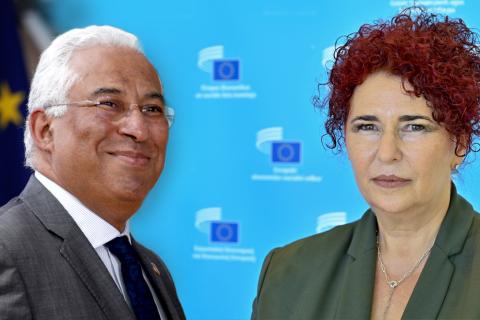
Predsednik portugalske vlade António Costa je 27. januarja na plenarnem zasedanju EESO predstavil prednostne naloge portugalskega predsedovanja Svetu EU. Portugalska je na vrh programa svojega predsedovanja uvrstila socialno agendo in EESO zaprosila, naj ji s svojim strokovnim znanjem pomaga pri sedmih temah, ki so bistvene za prihodnost EU.
Pod geslom „Čas za rezultate: pravično, zeleno in digitalno okrevanje“ se bo Portugalska osredotočila na tri glavna prednostna področja: spodbujanje okrevanja s podnebnim in digitalnim prehodom, izvajanje evropskega stebra socialnih pravic in krepitev avtonomije Evrope, ki obenem ostaja odprta svetu.
„Te prednostne naloge so v popolnem sozvočju s prednostnimi nalogami našega Odbora: zavzemamo se za EU, ki je gospodarsko uspešna, socialno vključujoča in okoljsko trajnostna,“ je dejala predsednica EESO Christa Schweng.
„Boj proti pandemiji COVID-19 je dokazal dodano vrednost naše Evropske unije. Začetek cepljenja na eni strani ter potrditev večletnega finančnega okvira in programa NextGenerationEU na drugi strani sta odprla vrata upanju in dala nov pomen besedi ,skupnost’,“ je podaril António Costa.
Osrednji dogodek portugalskega predsedovanja bo socialni vrh, ki bo 7. maja v Portu.
„Glavni namen tega vrha je dati močno politično spodbudo akcijskemu načrtu, ki ga bo Komisija predstavila marca, in izvajanju evropskega stebra socialnih pravic, ki je najboljše cepivo proti socialnim neenakostim, populizmu in strahu,“ je prepričan portugalski premier.
Dodal je še, da pri doseganju tega temeljnega cilja portugalsko predsedstvo računa na ključni prispevek EESO in njegovo dejavno sodelovanje. Predsedstvo je EESO zaprosilo, naj mu s svojim strokovnim znanjem pomaga pri sedmih temah, ki so bistvene za prihodnost EU. (mr)