The EESC’s July plenary saw the adoption of an opinion on the interdependence between peace and climate change. The opinion underscores the need to strengthen multilateral cooperation and invest in green development as a mechanism for peace.
The EESC is the first EU body to offer concrete recommendations on using digital tools to improve law-making – an area still plagued by complexity and opacity. With 18 000 pages of binding legislation added each year and annual administrative costs reaching €150 billion, AI could be a gamechanger in making EU laws more accessible to Europeans.
The EESC’s June plenary saw the adoption of an opinion urging the bloc to diversify and innovate its energy system to ensure stability and move to decarbonisation.
The European Economic and Social Committee (EESC) has adopted a new opinion urging the EU to place reindustrialisation at the heart of its response to the cost-of-living crisis. This is part of a broader EESC strategy aimed at tackling Europe’s ongoing cost-of-living crisis through a series of sectoral and umbrella opinions. The Committee argues that a stronger industrial base is key for securing quality jobs, boosting innovation and strengthening Europe’s economic resilience.
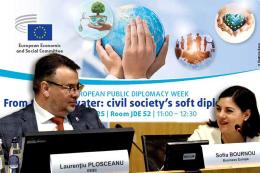
On 25 June 2025, the European Economic and Social Committee (EESC) held an event in the context of European Public Diplomacy Week, launched for the first time by the European External Action Service (EEAS). The participants highlighted a fundamental dimension of European action, the contribution of civil society to public diplomacy, from international trade to water, through enlargement. When official diplomacy has limited outreach due to political or other issues, civil society can provide added value.
At a conference held at the European Economic and Social Committee (EESC), participants discussed the challenges facing the construction sector in the European Union and pointed out that future measures must be aimed at enhancing workforce skills, reducing construction costs, improving workers’ protection and ensuring fair competition.
At its June 2025 plenary session, the European Economic and Social Committee (EESC) adopted a forward-looking opinion on the future of the EU Strategy on the Rights of Persons with Disabilities, calling for a more ambitious and binding approach for the 2025–2030 period.
The European Economic and Social Committee (EESC) has called on the EU to scale up regenerative agriculture, saying it can help rebuild soil health, restore biodiversity, and protect food production from extreme weather events resulting from climate change.
At its June plenary session, the European Economic and Social Committee (EESC) adopted two opinions calling for bold EU steps to protect public health by boosting cybersecurity in hospitals and securing supplies of critical medicines. These challenges demand concrete investment, smarter cooperation, and a rights-based approach that puts people’s well-being first.