
European Economic
and Social Committee
EU ENLARGEMENT MATTERS MORE THAN EVER
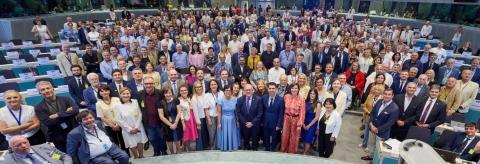
At a time of growing geopolitical uncertainty, EU enlargement is increasingly seen as one of Europe's strongest tools for enhancing security, stability and prosperity. That was the clear message from a high-level debate organised by the European Economic and Social Committee (EESC) and the European Commission during the EESC's plenary session on 16 July 2026.
Bringing together the European Commissioner for Enlargement, Marta Kos, political leaders and representatives from candidate countries, the discussion focused on how enlargement can help build a stronger, more resilient and more competitive Europe.
Opening the debate, EESC president Séamus Boland pointed out that enlargement is not only a political project: 'By advancing democratic reforms, as well as strengthening the rule of law and fundamental rights, candidate countries are contributing to our shared European security. Accelerating socio-economic convergence is essential for enlargement to deliver tangible benefits for citizens.'
Commissioner Kos stressed that enlargement has returned to the top of the EU agenda, and is helping reshape Europe's political and security landscape at a particularly challenging moment. Beyond its strategic importance, she pointed to the strong economic case for enlargement, noting that previous rounds have consistently delivered growth and opportunity.
A recurring theme throughout the debate was the important role of organised civil society. Participants agreed that reforms are more effective and sustainable when employers, trade unions and civil society organisations are actively involved. The discussion also highlighted the success of the EESC's Enlargement Candidate Members (ECM) initiative, which gives representatives from candidate and potential candidate countries a direct voice in the Committee's work.
The debate concluded with a strong message: the future of the Western Balkans, Ukraine, Moldova and other countries committed to becoming part of Europe lies in a united Europe. Achieving that goal will not only require political leadership, but also vibrant and engaged civil societies helping to shape the enlargement process every step of the way (pm).