The European Economic and Social Committee (EESC) warns that a weak long-term EU budget would undermine competitiveness, cohesion, agriculture and democracy. In a set of eight newly adopted opinions, the Committee calls for a stronger, fairer and future-proof multiannual financial framework (MFF) for 2028 to 2034, highlighting key risks, including proposed cuts to the common agricultural policy (CAP), dilution of cohesion and social investment and insufficient support for youth, skills and innovation.
EU's expanded budget envelope for Horizon Europe sends a strong political signal underscoring Europe's ambition to strengthen competitiveness and strategic autonomy, EESC says
At its January 2026 plenary session, the European Economic and Social Committee (EESC) adopted a resolution outlining the EU’s priorities for the 70th United Nations Commission on the Status of Women (UN CSW70). With a strong focus on access to justice, women’s participation in public life and the elimination of gender‑based violence, the EESC sets out a roadmap to strengthen women’s rights and reinforce democracy across Europe and beyond.
At its January 2026 plenary session, the European Economic and Social Committee (EESC) adopted an opinion calling for a significantly strengthened European Social Fund (ESF) within the future National and Regional Partnership Plans (NRPPs). The Committee argues that the ESF must play a central role in ensuring quality jobs, lifelong learning, social inclusion and equal opportunities for all during the 2028–2034 programming period.
On behalf of the Workers’ Group of the European Economic and Social Committee, I wish to express our deepest condolences after the tragic train accident that occurred yesterday late afternoon in the Andalusian province of Córdoba, which has claimed so many lives and left many people seriously injured.
At a time of growing geopolitical, economic and social uncertainty, the EESC’s Consultative Commission on Industrial Change (CCMI) is opening the year with a high-level debate on how Europe can strengthen its autonomy, resilience and preparedness.
The event will feature a keynote speech by Nicolas Schmit, former European Commissioner for Jobs and Social Rights (2019–2024), focusing on Europe’s future competitiveness, preparedness and resilience.
The EESC has adopted an opinion pointing out that nuclear energy is an essential component of the clean energy mix which is needed to phase out fossil fuels. The Committee calls on the European Commission to include key regulatory and financial enablers in order to make the planned investment possible, and to enhance transparent dialogue with civil society.
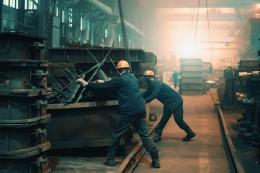
At its December 2025 plenary session, the European Economic and Social Committee (EESC) adopted an own-initiative opinion on Facilitating the potential of permanent materials in the EU circular economy. The opinion stresses the importance of steel, aluminium and glass – materials that retain their properties through multiple recycling cycles – for achieving a truly circular EU economy.