The European Economic and Social Committee (EESC) has adopted an opinion arguing that, in order to keep electricity bills under control in the long term, it is vital to increase transparency, adopt a systemic approach to the electricity system, and modernise the rules governing grid connections.
An interview with Juliane Marie Neiiendam, vice-president of the EESC Group on Equality, on the challenges ahead in the fight for gender equality and the crucial role of civil society
Removing discrimination and inequalities is essential to unlocking Europe’s economic potential and making better use of its workforce. An opinion adopted by the European Economic and Social Committee (EESC) on equality and the competitiveness agenda stresses that removing barriers and ensuring equal access to employment, education and economic opportunities can help boost productivity, foster innovation and address labour shortages. The text calls on the EU and its Member States to make the principle of equal treatment a central part of their economic strategies.
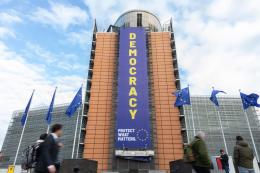
Local associations, community initiatives and volunteering must play a greater role in strengthening European democracy if we want to overcome the disengagement of Europeans from public life and fight back against the rise of the far right and ever-increasing political polarisation. That is the core message from an opinion issued by the European Economic and Social Committee (EESC) on inclusive democratic participation, which calls on the EU and its Member States to strengthen grassroots organisations, protect civil society and give citizens more opportunities to influence decisions affecting their communities.
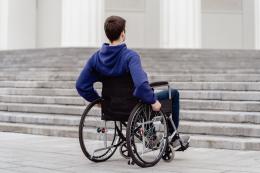
The EU needs stronger and more binding measures to protect the rights of persons with disabilities. The European Commission’s new strategy lacks ambition in terms of legislation and fails to address several key demands from disability organisations. This is the core message of an opinion adopted by the European Economic and Social Committee (EESC) on the enhanced EU Strategy on the Rights of Persons with Disabilities for 2026-2030.
Making it easier for businesses to expand across EU borders could unlock productivity gains, the European Economic and Social Committee says. It calls for measurable targets to complete the single market, alongside investment in innovation and skills and safeguards for labour rights.
The circular economy is not just good for the planet; it could also be a fundamental driver of Europe's competitiveness and raw materials security. Every year, avoidable value losses linked to linear material use amount to EUR 25.4 trillion worldwide, equivalent to almost a third of global GDP. According to an opinion adopted by the European Economic and Social Committee (EESC) on how to advance circular economy preparedness, a stronger circular economy could contribute to a more competitive, resilient and strategically autonomous EU.
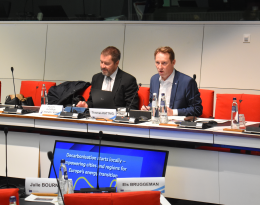
‘Decarbonisation starts at local level’ was the main takeaway from a conference held by the EESC’s Section for Transport, Energy, Infrastructure and the Information Society (TEN). Towns and regions must be given the appropriate means to step up the EU’s energy transition and ensure energy security and local energy autonomy.
From breaking intergenerational disadvantage and tackling child poverty to ending homelessness and protecting civic space, the European Economic and Social Committee (EESC) is calling for a comprehensive, rights-based approach to poverty. Key opinions adopted during its October plenary underline one central message: lasting solutions must be shaped with the support of civil society and the people most affected.
Droughts, floods and damaged ecosystems threaten food supplies, safe drinking water, jobs and homes. Water moves across borders through rivers, soils and the atmosphere, meaning that no country can secure its water future alone. In its opinion Water Diplomacy in Action: Restoring the Global Hydrological Cycle, the European Economic and Social Committee (EESC) calls for the restoration of the global water cycle to become a shared international priority.