
European Economic
and Social Committee
The New Pact for the Mediterranean is designed to improve young people’s future
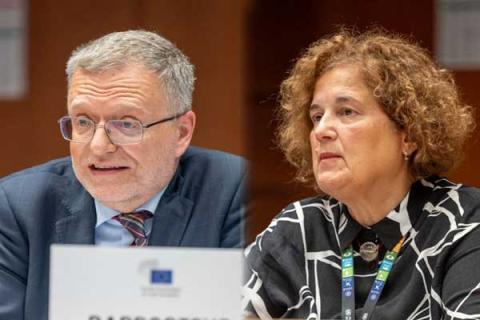
At its September plenary session, the European Economic and Social Committee (EESC) adopted an opinion on the New Pact for the Mediterranean, a month ahead of its official launch by the European Commission. The Committee calls for bottom-up processes ensuring that the Pact has a direct, positive impact on all people, especially on youth.
The New Pact for the Mediterranean aims to deepen cooperation between the EU and Southern Mediterranean countries grounded in mutual respect and shared priorities. It is designed through a people-centred strategic framework, emphasising inclusive participation and sustainable development. Young people should play a key role in all stages of policy-making.
The opinion was linked to a debate on the state of play of the new pact for the region, hosted during the EESC plenary, with the Director of the Commission’s Directorate General for the Middle East, North Africa and the Gulf, Stefano Sannino. He explained that the new pact is based on three pillars: people, including education and vocational training, economic cooperation, including renewable energy and green technologies, and security, resilience and migration management.
The debate was chaired by EESC Vice-President Krzysztof Pater who underlinedthat the Pact must be ambitious, coherent and forward-looking, addressing the region’s structural economic weaknesses, while also fostering resilience, sustainability and social inclusion. ‘The EESC has made the New Pact its top priority in our work related to our Southern Neighbourhood. The Committee stands ready to play its part, offering its full support for this crucial initiative’, he said.
Mr Sannino added that this was a way of addressing the complexities and difficulties of the region, and an opportunity to capitalise on many years of cooperation between the EU and the Southern Neighbourhood. ‘We walk the talk and make this large consultation process co-owned and co-created, collecting requests, indications and recommendations from all stakeholders and EU institutions’.
EESC member and rapporteur for the opinion, Thomas Wagnsonner, emphasised: ‘We regard the New Pact as a development model with joint partnerships on equal footing and business opportunities that should enable sustainable economic growth and innovation with high-quality jobs, especially for young people and women, in inclusive and socially stable societies in the Mediterranean region’.
Along the same lines, Lidija Pavić-Rogošić, EESC member and co-rapporteur, stressed that the Mediterranean future should be built on shared destiny, inclusive action, equitable growth and civic co-authorship. ‘For a real impact, action is needed, including civic co-authorship, civic engagement and monitoring done with communities – where prosperity is human-centred, accountability is collective, and solidarity is lived, not spoken" she said.
Young people at the heart of the new Pact
The Pact seeks to focus on people, and develop a people-centred agenda, so that it can bring tangible results for societies. Notably, almost half of the population (47%) in the region consists of young people aged 0 to 24 years old.
The EESC proposes that EU programmes like Erasmus+ and Interreg should include dedicated civil society funding with simplified applications and long-term financing. Additionally, economic and social councils, as well as youth councils, should guarantee roles and be established where they are missing.
The opinion recommends that young people from diverse backgrounds must be involved at all policy stages, with robust monitoring and accountability mechanisms to ensure their voices influence the Pact’s development.
Pablo Pastor from the Anna Lindh Foundation and President of the Mediterranean Youth Council, who was guest speaker at the EESC plenary debate, said that the new Pact was an opportunity for action. ‘We cannot afford to make the same mistakes as the last thirty years. We cannot adopt a paternalistic view of the Mediterranean. We cannot sign agreements that are not respected’.
The Pact envisages the initiative of establishing a Mediterranean University modelled around university alliances, bringing together students, scholars and cultures from Europe, the Middle East and North Africa. Through education, training and upskilling, more and better working opportunities can be offered to the young people that are creating the conditions for a prosperous future.
Work organisation
Downloads
-
The New Pact for the Mediterranean is designed to improve young people’s future
Recommended for you
Il-KESE jappella għal regolamentazzjoni b’saħħitha u ssemplifikata tal-kriptoassi
News
Il-Kumitat Ekonomiku u Soċjali Ewropew jappoġġja żieda fir-regolamentazzjoni tal-kriptoassi, b’regoli robusti u koerenti biex l-investituri fl-UE jiġu protetti aħjar, f’konformità mal-miżuri attwali…
L-istrumentalizzazzjoni tal-migranti u l-kriżi tar-refuġjati tal-Ukrajna jappellaw għal bidu ġdid għall-politika dwar il-migrazzjoni
News
L-istrumentalizzazzjoni tal-migranti sostnuta mill-Istat, li għandha l-għan li tiddestabbilizza lill-UE, u l-gwerra attwali fl-Ukrajna, li wasslet għal influss bla preċedent ta’ refuġjati, jagħmluha…
“L-Ewropa Tiegħek, Leħnek” 2023: Iż-żgħażagħ jitolbu UE aktar trasparenti, diġitali u semplifikata
News
Fit-23 u l-24 ta’ Marzu, il-Kumitat Ekonomiku u Soċjali Ewropew (KESE) ospita l-14-il avveniment L-Ewropa Tiegħek, Leħnek!, li laqqa’ fi Brussell 105 studenti minn 35 skola mis-27 Stat Membru tal-UE…
Euro-Med – L-organizzazzjonijiet tas-soċjetà ċivili huma essenzjali biex l-ekonomija u s-soċjetà jaħdmu tajjeb
News
Matul is-sessjoni plenarja ta’ Diċembru tal-Kumitat Ekonomiku u Soċjali Ewropew (KESE) sar dibattitu dwar ir-rikostruzzjoni u r-reżiljenza tar-reġjun Ewro‑Mediterranju wara l-pandemija tal-COVID-19.…
Il-KESE jiftaħ l-applikazzjonijiet għall-Premju tiegħu għas-Soċjetà Ċivili li se jkun qed jindirizza s-saħħa mentali
News
L-organizzazzjonijiet tas-soċjetà ċivili, l-individwi u l-kumpaniji privati issa jistgħu jdaħħlu l-proġetti tagħhom mingħajr skop ta’ qligħ għall-premju tal-KESE ddedikat għall-appoġġ tal-benesseri…