Europe’s cleantech sector has considerable research expertise but struggles to turn innovation into commercial success. Competition from the US and China makes it harder for Europe to scale up investment and maintain leadership in clean-energy and water technologies. The European Economic and Social Committee (EESC) calls on the European Commission to treat cleantech as a distinct industrial sector and take concrete steps to help it grow, create jobs and strengthen Europe’s competitiveness.
In an opinion adopted at the September plenary session, the European Economic and Social Committee (EESC) identifies that fostering entrepreneurship and quality job creation in the Mediterranean region is the answer to high unemployment rates. Leveraging the potential of women and young people can promote inclusive, resilient growth.
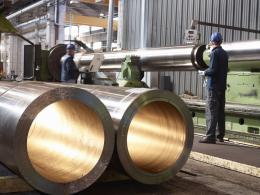
Europe’s steel industry is facing serious challenges with wide-reaching implications. Without swift and decisive action, factories could close, jobs be lost, and the EU’s strategic autonomy in defence, clean energy and digital technologies threatened. The European Economic and Social Committee (EESC) calls on the European Commission to strengthen trade safeguards, reform energy policies and support investment in low-carbon production.
At its September plenary session, the European Economic and Social Committee (EESC) adopted a resolution Defending the EU’s values and strengthening its future in the new geopolitical order, calling for a secure, resilient and strategically autonomous EU. The text highlights the critical momentum for Europe’s strategic response to the current geopolitical challenges, underlining that civil society must keep its central role.
Water must be treated as a strategic priority for Europe, stressed the European Economic and Social Committee (EESC) during its September plenary session, where three new opinions on water policy were adopted. The debate brought together high-level EU and UN representatives, highlighting the Committee’s ongoing commitment to the EU Blue Deal, which it has championed for nearly four years.
In an opinion adopted at the September plenary, the European Economic and Social Committee (EESC) says that the Commission has not yet managed to really put people at the heart of the EU’s energy system, and calls for the new initiative to provide the right guarantees in this direction.
stresses the central role of enforcement in reducing the fragmentation of the Single Market and calls on the Commission to implement a clear and coordinated approach between preventive, collaborative and remedial tools. It also stresses the primary obligation of Member States to implement EU law in due time and correctly;
considers that the adequate implementation of EU law should be integrated into all steps of the legislative process, and legislation should include clauses dedicated to enforcement. Gold-plating, i.e. adding to EU legislation supplementary national requirements, should be avoided. The EESC asks for active engagement from the co-legislators in this regard, as well as the Member States;
asks the Commission to update the Communication on enforcement of EU law to strengthen and simplify the enforcement tools and accelerate the handling of infringement procedures, while increasing their transparency.
stresses the need to provide for oversight mechanisms regarding the application at national level of the proposed adaptations to the regulatory framework;
recommends that general transfer licences be prioritised and used systematically for all projects financed or coordinated at EU level, and that this system be extended and harmonised across the national systems;
recommends that the possibility for Member States to authorise national exemptions for chemical substances ‘in the interests of defence’ be subject to appropriate environmental verification and compatibility procedures.
underlines the need for additional efforts to promote entrepreneurship and business development more broadly, including the incorporation of a scaling-up perspective in all business-related policy and regulatory initiatives;
stresses the importance of the better regulation principle, guided by thorough impact assessments that cover entire value chains and all stages of the legislative process; it calls for proper implementation and follow-up of an innovation stress test and a competitiveness check;
calls for a thorough review to identify and remove both legislative and non-legislative obstacles that hinder entrepreneurs from seizing a second chance after business failure.
welcomes the European Commission’s efforts to simplify legislation and reduce specific administrative burdens but, at the same time, it also expresses concerns regarding the consultation process, the limited debate on the proposed changes and the lack of impact assessments;
invites the Commission to comprehensively map the EU business landscape by company size and according to specific Member States’ characteristics with the aim to ensuring more appropriate thresholds and scope of the Small Mid-Caps (SMC) category;
encourages the Commission to present further targeted GDPR simplification measures, having many companies still facing disproportionate compliance requirements such as extensive record-keeping.