European Economic
and Social Committee
EESC President Highlights Civil Society’s Crucial Role at 18th EU-Serbia JCC in Belgrade

Today, President Röpke participated in the opening session of the 18th EU-Serbia Joint Consultative Committee (JCC) meeting, reaffirming the Committee’s steadfast support for Serbia’s EU accession journey. The meeting took place at the Chamber of Commerce of Serbia and brought together Serbian officials, civil society representatives, and EU delegates to discuss progress and challenges on Serbia’s path to EU integration.
Accompanied by Serbian Minister of European Integration, Tanja Miščević, the EU Ambassador to Serbia, Emanuele Giaufret, and civil society representatives from EU and Serbia, President Röpke underscored the critical role of civil society in fostering democratic dialogue and implementing reforms. He welcomed Serbia's recently announced goal to align fully with EU membership criteria by 2026 and make it a national priority, emphasizing the need for tangible action to ensure lasting progress.
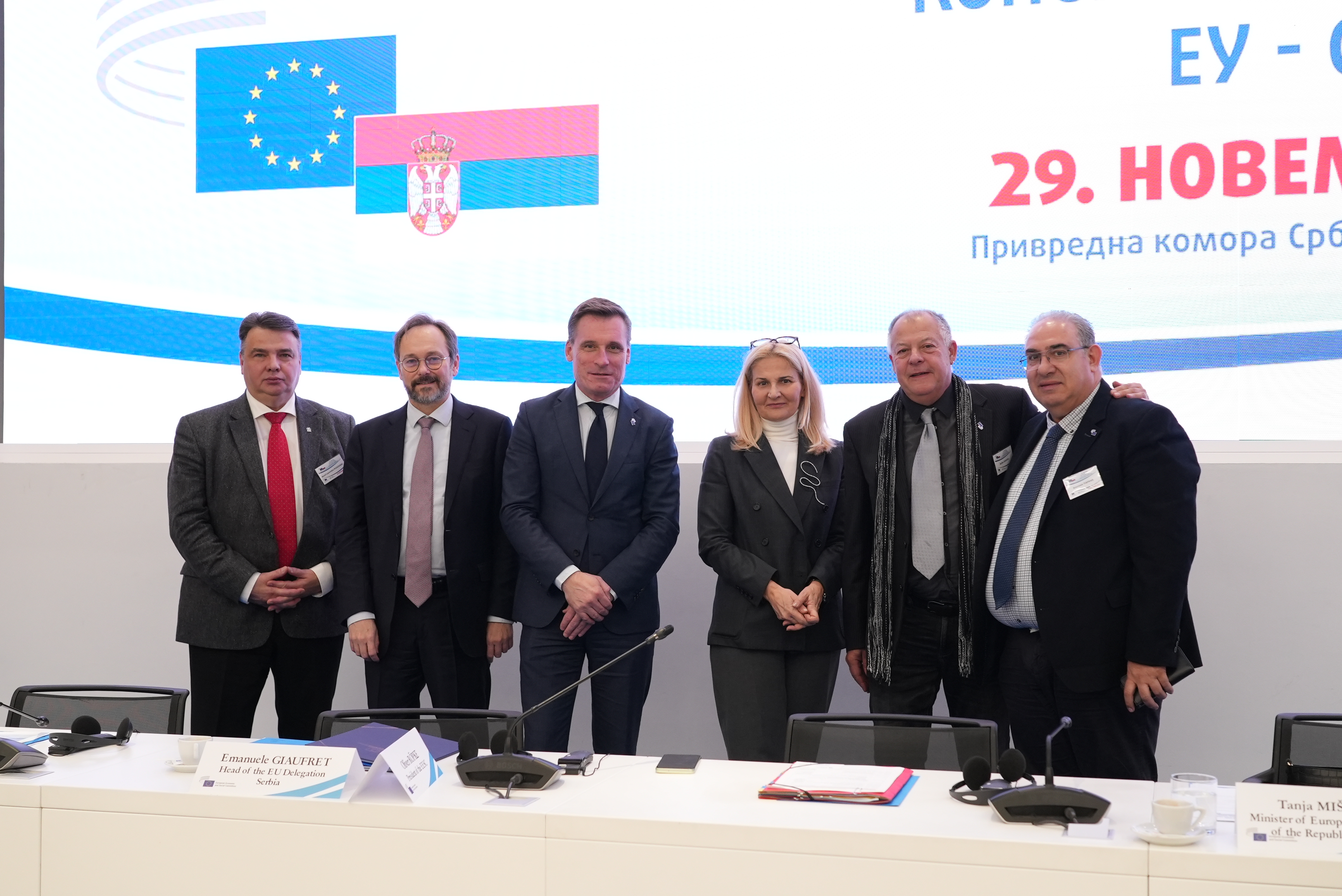
President Röpke stressed that Serbia stands at a critical juncture, with momentum building for reform and EU integration. He highlighted the significant achievements of civil society in advocating for democratic principles, transparency, and accountability, noting that this momentum must be sustained and strengthened by all parties.
The President also praised the inaugural mission of the EESC’s Fundamental Rights and Rule of Law group to Serbia, which took place earlier this week. This landmark visit was the occasion to collect reports on challenges such as judicial independence, media pluralism, anti-corruption measure and the safety of civil society actors. The findings shed light on systemic issues that are not mere technical adjustments but are the bedrock of a society that values accountability, freedom, and the rule of law. All parties agreed on the necessity to move forward on these questions in a constructive manner, and to push for Cluster III negotiations. The mission also highlighted the unwavering dedication of Serbian civil society to European values.
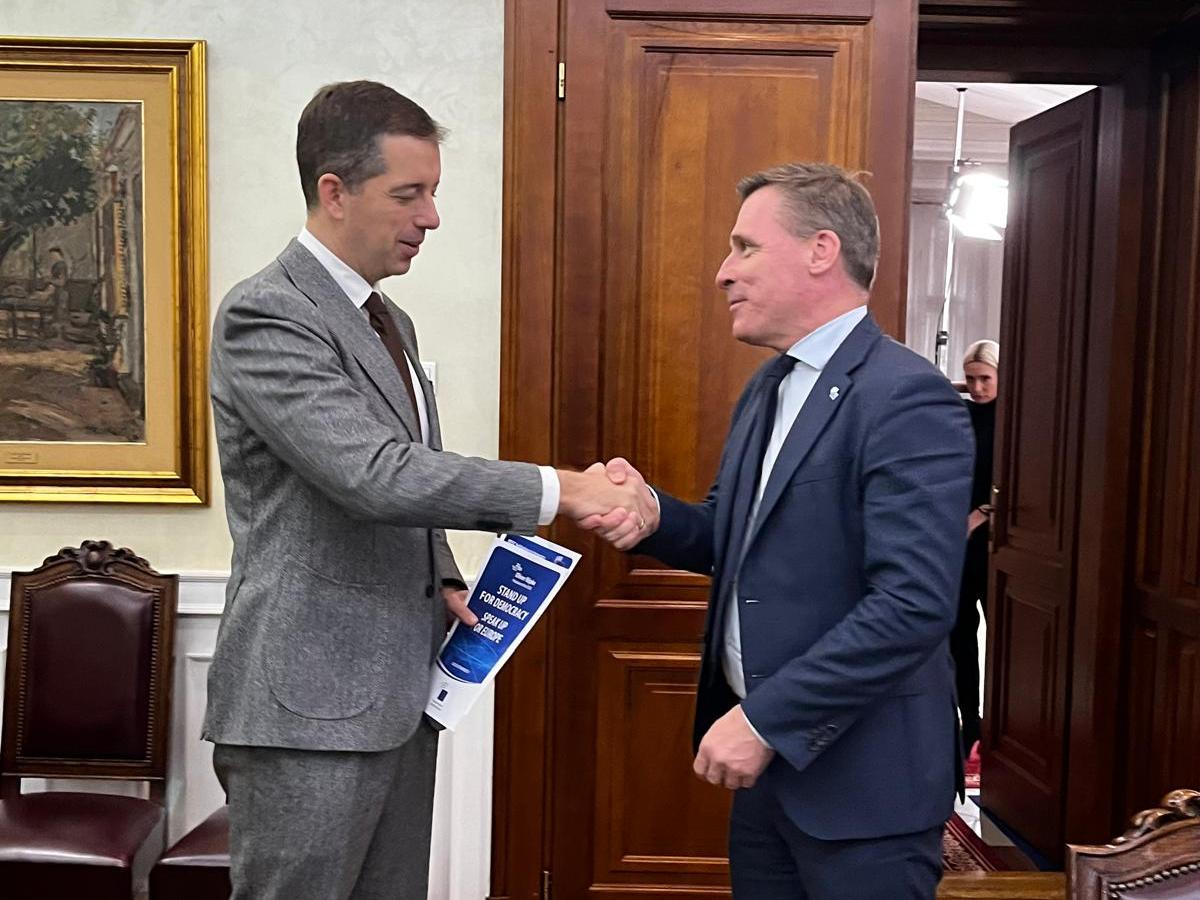
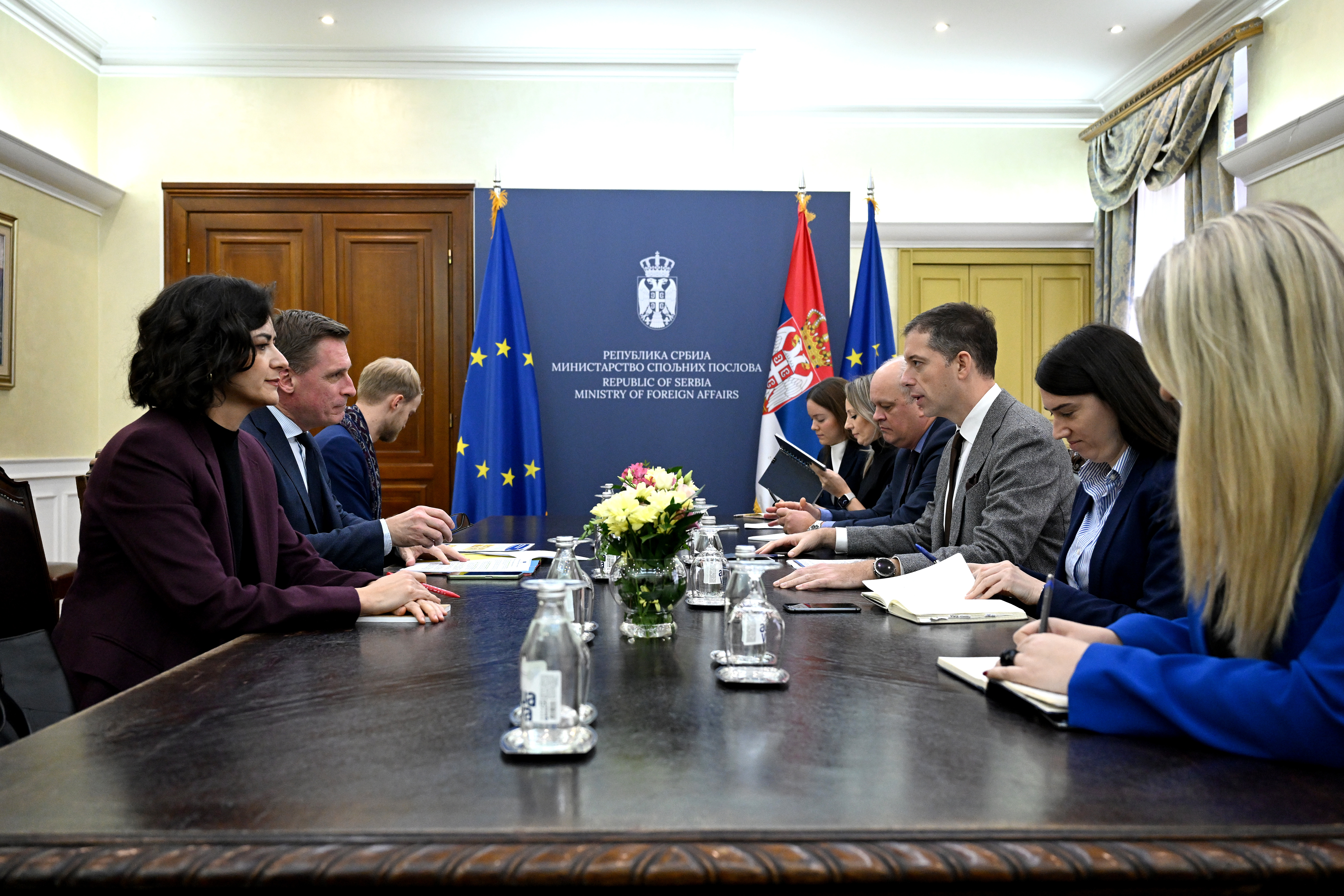
In addition to the JCC meeting, President Röpke held bilateral discussions with Minister Miščević and Serbian Foreign Minister Marko Đurić. These meetings underscored the EESC’s commitment to fostering dialogue at all levels, bridging civil society and government to address key issues in the reform process.
President Röpke reiterated the EESC’s commitment to Serbia’s European integration, urging all stakeholders to seize this moment of opportunity. He concluded by emphasizing that Serbia’s accession process is not only about meeting technical criteria but about upholding the core values of democracy, rule of law, and human rights.
The 18th EU-Serbia JCC marks another step forward in deepening the partnership between Serbia and the European Union. The EESC remains a steadfast partner, dedicated to ensuring that civil society remains at the heart of this transformative journey.