
European Economic
and Social Committee
EDITORIAL: We can make a difference
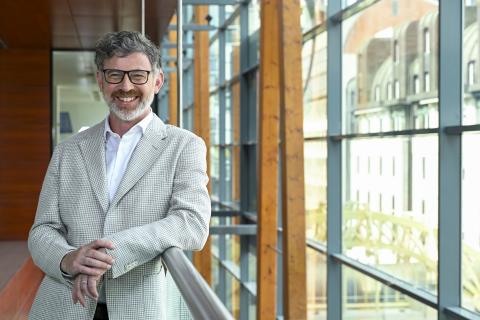
It is with great pleasure that I welcome you to this edition of our newsletter, the newsletter of the Civil Society Organisations’ Group. A few days ago, we celebrated the start of the new term in the European Economic and Social Committee (EESC). This term will last from 2025 to 2030. The Committee’s renewal is always an exciting time for our Group. We are, of course, sad to see experienced members leaving us and there is a sense of loss in terms of the knowledge and expertise that typifies our Group. However, the beginning of a new term is always tempered by an air of expectation and unique optimism, given the abilities and expertise that our new members will undoubtedly bring to the Group.
When I was a new member, back in 2015, I recall feeling like I was jumping on to a moving train. The EESC building in Brussels reverberated with the sound of constant conversation. Each overheard snippet could range from a mundane hello or somebody ordering a coffee to an exciting glimpse of a negotiation on a Committee position or text. The excellent staff who work with our members here in Brussels, acted confidently and with a clear sense of purpose. I remember being excited to be here, and wanting to make a difference, but wondering how best to get started.
This is where our Group comes in, helping members to fully understand and orient themselves in the workings of the Committee. Our Group has spent the last month welcoming its new members and reconnecting with returning ones. In the next step, we must empower all members to fully play their role.
Our shared aim now is to deal with all the formalities and then get down to work – for each other and for the people and networks of communities that we represent here at the EESC. We must cherish the fact that we have this dedicated space within the EU governance structures for civil society organisations to give their input into EU policy-making. That right is enshrined in the Treaty of Rome, one of the founding treaties of the European Union. Our job, as members, and my focus as President of the Civil Society Organisations’ Group, is to now ensure we take full advantage of this privilege and be as effective as we can when engaging with the European institutions and our constituencies.
That will require us to do our work here in Brussels, building coalitions and working together to deliver practical results. It will require all of our readers and organisations across the 27 EU Member States and at EU level to spread the word about what we are always working to achieve here in the Civil Society Organisations’ Group at the EESC. Our strength is in our connection to communities and networks. As members, we live and work within our cities, towns and villages in every Member State. This distinguishes us from members of other EU institutions and bodies. It gives us the opportunity to help develop more efficient EU policies, policies that truly address people’s needs, and are therefore better accepted by our communities and implemented more easily.
I am very honoured and excited to start my term as President of this Group, a new challenge for me. I am equally enthusiastic about getting to know and tapping the full potential of our Group, with new and now experienced members. The last time our Group started a new mandate, we did so under the restrictions of lockdowns and COVID-19. This time we are all ready to hit the ground running.
We will not shy away from difficult debates and conversations. We will work to help the social partners align with us, and us with them. We will keep talking to you, our networks, our community, to help you reach decision-makers. And we invite you to join us, as together we make collaboration the most effective tool in participation.
President, EESC Civil Society Organisations’ Group