In an own-initiative opinion, the European Economic and Social Committee (EESC) proposes creating a Climate Adjustment Fund (CAF) to ensure a rapid response to new climate and energy crises. The CAF would complement existing EU policies and ensure more effective use of existing funding.
Public debate in the ECO Section on the Latest twists and turns on the road to the next Multiannual Financial Framework in the framework of the opinion ECO/682 Multiannual financial framework 2028-2034.
The public hearing will examine how national, local and civil society actors will work together to foster collaboration through partnership principle and multi-level governance in order to deliver more inclusive, sustainable, and resilient outcomes across all regions.
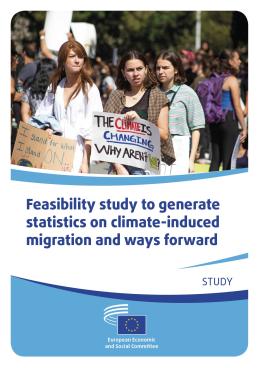
This feasibility study to generate statistics on climate-induced migration and ways forward sought to gather and review existing data on climate-induced migration, focussing on five Member States (France, Germany, Greece, Italy and Spain) and one candidate country (Türkiye), to inform an effective EU response. There is no universally agreed definition of climate-induced migration. The majority of population movements as a result of rapid onset events takes place within a country as opposed to across borders.
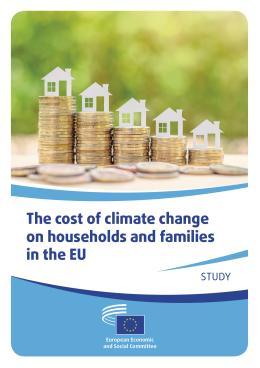
This study investigates the major climate-related risks for households in the EU by quantifying the relationship between a set of selected climate-hazards metrics, households’ income by source, and sector-specific expenditures, capturing both the climate induced cost of impacts and adaptation measures. This analysis is complemented with the assessment of mitigation policy costs for households using a mixed modelling approach.