
European Economic
and Social Committee
EESC Employers' Group calls for a Digital Rural Act
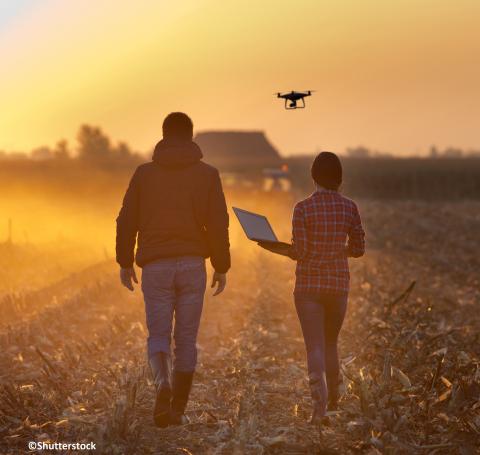
At its July extraordinary meeting, the Employers' Group urged the European Commissioner for Agriculture, Janusz Wojciechowski, to propose a Digital Rural Act (DRA).
A DRA would facilitate the development of digital technologies in agriculture and rural areas, thus improving the effectiveness of the Common Agriculture Policy and supporting the EU green deal and Farm to Fork strategies.
"The COVID-19 crisis has shown that bridging the urban-rural digital divide is imperative if we want to make digital a genuine lever for sustainable development throughout our continent. The deployment of fibre and 5G is crucial in cities as much as in rural areas," said Employers' Group Vice-President Arnold Puech d'Alissac. "But the CAP cannot finance all the needs of the rural world, including its digital needs. Other budgets need to come to the rescue in order not to deplete the CAP," he added. "The national recovery and resilience plans can help bridge the divide," but we need a more structured plan, he reiterated.
The Commissioner said that digitalisation was high on the Commission's agenda, and was reflected both in the headline ambition for the digital age and more recently in the proposal for a Compass for the digital decade.
"Digitalisation in agriculture and rural areas can be regarded as instrumental, not only to strengthen the competitiveness of the sector and rural communities, but also to contribute to several sustainability-related policy objectives. This includes, of course, environmental and socio-economic sustainability," the Commissioner said, pointing to how digital technologies can transform agriculture by helping farmers to work more precisely, efficiently and sustainably, for example, in the use of nutrients and through tailored animal welfare measures.
Rural Europe has to play a fundamental role in this new post-pandemic call for social cohesion and sustainability, in line with the strategies proposed by the European Commission (Climate Change, EU Green Deal, Farm to Fork, Biodiversity), as well as with the UN Sustainable Development Goals (SDGs). The agri-food sector is the engine of the European economy. The EU has 294 000 agri-food companies, which generate a turnover of EUR 1.192 trillion euros and employ 4.72 million people, making it the largest manufacturing sector in the EU. The agri-food sector also benefits from an external trade surplus worth EUR 36 billion.
"At the EESC, we have been defending the great potential for innovation, provided that sufficient resources are allocated for investment in infrastructure and digitalisation. European farmers are ready to commit to the transitions, but they will not be able to do so without proper incentives, without a level-playing field with imported products and without support for resilience," said Stefano Mallia, President of the Employers' Group.
Overall, digitalisation is an important factor in keeping younger generations, including young farmers and other entrepreneurs, in rural areas. "The steps we take in the coming years must be taken together. As employers and entrepreneurs, your leadership and initiative will prove invaluable on the path that we take. I look forward to working with you closely, and I am confident that we can achieve our shared goal of a prosperous and sustainable Europe," the Commissioner added.
Beyond the proposal for the DRA, the Employers' group issued a number of other recommendations to the Commissioner:
- Food security must remain one of the EU's main priorities for the future. During the current COVID-19 pandemic, the EU agri-food sector has shown its resilience and continues to play a key role in providing Europeans with safe and high-quality food.
- The renewal of the CAP and the “Farm to Fork” strategy will transform our current reality. This is why we need accurate and timely impact assessments to optimise food production, in line with sustainable development goals and the objectives set by the European Green Deal. It is essential to involve all stakeholders in the reorganisation of European food markets for socio-economic transitions to be successful.
- The new CAP will be anything but a "status quo" for European farmers. In addition to the standards already in force, farmers will have to work with the new enhanced conditionality, the proposed eco-schemes, and the environmental and climate measures, taking up a bigger share of the budget, while having to do more with less money, due to the CAP budget shrinking. European farmers are ready to commit to the transitions, but they will need proper incentives, a level-playing field with imported products and support for resilience.
- Europe is lagging behind in terms of its digital infrastructure. The COVID-19 crisis has shown that bridging the urban-rural digital divide is imperative if we want to make digital a genuine lever for sustainable development throughout our continent. The deployment of fibre and 5G is just as crucial in cities as in rural areas, but the CAP cannot finance all the needs of the rural world, including its digital needs. Other budgets need to come to the rescue in order not to deplete the CAP. The national recovery and resilience plans can help bridge the divide. Europe needs a Digital Rural Act!
- Trade agreements are meant to increase our agri-food exports, but we need to put in place sufficient safeguard clauses to protect the most sensitive sectors.
- The EESC Employers' Group can play a key role in creating a favourable business environment in the agri-food sector. We must provide entrepreneurs with the right conditions so that they can prosper and create innovative and decent jobs in a recovering economy. The role of SMEs should not be overlooked.
For more information, please contact Daniela Vincenti, Communication Advisor: Daniela.vincenti@eesc.europa.eu
+32 497 412095
Work organisation
Recommended for you
Toghadh Séamus Boland ina Uachtarán ar Choiste Eacnamaíoch agus Sóisialta na hEorpa, agus gheall sé go gcuirfear an tsochaí shibhialta i gcroílár na hEorpa
News
Toghadh Séamus Boland na hÉireann ar an 35ú Uachtarán ar Choiste Eacnamaíoch agus Sóisialta na hEorpa (CESE) le haghaidh an téarma oifige 2025-2028. Is urlabhra riamh anall é do phobail na tuaithe…
CESE, Uachtarántacht na hÉireann agus an fhís choiteann atá acu
News
I ndiaidh na díospóireachta a reáchtáladh le Comhaltaí CESE le linn sheisiún iomlánach mhí Iúil, níl aon dabht faoi ach go bhfuil clár Uachtaránacht reatha an Aontais ag freagairt go mór do na…
#YEYS2022: Ceist na bréagaisnéise pléite ag aos óg na hEorpa agus a dtuairimí ina leith curtha in iúl acu don Leas-Uachtarán Jourová
News
Chuir daltaí meánscoile ó gach cearn den Eoraip ocht gcinn de thograí nithiúla faoi bhráid Leas-Uachtarán an Choimisiúin Eorpaigh um Luachanna agus um Thrédhearcacht, Věra Jourová. Bhí páirt á…
#CivilsocietyforUkraine
News
Cáineann CESE ionradh Rialtas na Rúise ar an Úcráin, ionradh atá gan údar agus gan chúis Rún ó Choiste Eacnamaíoch agus Sóisialta na hEorpa (CESE) maidir leis an gcogadh san Úcráin agus an tionchar…
Eagrán speisialta de CESE info
News
Eagrán speisialta de CESE info atá dírithe ar an Úcráin. Is féidir scéal Tetyana Ogarkova a léamh, bean a chuala fuaim ionradh na Rúise ar dhúiseacht di an 24 Feabhra.