
European Economic
and Social Committee
Rural Europe must count in every EU policy
Rural areas are essential to Europe’s prosperity and resilience, yet many people living there have poorer access to services, jobs and infrastructure. In an opinion adopted at its September plenary, the European Economic and Social Committee calls for a practical, EU-wide ‘rural proofing’ tool to ensure that policymakers assess the impact of decisions on rural communities from the outset. This approach should also shape the next EU budget and National and Regional Partnership Plans.
Policies on transport, housing, healthcare, digitalisation, education, energy and climate can affect people differently depending on where they live. Yet rural impacts are not always considered when policies are designed. The EESC is therefore calling for policymakers to ‘think rural’ from the start.
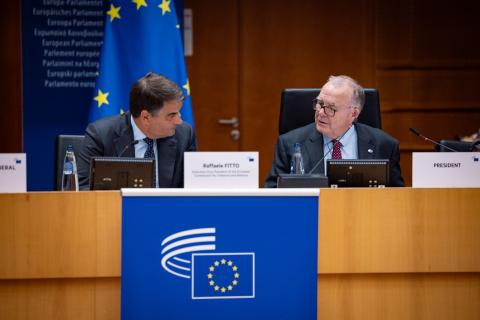
The opinion, ‘A rural proofing tool to unlock the full potential of rural areas and communities through better rural-centred EU policymaking for a fair and sustainable EU’, was adopted at the EESC’s September plenary. It was presented during a debate entitled ‘Territorial cohesion in action: National and Regional Partnership Plans and the Right to Stay’, with Raffaele Fitto, Executive Vice-President of the European Commission for Cohesion and Reforms.
‘We must adapt cohesion policy to a changing world, addressing today’s priorities while preparing for tomorrow’s challenges. That is why modernisation has been central to my mandate from the outset. Through the National and Regional Partnership Plans, we aim to safeguard cohesion policy’s fundamental principles: shared management, multilevel governance and genuine partnership’, said Raffaele Fitto.
Think rural from the start
Rural proofing means assessing how a policy could affect rural people, businesses and communities before decisions are taken. The EESC says this approach should apply across all policy areas, not only those traditionally associated with rural development or agriculture.
The Committee wants all major EU policy proposals to undergo mandatory rural screening. Where the screening identifies significant effects, policymakers should carry out a more detailed territorial assessment and adjust the proposal where needed.
For example, digital-only public services can exclude people in areas with poor connectivity, while centralised healthcare services can force patients to travel much farther. Rural proofing should help identify such effects early and improve policies before they are implemented.
The EESC stresses that rural proofing must inform decisions rather than become another box-ticking exercise.
Rural proofing should shape EU funding
The EESC wants rural proofing to become a core part of the next EU long-term budget and the implementation of EU funding.
Before approving National and Regional Partnership Plans, the European Commission should require Member States and regions to explain how they have addressed rural challenges and assessed the territorial impact of planned investments.
The Committee also stresses that simplification should not come at the expense of partnership, territorial ownership or accountability. Regions, cities, social partners and organised civil society should be fully involved in preparing, implementing, monitoring and evaluating the plans. As the EESC puts it, ‘performance needs witnesses’.
EESC President Seamus Boland said: ‘Rural proofing is about making sure that place matters when European policies are designed. Rural communities should not have to adapt to decisions made without their realities in mind. As we shape the next generation of cohesion policy and the National and Regional Partnership Plans, rural needs must be considered from the outset, with regions, social partners and civil society given a meaningful role in shaping the decisions that affect them’.
One approach across the EU
The EESC is calling for a common EU-wide rural proofing tool, with minimum standards for initial screening, territorial impact assessments, stakeholder participation, rural indicators, mitigation measures and reporting.
At the same time, the approach should reflect the diversity of rural Europe, from remote and mountain regions to islands and rural communities close to cities.
Better data will be essential. The EESC calls for a stronger role for the Rural Observatory, and for more comparable national and regional data, particularly on women and young people.
Making the Right to Stay a reality
The EESC sees rural proofing as an important tool for delivering the Right to Stay, giving people a genuine choice to remain in, return or move to a rural community.
That choice depends on access to affordable housing, healthcare, education, childcare, public transport, reliable digital connections and decent jobs. Women and young people can face specific barriers, making it particularly important that their needs are reflected in policy design.
We need to change the way we look at rural Europe. Rural realities and potential must be considered across all policies, not only those traditionally labelled as rural or agricultural, but that is also why we need rural proofing’, said EESC rapporteur Lidija Pavić-Rogošić.
From managing decline to unlocking potential
The EESC stresses that rural policy should do more than respond to demographic and economic challenges. Rural areas can make a major contribution to food production, renewable energy, the bioeconomy, biodiversity, innovation and climate action.
A stronger rural perspective can help unlock this potential while strengthening links between rural and urban areas.
The EESC also stresses that cohesion and competitiveness should not be seen as competing objectives. Strong regions and balanced territorial development are part of Europe’s long-term economic strength. Rural communities deserve to be considered when it comes to policymaking. Rural proofing would help ensure that the realities of these communities are considered from the outset, leading to better policies and more opportunities across rural Europe.
Work organisation
Recommended for you
Toghadh Séamus Boland ina Uachtarán ar Choiste Eacnamaíoch agus Sóisialta na hEorpa, agus gheall sé go gcuirfear an tsochaí shibhialta i gcroílár na hEorpa
News
Toghadh Séamus Boland na hÉireann ar an 35ú Uachtarán ar Choiste Eacnamaíoch agus Sóisialta na hEorpa (CESE) le haghaidh an téarma oifige 2025-2028. Is urlabhra riamh anall é do phobail na tuaithe…
CESE, Uachtarántacht na hÉireann agus an fhís choiteann atá acu
News
I ndiaidh na díospóireachta a reáchtáladh le Comhaltaí CESE le linn sheisiún iomlánach mhí Iúil, níl aon dabht faoi ach go bhfuil clár Uachtaránacht reatha an Aontais ag freagairt go mór do na…
#YEYS2022: Ceist na bréagaisnéise pléite ag aos óg na hEorpa agus a dtuairimí ina leith curtha in iúl acu don Leas-Uachtarán Jourová
News
Chuir daltaí meánscoile ó gach cearn den Eoraip ocht gcinn de thograí nithiúla faoi bhráid Leas-Uachtarán an Choimisiúin Eorpaigh um Luachanna agus um Thrédhearcacht, Věra Jourová. Bhí páirt á…
#CivilsocietyforUkraine
News
Cáineann CESE ionradh Rialtas na Rúise ar an Úcráin, ionradh atá gan údar agus gan chúis Rún ó Choiste Eacnamaíoch agus Sóisialta na hEorpa (CESE) maidir leis an gcogadh san Úcráin agus an tionchar…
Eagrán speisialta de CESE info
News
Eagrán speisialta de CESE info atá dírithe ar an Úcráin. Is féidir scéal Tetyana Ogarkova a léamh, bean a chuala fuaim ionradh na Rúise ar dhúiseacht di an 24 Feabhra.