calls for concrete and rapidly deployable measures to speed up the commercialisation of AI, especially for SMEs and scale-ups, through simpler access to funding, a reduced administrative burden, clearer IP rules and support for cross-border scaling in the single market;
highlights the importance of regional competence clusters, leveraging European Digital Innovation Hubs, and the inclusion of underrepresented sectors such as finance, tourism and e-commerce to ensure a holistic and inclusive AI approach;
strongly recommends investment in AI skills and literacy, including clear definitions for upskilling and cross-skilling, to support the safe and effective integration of AI into key sectors such as healthcare, defence and security, and the public sector;
stresses the need for regulatory clarity and proportionality, strengthened data-sharing and IP frameworks, and inclusive governance with balanced stakeholder representation, ensuring obligations are appropriate for SMEs and innovative start-ups;
calls for long-term funding and strategic public procurement, including predictable support under the 2028–2034 Multiannual Financial Framework, to reinforce Europe’s AI ecosystem, digital sovereignty and industrial base, while ensuring transparency and fair competition.
considers the indicative budget of EUR 175 002 000 000 proposed for the period 2028-2034 to be encouraging and that it sends a strong signal of support for scientific excellence and the aim of investing in research and innovation and disruptive technologies. However, the EESC recommends that it be used only as a baseline figure for discussions between the Council and the European Parliament;
deems it imperative to improve the monitoring of the use of funds and to identify obstacles to their use and the factors behind underspending in certain countries;
recommends maintaining and correctly aligning Horizon Europe and the European Competitiveness Fund, particularly the fund’s four policy components and the corresponding activities under the ‘Competitiveness’ pillar of Horizon Europe (Pillar II);
recommends that, in order to support the entire innovation cycle from fundamental research to placing on the market, project assessment and selection procedures must not only be based on scientific excellence, but also on additional assessment criteria designed to better understand commercial relevance, industrial impact and the contribution to European strategic autonomy and the competitiveness of European industry;
recommends maintaining a four-year term of office, renewable once for the president of the European Research Council (ERC), instead of reducing it to two years.
welcomes the recognition of the need for investments, in particular the urgent need to strengthen the EU’s resilience and improve security. The Committee asks for an increase in CEF funding to at least 100 billion euros.
supports the ECF as a cornerstone of the EU budget to drive innovation, resilience and security, stressing that funding must remain firmly aligned with sustainability and the EU’s social market economy;
calls for merit-based, EU-wide project selection with clear criteria, transparent procedures, equal access for applicants in all Member States and active involvement of social partners and civil society in governance;
proposes a ‘market referendum’, requiring projects seeking major EU top-ups to mobilise a share of private capital first, which would help validate project quality, reduce politicised funding decisions and strengthen the link between public support and real competitiveness;
stresses the need for strong risk-assessment and prevention tools, to ensure that ECF resources are channelled only to projects that genuinely enhance Europe’s competitiveness and avoid repeating past shortcomings in EU funding programmes; and
highlights the importance of supporting SMEs, regional and cross-border innovation ecosystems and investment in skills and decent work, while simplifying procedures and ensuring governance that is transparent, predictable and inclusive.
Strengthening governance, administrative capacity and citizen participation to improve delivery and ensure place-based priorities guide EU action.
Embedding MRS priorities more firmly in the next EU budget (2028–2034), with clear objectives, adequate resources and meaningful cross-border cooperation.
Expanding the MRS framework by developing a Mediterranean strategy linked to the Pact for the Mediterranean and exploring new approaches for the Atlantic and Carpathian regions.
welcomes the Commission’s 2024 approach, which seeks to align competition enforcement with the EU’s digital, green and industrial policy priorities while safeguarding a well-functioning Single Market:
supports the Commission’s efforts to enhance the effectiveness and predictability of competition rules, including the development of new guidelines on exclusionary abuses of dominance, the modernised Market Definition Notice, and improved tools to assess consumer welfare impacts;
stresses the importance of strong and effective enforcement in digital markets, both under traditional competition rules and through the growing application of the Digital Markets Act.;
calls for stronger merger control, including a framework to scrutinise below-threshold acquisitions that may harm competition (e.g. “killer acquisitions”), and urges greater consideration of labour market impacts and innovation dynamics in merger assessments;
highlights the need for State aid rules to promote cross-border participation, reduce fragmentation and support strategic investments essential for the Clean Industrial Deal, while ensuring cohesion and a level playing field across Member States.
calls for a pragmatic, well-funded strategy with a concrete action plan, timeline, and dedicated budget to address accumulated challenges and outline long-term cooperation;
urges the development of a common vision for regional cooperation, leveraging EU-level policies and international treaties, and working with regional organizations like the Organisation for Security and Co-operation in Europe (OSCE) and the Black Sea Economic Cooperation (BSEC);
highlights the need to counter hybrid threats, especially in Moldova and Georgia, and calls for more action from the EU and NATO;
stresses that achieving a lasting peace is a necessary and essential pre-condition for sustainable economic development.
warns against excessive reactivity and insists on transparency, accountability, and meaningful engagement of stakeholders in budget planning and evaluation;
stresses the need for consistency between foreign policy, development, trade and competitiveness to maximise the EU’s global impact;
calls for meaningful and more inclusive participation of civil society in decision-making and monitoring as well as for predictable and stable funding, notably to strengthen democracy, civic space and gender equality;
calls on the Commission to extend its Inequality Marker, a valuable instrument for measuring and mainstreaming the fight against inequalities, to all Global Gateway projects.
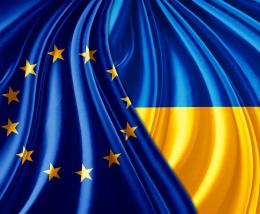
welcomes the extension of temporary protection mechanism, which was activated for the first time in 2022, granting Ukrainians the right to move, work, and access public services across the EU;
urges the European Commission and Member States to develop pathways for Ukrainians to transition from temporary to more permanent residence, emphasizing the need for legal certainty and integration support;
highlights that integrating Ukrainian children into EU education systems is vital for their future and for building community ties. The Committee recommends support for youth organizations and cultural initiatives is recommended;
stresses the importance of establishing fair working conditions for Ukrainians, both within the EU and in Ukraine, while Member States are expected to combat exploitation and unequal treatment of Ukrainians in employment.