Water resilience was the focus as the European Economic and Social Committee (EESC) met in Nicosia for its Extraordinary Bureau Meeting under the incoming Cypriot Presidency of the Council of the EU. Civil society representatives, experts and policy makers examined Europe’s water challenges and explored coordinated solutions.
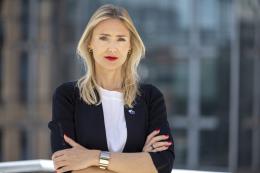
The European Economic and Social Committee (EESC) has elected Alena Mastantuono as its new Vice-President, entrusting her with steering the Committee’s financial management for the first half of the 2025–2030 mandate.
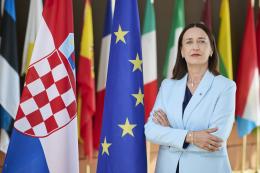
At its inaugural plenary session on 22 October, the European Economic and Social Committee (EESC) elected Marija Hanževački, General Secretary of the Independent Trade Unions of Croatia, as its new Vice President. She will head up the EESC’s communication activities for the first half of its new five-year term of office, representing the voice of civil society across Europe.
The new president of the European Economic and Social Committee (EESC) vows to put civil society at the heart of Europe through a people-centred programme that balances economic growth and social inclusion and ensures everyone has a fair chance to thrive. Topping his priorities are the eradication of poverty by providing opportunities and protecting and empowering civil society to ensure Europe stays true to its democratic and social core amid a shrinking of civic space and growing political and economic instability.
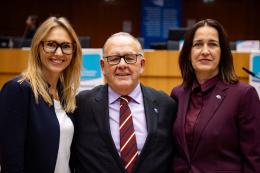
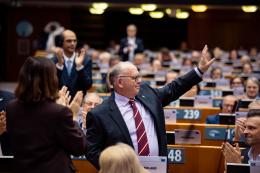
Ireland’s Séamus Boland has been elected the 35th President of the European Economic and Social Committee (EESC) for the 2025–2028 term of office. A lifelong advocate for rural communities and social inclusion, he will guide the EU body representing organised civil society for two and a half years. His programme is devoted to providing opportunities through poverty eradication, securing democracy by protecting civic space, and ensuring the transition to a more competitive and green economy in a way that doesn’t leave anyone behind.
Piotr Sadowski, zasłużony działacz społeczeństwa obywatelskiego walczący o sprawiedliwość społeczną, został wybrany na nowego współprzewodniczącego Grupy Łącznikowej Europejskiego Komitetu Ekonomiczno-Społecznego (EKES-u). Wraz z przewodniczącym Komitetu będzie kierował pracami grupy na rzecz promowania dialogu obywatelskiego i demokracji uczestniczącej w całej Unii Europejskiej.
At its September plenary, the European Economic and Social Committee (EESC) hosted a debate with Commissioner for Energy and Housing Dan Jørgensen, and called on the European Commission to take urgent action to address the ongoing housing crisis.
At its September plenary in Brussels, the European Economic and Social Committee (EESC) brought together EU leaders, civil society, youth groups, and international partners in the European Parliament hemicycle to mark the end of President Oliver Röpke’s 2023-2025 term of office. The ceremony celebrated the Committee’s recent achievements and looked ahead to the challenges set to shape Europe’s future.
The Executive Director of the United Nations Entity for Gender Equality and the Empowerment of Women (UN Women) and the President of the European Economic and Social Committee (EESC) signed a pivotal joint declaration today on the sidelines of the High-Level Political Forum (HLPF) in New York. The declaration reaffirms the two institutions’ shared and unwavering commitment to promoting gender equality and the empowerment of women and girls across the globe.
At an Enlargement Forum hosted by the European Economic and Social Committee (EESC), civil society representatives from candidate countries commended the Committee’s Enlargement Candidate Members initiative as a vital tool for shaping their countries’ European integration process and bolstering public support for EU accession.