20 October 2023 | 10:00 - 13:00 | JDE Building | Room JDE63
Brussels
Belgium
The purpose of this hearing was to contribute to the EESC opinion and to the debate on the rethinking of the internal market in light of the acceleration of the twin transitions and on crafting a European Industrial Strategy that strenghen EU industries.
This hearing will focus on topical questions such as the possible avenues to help MSMEs be well informed and prepared to grasp the opportunities of the transition to climate neutrality, coupling it with the possibilities offered by the digitalisation and hedging the current geopolitical risks. It will also take into consideration the challenges faced by the Belgian companies and the opportunities offered to them if they successfully adjust to the climate neutral and digitalised world.
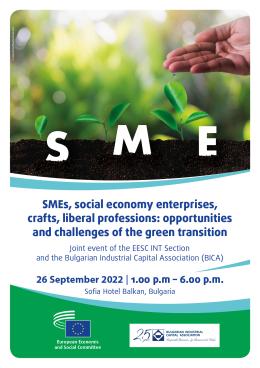
This joint high-level event focused on topical questions such as the challenges faced by Micro, Small, Medium Enterprises (MSMEs) to successfully adjust to the climate neutral and digitalised world. It has also analysed the possible avenues to help MSMEs to be well informed and prepared to grasp the opportunities of the transition to climate neutrality, coupling it with the possibilities offered by the digitalisation and hedging the current geopolitical risks.
The EESC organised a hearing with the title: "Recapitalising EU companies. An innovative way towards sustained and inclusive recovery" in order to present the views of relevant stakeholders, including SMEs, on equity funding.
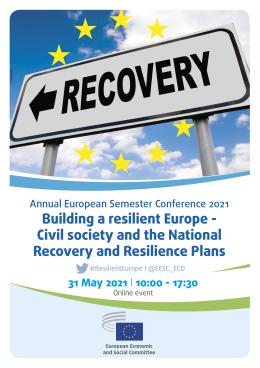
Building a resilient Europe - Civil society and the National Recovery and Resilience Plans
Event type
Conference
Location
Brussels
Belgium
The Recovery and Resilience Facility is moving into its next phase, and the European Semester Group of the EESC is following the process. In this high-level conference we will discuss whether the national recovery and resilience plans will deliver as regards the aim of achieving fair, inclusive, competitive and sustainable growth and cohesion through the new growth strategy – the European Green Deal. Focus will be on the implementation of the national recovery and resilience plans, with particular attention on the implementation of the European Pillar of Social Rights and the just transition towards a green, digital and sustainable European economy. The conclusions of this event will be forwarded to EU institutions and the "EU Recovery Summit" conference in Lisbon on 28 June 2021.
Following the outbreak of the COVID-19 pandemic, the European Economic and Social Committee (EESC) played a central role in bringing the consensual views of organised civil society in the EU to the attention of policy-makers and contributing to the rapidly evolving economic policy response at European level.
In this regard, we believe that now is the time for the EU institutions to make decisive steps in approving swiftly the new Facility and putting in place the necessary implementation mechanisms at European and national level, so that the hardest hit Member States, citizens and businesses can benefit from the relevant EU funding when they need it most.
Against this background, and on the occasion of the first meeting of the EESC's Section for Economic and Monetary Union and Economic and Social Cohesion (ECO) in our new term-of-office (2020-2025), we are organising a thematic debate on this issue between European policy-makers and civil society representatives.
The debate will take place on Thursday, 19 November 2020 from 14.30 to 16.40 as an online event, webstreamed live on the EESC website.
A Unified Legal Framework to Support Growth and Business
This study, commissioned by the EESC, offers a comprehensive analysis of the concept, rationale, historical evolution, and future prospects of the 28th regime in EU law.
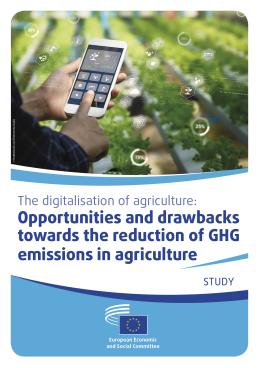
Opportunities and drawbacks towards the reduction of GHG emissions in agriculture
This study evaluates the environmental, social, and economic impacts of digitalisation based on a literature review and case studies in Estonia, Germany, Romania, and Spain
This study examines how social partners and civil society organisations in six Member States — Italy, Austria, Hungary, Poland, Portugal and Sweden — view the effectiveness of current policies in raising employment levels and increasing adult participation in training. It also puts forward recommendations for improving policy outcomes.
From Complexity to Clarity: Reducing EU Regulatory Burdens with AI
This study, commissioned by the EESC, analyses regulatory expansion, evaluates the effectiveness of the Better Regulation framework, and explores AI-driven solutions to reduce regulatory burden.