
European Economic
and Social Committee
Autonomy through competitiveness: SMEs at the core of Europe’s strategic preparedness
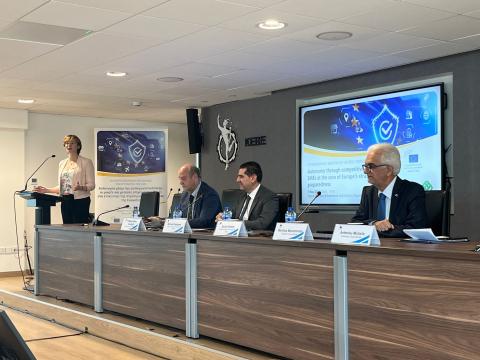
In the framework of the Cyprus Presidency of the Council of the EU 2026, the EESC Employers' Group held a conference on "Autonomy through competitiveness: SMEs at the core of Europe’s strategic preparedness" in Nicosia on 7 May 2026.
The conference discussed how SMEs can be the key to Europe’s strategic preparedness with Michael Damianos, Minister of Energy, Commerce & Industry of Cyprus; Professor Nikos Varsakelis from Aristotelian University of Thessaloniki; Demetris Georgiades, Chairman of the Cyprus Economy and Competitiveness Council; Michalis Persianis, President of the Fiscal Council of Cyprus; and Maria Heracleous, Former Representative of IMF in Cyprus, Former Board Member of Central Bank of Cyprus.
The discussion examined how the EU’s evolving focus on strategic autonomy and preparedness is reshaping the meaning of EU competitiveness, positioning it as a prerequisite for resilience, security, and sustainable growth. Embedding preparedness into competitiveness policy requires enhancing SMEs’ capacity not only to withstand shocks but to adjust and reposition quickly.
SMEs play a central role both as key drivers of employment, innovation, and value creation, and as actors exposed to structural constraints such as regulatory complexity, energy costs, financing gaps, and skills shortages. Ensuring that they can invest & grow is essential to translate strategic autonomy into economic reality.
In this context, the Industrial Accelerator Act can help restore competitiveness and increase productivity but, as EESC Employers' Group President Sandra Parthie underlined, we need to make sure it does not turn into an administrative act for industry, but that it remains a true industrial accelerator.
At the same time, we are approaching a critical moment on public debt. The debate should not focus only on how much governments spend, but on what they spend on. We should incentivise, if not fully exempt, investments that strengthen economic resilience, such as innovation, infrastructure and skills.
Europe also faces a talent and ambition gap. Too few students pursue STEM, and too many of our brightest minds leave. Encouraging entrepreneurship must become as attractive as traditional employment, especially if we want to retain and grow innovation capacity.
Access to finance remains a core bottleneck. European venture capital lags far behind the US, pushing startups to relocate where funding is available. If we want growth, we need to rethink incentives, including how taxation affects return on investment. A single, unified capital market, with accessible retail entry points, could help redirect savings into European businesses.
Finally, competitiveness and resilience are now inseparable. Energy, water, and broader emergency preparedness are no longer side issues, they are economic fundamentals. And with rising defence spending, sustaining Europe’s welfare model will depend on one thing: growth. Unlocking SME potential is not one reform: it’s a systemic shift.
Work organisation
Recommended for you
Sabiedrisko pakalpojumu līdzradīšana veselības nozarē būs ieguldījums līdzdalības demokrātijas stiprināšanā Eiropas Savienībā
News
Šajā pasākumā, ko organizēja Eiropas Ekonomikas un sociālo lietu komiteja (EESK) un Debrecenas Universitāte, tika uzsvērts, cik būtiska ir vispārējas nozīmes pakalpojumu līdzradīšana veselības un…
Eiropas Savienībai ir vajadzīgs rīcības plāns, lai nodrošinātu cenas ziņā pieejamus un kvalitatīvus mājokļus
News
Augsta līmeņa konferencē, ko Rīgā rīkoja Eiropas Ekonomikas un sociālo lietu komiteja (EESK), tika paustas bažas par cenas ziņā pieejamu mājokļu krīzi un izskanēja brīdinājumi, ka Eiropas Savienībai…
Migrantu instrumentalizācija un Ukrainas bēgļu krīze liek no jauna pievērsties migrācijas politikai
News
Valsts finansētā migrantu instrumentalizācija, kuras mērķis ir destabilizēt ES, un pašreizējais karš Ukrainā, kas novedis pie vēl nepieredzēta bēgļu pieplūduma, liek pārskatīt Eiropas migrācijas…
“JŪSU EIROPA, JŪSU LĒMUMI” 2023. gadā jaunieši prasa pārredzamāku, digitālāku un vienkāršotāku Eiropas Savienību
News
23. un 24. martā Eiropas Ekonomikas un sociālo lietu komitejā 14. reizi norisinājās pasākums “Jūsu Eiropa, jūsu lēmumi”, kurā piedalījās 105 skolēni no 35 skolām. Jaunieši bija ieradušies no visām…
#EnergyPoverty – enerģētiskā nabadzība sievietes skar vairāk nekā vīriešus
News
Ekonomisku, fizioloģisku, sociālu un kultūras iemeslu dēļ enerģētiskā nabadzība sievietes var skart vairāk nekā vīriešus. Ņemot vērā jaunākos satraucošos statistikas datus, Eiropas Ekonomikas un…