
European Economic
and Social Committee
European Migration Forum showcases how civil society can help implement the Pact on Migration and Asylum
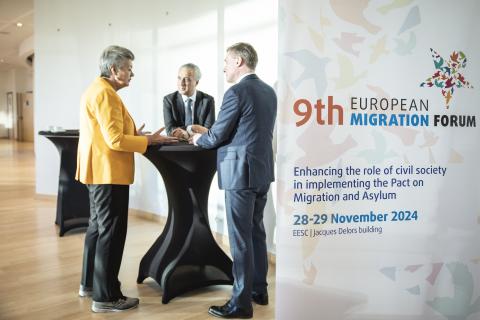
The 9th European Migration Forum, organised by the European Economic and Social Committee (EESC) and the European Commission’s Directorate-General for Migration and Home Affairs, focuses on how civil society can play a key role in the forthcoming implementation of the Pact on Migration and Asylum, while highlighting the direct work of civil society organisations on the ground.
A key focus of the event is the Pact on Migration and Asylum, which entered into force in June, with participants exploring its forthcoming implementation and how civil society can help support and apply the pact humanely. Other topics covered throughout the event include: the new permanent solidarity mechanism; creating closer links between asylum and return procedures; adequate reception conditions; and the Action Plan on Integration and Inclusion 2021-2027.
The Forum brings together representatives from over 100 civil society organisations, local and regional authorities, policy-makers from the Member States, and participants from the Commission and EU agencies, including the European Agency for Fundamental Rights and the European Union Agency for Asylum. Over the years, the format of the European Migration Forum has evolved, placing greater emphasis on participation by attendees, with this 9th edition showcasing testimonies and directly highlighting the work of civil society actors, including refugees and those directly involved in dealing with asylum and migration issues.
Kicking off the opening session, the European Commissioner for Home Affairs, Ylva Johansson, said: ‘I am glad that one of my last public duties as Commissioner will be to speak at the European Migration Forum, a vital platform for civil society organisations, EU Member States and policy-makers to address challenges and opportunities related to migration management. Our discussions over the years always have been inspiring. Together, we can build stronger, more resilient communities, upholding our values, and ensuring that Europe remains a place of refuge and opportunity.’
The EESC President, Oliver Röpke, thanked Commissioner Johansson for her dedication to reforming EU migration policy and highlighted the fact that this Forum marked her last public engagement before stepping down. Addressing the many participants directly, he explained: ‘We must ensure that the migration pact is implemented in the most humane and sustainable way possible and the only way we can do this is by listening to civil society organisations on the ground. Although the pact is adopted, the work is far from over – in fact, one could say the real work starts now.’
The EESC has already adopted key opinions on major themes relating to migration and asylum, including on the setup of the Pact on migration and asylum, on asylum and migration regulation, on the Security Union package/Schengen package, and on the Action plan on integration and inclusion 2021-2027, among others. The EESC also set up a Permanent group on immigration and integration in 2009, which helps give tangible form to the EESC’s role as a facilitator between civil society and the EU institutions on migration issues, while striving to promote the development of a common European immigration and integration policy.
Work organisation
Recommended for you
Decision repealing Directive 89/629/EEC
Opinion
SVARĪGĀKIE ASPEKTI EESK norāda: tā kā priekšlikuma saturs ir pilnībā pieņemams un attiecībā uz to nav nepieciešami nekādi Komitejas komentāri, Komiteja ir nolēmusi sniegt pozitīvu atzinumu par…
Sabiedrisko pakalpojumu līdzradīšana veselības nozarē būs ieguldījums līdzdalības demokrātijas stiprināšanā Eiropas Savienībā
News
Šajā pasākumā, ko organizēja Eiropas Ekonomikas un sociālo lietu komiteja (EESK) un Debrecenas Universitāte, tika uzsvērts, cik būtiska ir vispārējas nozīmes pakalpojumu līdzradīšana veselības un…
Eiropas Savienībai ir vajadzīgs rīcības plāns, lai nodrošinātu cenas ziņā pieejamus un kvalitatīvus mājokļus
News
Augsta līmeņa konferencē, ko Rīgā rīkoja Eiropas Ekonomikas un sociālo lietu komiteja (EESK), tika paustas bažas par cenas ziņā pieejamu mājokļu krīzi un izskanēja brīdinājumi, ka Eiropas Savienībai…
RePowerEU Plan
Opinion
SVARĪGĀKIE ASPEKTI: EESK uzskata, ka Eiropas KomisijasREPowerEU plāns ir solis pareizajā virzienā, lai panāktu ES neatkarību no Krievijas gāzes un naftas piegādes; norāda, ka daudzas problēmas,…
Migrantu instrumentalizācija un Ukrainas bēgļu krīze liek no jauna pievērsties migrācijas politikai
News
Valsts finansētā migrantu instrumentalizācija, kuras mērķis ir destabilizēt ES, un pašreizējais karš Ukrainā, kas novedis pie vēl nepieredzēta bēgļu pieplūduma, liek pārskatīt Eiropas migrācijas…