
European Economic
and Social Committee
TRUST FIRST: THE BEST DEFENCE AGAINST DISINFORMATION
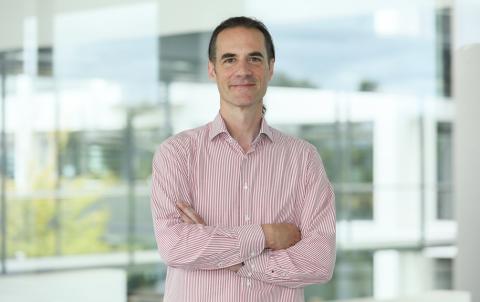
The Public Square gives the floor to voices from across public life – civil society, journalists, NGOs and institutions – to share the causes they champion and the issues they believe deserve attention. This month, Johannes Metzler, Head of Communication Consultancy at DW Akademie, reflects on one of today’s most pressing challenges: the spread of misinformation and disinformation.
DW Akademie’s Communication Consultancy team provides organisations and institutions with advice and training to help them communicate more effectively. What does this support involve in practice? How can this kind of support be of use to partners when false or misleading information is spreading?
First and foremost, successful communication depends on one thing above all else: trust. People only believe information if they have come to know the source as reliable and credible over an extended period of time.
This is especially true when dealing with misinformation and disinformation. Anyone who wants to effectively counter false information must have established the necessary credibility long before the crisis occurs. Organisations that communicate consistently and in ways that resonate with their target audiences are far more likely to be heard when it matters most.
For communication to be credible, many different factors need to come together: the right channels, the appropriate tone of voice, and, of course, the content itself.
At Communication Consultancy, we support our partner organisations across ten different but closely interconnected areas of expertise. That is why a single training session is rarely enough.
We always tailor our consultancy services to the specific needs of each organisation. We begin by jointly conducting a thorough assessment of the current situation: Which channels does the organisation use to communicate? Are the relevant target groups actually active on those channels? Is there a shared understanding of what messages should be communicated and how they should be communicated? What human, financial and technical resources are available?
Based on this assessment, we develop our support measures. Our goal is for partners to be able to continue implementing the strategies and tools we develop together over the long term, using the resources available to them. That is why we always adapt our approach to the organisation and the local context.
Disinformation is often associated with Russia, election interference and attempts to destabilise democracies. In what other areas can it cause serious harm?
Today, perhaps the more relevant question is: in which areas has false information or disinformation not yet spread and caused harm? We are facing a global challenge. Addressing it critically is a task for societies around the world. Reliable voices increasingly struggle to break through with facts. Consider areas such as public health, climate action or irregular migration.
The events in Ceuta provide a particularly tragic example. In July 2026, rumours spread through social media claiming that the border was open or that people reaching Spain would be allowed to stay. As a result, many people entered the water and attempted to swim across. Images of those who lost their lives in the Mediterranean shocked Europe. Misinformation and disinformation are a threat not only to societies as a whole, but also to every individual.
A wide range of actors are involved in spreading disinformation. In some cases, states deliberately disseminate false information. In others, groups or individuals do so because they can profit financially from it. Their motives may differ, but the effects are similar: they create uncertainty, fuel mistrust, and make it harder for people to make informed decisions.
These are not challenges that affect only countries in the Global South. Developing a critical approach to disinformation is a responsibility shared by societies worldwide.
You mentioned the case of Ceuta. From a communication perspective, what can institutions and organisations learn from this case?
In the case of Ceuta, it is still unclear exactly how and by whom the rumours that the border was open were spread. But, generally speaking, disinformation is often effective because it connects with people’s existing beliefs, hopes or expectations. Individuals are more likely to believe claims that appear to confirm what they already think is true, or what they would like to believe.
Once disinformation is already circulating, the priority is to respond as quickly as possible, especially when lives may be at risk. Organisations should immediately refute false claims and reiterate the facts. If they know their audiences and can reach them through the channels they use, this is much more effective than explanations or corrections coming from external sources. This makes it all the more important for institutions to build trust before crises emerge.
At the same time, we need to strengthen people’s media and information literacy. Today, there are many excellent and often free ways to do this. A healthy degree of scepticism can go a long way in verifying information: Is the source trustworthy? Is the information confirmed by other sources? Is it a sensational claim, perhaps accompanied by provocative or emotionally charged images?
However, an even more effective approach than debunking disinformation is what is known as pre-bunking. This involves informing people about common manipulation and disinformation techniques and explaining how they work, even before a specific incident occurs.
How can organisations use pre-bunking to help audiences recognise misleading content and manipulation techniques before they encounter them?
From my perspective as a communications consultant, I can only say that disinformation is far too often regarded as ‘a topic for media professionals’. In reality, it is not. Pre-bunking is a good example of why. The early recognition of false information is important for every organisation that deals with it, regardless of the sector in which it operates.
Much like a vaccine strengthens the body’s immune system, pre-bunking strengthens people’s ability to recognise warning signs and critically assess content when they encounter misleading information.
Organisations and institutions should proactively educate their target audiences about the most common manipulation and disinformation techniques. This can be done through short explainer videos, social media campaigns, media literacy training or interactive exercises that demonstrate tactics such as emotional manipulation or the creation of seemingly credible sources.
From your practical experience, what makes this cooperation work? Can you share an example from your consultancy work in which a communication strategy helped an organisation respond effectively to misinformation or disinformation?
Countering disinformation is not a task that individual institutions can solve alone. Effective responses require collaboration among a wide range of stakeholders, including government agencies, civil society organisations, media outlets, researchers, and, importantly, local communities. Each of these groups brings different perspectives, expertise and access to relevant audiences.
This is why it is essential to maintain and actively strengthen networks over time. It is not enough to make contact only once a disinformation campaign is already under way. Instead, insights should be shared continuously, responsibilities clearly defined, and regular coordination mechanisms established. In West Africa, for example, we brought together and advised a diverse group of non-governmental organisations working in different ways to address disinformation. These included smaller youth organisations as well as a think-tank focused specifically on researching the phenomenon. We provided targeted training and also connected them with journalists. Such alliances are promising because participants often discover how much they actually have in common.
One goal is to set up an early warning or alert system that operates through personal networks and direct contacts, including phone numbers. When misleading information appears in one place, all actors involved can notify one another as quickly as possible. The earlier disinformation is identified, the more effectively its impact can be limited.
Ultimately, the objective is to build trust, communication channels, and collaboration during stable periods. When crises arise, that preparation pays off.
That is why one of our key goals is to train credible multipliers who can pass on their knowledge within their own networks and communities.
Johannes Metzler heads the Communication Consultancy unit at DW Akademie. Previously, he worked as a journalist for German media organisations and spent several years in Latin America supporting the development and advisory work of media organisations.
DW Akademie’s Communication Consultancy team supports civil society organisations and institutions in the Global South in building trust, reaching diverse audiences, and remaining effective, even under pressure. Through tailored consulting and training, it helps partners strengthen their communication capacities. The approach combines media consultancy expertise with the practical experience of Deutsche Welle professionals, including journalists, fact-checkers, communication specialists and AI experts.