Transparency International EU and Generation Climate Europe have now joined the EESC's network of European civil society organisations working to shape EU laws
The 8th European Migration Forum (EMF), organised by the European Economic and Social Committee (EESC) and the Directorate-General for Migration and Home Affairs, explored questions around migrants' vulnerabilities, bridging the skills gap and countering prejudice surrounding migration.
Making the European economy more resilient and dynamic through growth while at the same time prioritising environmental protection are not mutually incompatible but essential to future-proofing the continent's society. That is the main message from a European Economic and Social Committee conference "Sustainability and prosperity at the heart of the European project", held on 30 November on the fringes of an extraordinary Bureau meeting, where the EESC met with the upcoming Belgian presidency of the Council of the EU.
Europeans need to know how EU decisions affect their lives if campaigns to boost voter turnout are to have any real effect. Messages need to be tailored to each EU country and barriers preventing young people from entering politics need to be addressed as a matter of urgency.
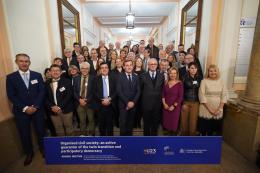
Ahead of the 2024 European elections, the European Economic and Social Committee (EESC) and the EU's national Economic and Social Councils met in Madrid for their annual meeting. Main takeaway: organised civil society is instrumental in ensuring a just green and digital transition and in making European democracy work.
The Recovery and Resilience Facility has increased the capacity for social investment in the EU. However, National Recovery and Resilience Plans, funded by the facility, are still plagued by shortcomings such as uneven investing in social programmes in different Member States, insufficient consultation with social partners and a gender dimension that is too weak
To make the decarbonisation of the EU's energy and transport a success, those sectors need workers equipped with "new" skills, the European Economic and Social Committee (EESC) warns, as it calls on policy-makers to act without delay.
A new report from the Fundamental Rights and Rule of Law (FRRL) Group of the European Economic and Social Committee (EESC) highlights the growing challenges civil society organisations face in Europe. The report was unveiled on 7 November during the FRRL Group's conference on the current state of the rule of law and its impact on civic space.
On 26 October, the European Economic and Social Committee (EESC) unveiled its plan for a comprehensive EU water strategy. The EESC is leading the way as the first European institution to take concrete steps to address the water crisis. Its proposals include: water consumption labels, a Blue Transition Fund, water conditionality in EU fund, and a dedicated EU Commissioner for water. Read EESC President Oliver Röpke's Declaration for an EU Blue Deal.
Despite many recent breakthroughs and the fact that the EU gender equality index reached record levels this year, much still needs to be done for women to achieve equal rights as men in many domains