
European Economic
and Social Committee
EESC President
EESC strengthens EU-Brazil relations and deepens civil society cooperation
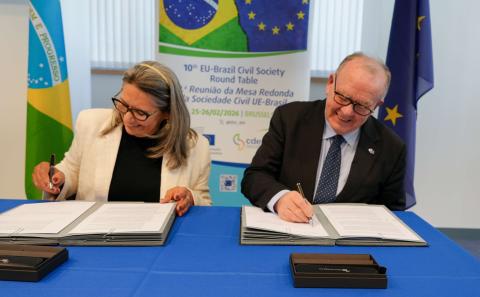
EU and Brazilian civil society pledged closer collaboration on safeguarding democracy, the Mercosur trade deal, social inclusion and climate action during the tenth meeting of the EU-Brazil Civil Society Round Table, which took place on 25-26 February 2026 at the EESC.
The round table, co-organised by the EESC and Brazil’s Sustainable Economic and Social Development Council (CDESS), an advisory body fostering dialogue between the Brazilian government, workers, and civil society, culminated in the signing of a Joint Declaration which outlined shared priorities and commitments.
'Our cooperation is not just between institutions, but between people: farmers, workers, entrepreneurs, young people, and communities who want dignity and opportunity,' said EESC President Séamus Boland. 'I am proud that our partnership always places people at the heart of our agenda, making sure our policies are based on real needs and hopes.'
'Our world is changing rapidly and we face many new challenges including geopolitical tensions, economic uncertainty, climate emergencies, and threats to democracy. In these times, the relationship between the EU and Brazil is more important than ever,' said REX Section President Stefano Palmieri. 'The EU-Brazil partnership is built on trust, respect, a shared belief in the power of dialogue – and the conviction that we can achieve more together than alone.'
Through the joint declaration the EESC and CDESS reaffirmed the commitment of Brazilian and European civil society to democracy, human rights, multilateralism, sustainable development, and climate action – and committed to working together to address key challenges and opportunities.
This included full agreement and commitment to democracy and the need for active civil society, media, and citizens to ensure transparency, inclusion, and informed debate. As well as combating disinformation, media literacy, and ethical innovation in social media and AI.
On the EU-Mercosur trade agreement, the round table welcomed the partnership, but emphasised the importance of fairness, mutual benefits, and attention to sensitive sectors like agriculture and industry. There was a shared hope that the European Parliament’s referral to the European Court of Justice will not delay the agreement’s entry into force as the agreement holds significant potential for market access and trade diversification. The need for strong civil society monitoring to ensure equitable development and support for vulnerable communities was also underlined.
On social and labor issues, there was an agreed emphasis on the importance of social dialogue through Economic and Social Councils to address inequalities and challenges from digital and AI-driven changes in work. Emotional and mental well-being, especially for youth exposed to digital risks, requires attention.
And in the area of climate action and multilateralism, there was agreement that Economic and Social Councils should shape national strategies for climate agreements, with stronger UNFCCC governance needed to empower civil society participation.
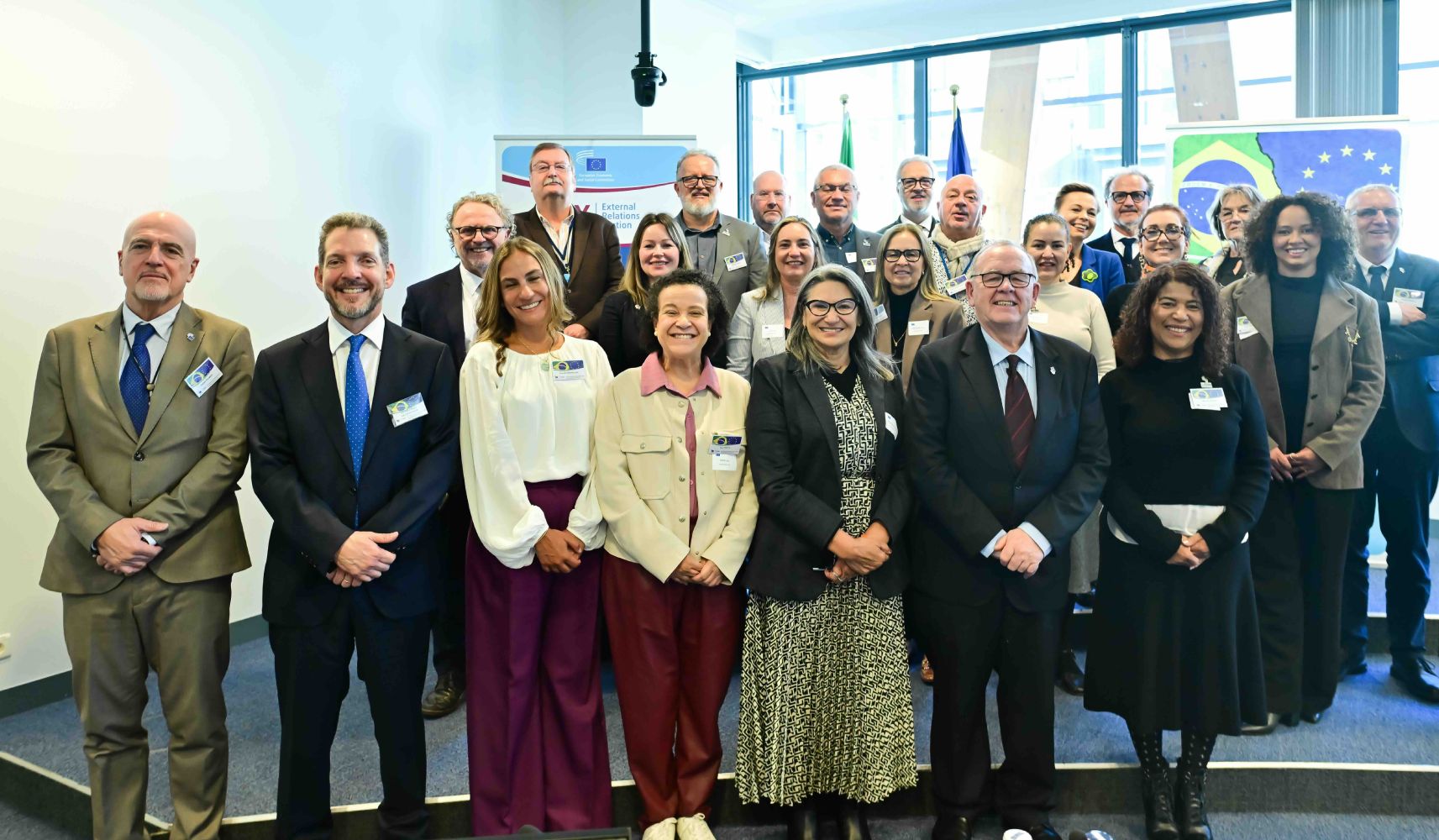
The Brazilian delegation of 12 members was led by Raimunda Monteiro, Deputy Executive Secretary of the CDESS, and also joined by Pedro Miguel da Costa e Silva, Brazil's Ambassador to the EU.
 |  |
Work organisation
Contact
Séamus BOLAND
European Economic and Social Committee
rue Belliard/Belliardstraat 99-101 1040 Brussels Belgium
Tel (secretariat): +32 (0)2 546 97 25 - Email (secretariat)
Media Contact
For press and media inquiries, please contact the President's Spokesperson