European Economic
and Social Committee
European Economic
and Social Committee
The European Economic and Social Committee (EESC) is the voice of organised civil society in Europe.
Find out more about its role and structure at http://www.eesc.europa.eu/en/about
The EESC issues between 160 and 190 opinions, evaluation and information reports a year.
It also organises several annual initiatives and events with a focus on civil society and citizens’ participation such as the Civil Society Prize, the Civil Society Days, the Your Europe, Your Say youth plenary and the ECI Day.
Find the latest EESC opinions and publications at http://www.eesc.europa.eu/en/our-work/opinions-information-reports/opinions and http://www.eesc.europa.eu/en/our-work/publications-other-work/publications respectively.
The EESC is active in a wide range of areas, from social affairs to economy, energy and sustainability.
Learn more about our policy areas and policy highlights at http://www.eesc.europa.eu/en/policies
The EESC holds nine plenary sessions per year. It also organises many conferences, public hearings and high-level debates related to its work.
Find out more about our upcoming events at http://www.eesc.europa.eu/en/agenda/our-events/upcoming-events
Here you can find news and information about the EESC'swork, including its social media accounts, the EESC Info newsletter, photo galleries and videos.
Read the latest EESC news http://www.eesc.europa.eu/en/news-media/news and press releases http://www.eesc.europa.eu/en/news-media/press-releases
The EESC brings together representatives from all areas of organised civil society, who give their independent advice on EU policies and legislation. The EESC's326 Members are organised into three groups: Employers, Workers and Various Interests.
Find out more about our Members and groups at http://www.eesc.europa.eu/en/members-groups
The EESC has six sections, specialising in concrete topics of relevance to the citizens of the European Union, ranging from social to economic affairs, energy, environment, external relations or the internal market.
Find out more at http://www.eesc.europa.eu/en/sections-other-bodies
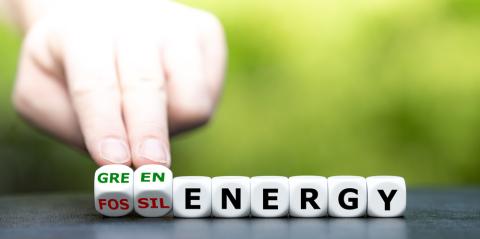
Uafhængighed på energiområdet er nøglen til Europas fremtid: EU skal sikre sin energiforsyning hurtigst muligt, gøre sig fri af russisk gas og drastisk fremskynde omstillingen til ren energi. Dette er hovedbudskabet i udtalelsen "REPowerEU: En fælles europæisk indsats for mere sikker og bæredygtig energi til mere overkommelige priser", der blev udarbejdet af Thomas Kattnig, Alena Mastantuono og Simo Tiainen og vedtaget på plenarforsamlingen i maj.
EØSU støtter Kommissionens meddelelse "REPowerEU", der blev godkendt af kommissærkollegiet samme dag som udtalelsen blev vedtaget, og hvori det hedder, at den er i overensstemmelse med målene i den grønne pagt og energiunionen. Desuden indeholder forslaget nye foranstaltninger, der skal sætte skub i produktionen af grøn energi, diversificere forsyningerne og mindske efterspørgslen efter russisk gas, som har ført til betragtelige stigninger i elektricitetsmarkedets priser som følge af manipulation af markedet.
Udvalget advarer også om, at EU skal være særlig forsigtig, når det drejer sig om at erstatte russisk gas med andre ressourcer, og tage hensyn til disses miljøpåvirkning og udsigten til at blive afhængig af tredjelande, der ikke deler europæiske værdier.
Den nuværende geopolitiske situation som følge af den russiske invasion af Ukraine har yderligere forværret den hidtil usete stigning i energipriserne, som EU har stået over for i de seneste måneder. Det er derfor yderst vigtigt at tage øjeblikkelige skridt til at afbøde virkningerne af høje priser for Europas husholdninger, landbrugere, virksomheder og industri. (mp)