European Economic
and Social Committee
European Economic
and Social Committee
The European Economic and Social Committee (EESC) is the voice of organised civil society in Europe.
Find out more about its role and structure at http://www.eesc.europa.eu/en/about
The EESC issues between 160 and 190 opinions, evaluation and information reports a year.
It also organises several annual initiatives and events with a focus on civil society and citizens’ participation such as the Civil Society Prize, the Civil Society Days, the Your Europe, Your Say youth plenary and the ECI Day.
Find the latest EESC opinions and publications at http://www.eesc.europa.eu/en/our-work/opinions-information-reports/opinions and http://www.eesc.europa.eu/en/our-work/publications-other-work/publications respectively.
The EESC is active in a wide range of areas, from social affairs to economy, energy and sustainability.
Learn more about our policy areas and policy highlights at http://www.eesc.europa.eu/en/policies
The EESC holds nine plenary sessions per year. It also organises many conferences, public hearings and high-level debates related to its work.
Find out more about our upcoming events at http://www.eesc.europa.eu/en/agenda/our-events/upcoming-events
Here you can find news and information about the EESC'swork, including its social media accounts, the EESC Info newsletter, photo galleries and videos.
Read the latest EESC news http://www.eesc.europa.eu/en/news-media/news and press releases http://www.eesc.europa.eu/en/news-media/press-releases
The EESC brings together representatives from all areas of organised civil society, who give their independent advice on EU policies and legislation. The EESC's326 Members are organised into three groups: Employers, Workers and Various Interests.
Find out more about our Members and groups at http://www.eesc.europa.eu/en/members-groups
The EESC has six sections, specialising in concrete topics of relevance to the citizens of the European Union, ranging from social to economic affairs, energy, environment, external relations or the internal market.
Find out more at http://www.eesc.europa.eu/en/sections-other-bodies
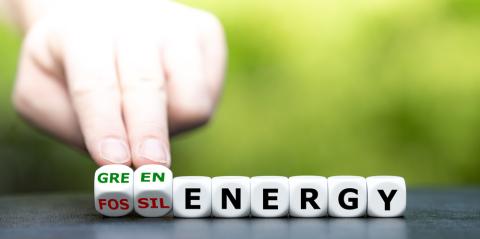
Die Unabhängigkeit der Energieversorgung ist für die Zukunft Europas entscheidend: Die EU muss ihre Energieversorgung so bald wie möglich sichern, sich von russischem Gas unabhängig machen und die Energiewende drastisch beschleunigen. Das ist die wichtigste Erkenntnis aus der Stellungnahme „REPowerEU: gemeinsames europäisches Vorgehen für erschwinglichere, sichere und nachhaltige Energie“, die von Thomas Kattnig, Alena Mastantuono und Simo Tiainen erarbeitet und auf der Plenartagung im Mai verabschiedet wurde.
Der EWSA unterstützt die Mitteilung der Europäischen Kommission „REPowerEU“, die das Kollegium am Tag der Verabschiedung der Stellungnahme gebilligt hat, da sie den Zielen des Grünen Deals und der Europäischen Energieunion entspricht. Zudem werden in dem Vorschlag neue Maßnahmen zur Steigerung der Erzeugung grüner Energie, zur Diversifizierung der Versorgung und zur Verringerung der Nachfrage nach russischem Gas aufgezeigt, wobei Marktmanipulationen zu einem erheblichen Anstieg der Strommarktpreise geführt haben.
Nach Ansicht des Ausschuss ist besondere Vorsicht geboten, wenn die EU russisches Gas durch andere Ressourcen ersetzen möchte. Dies betrifft nicht nur die Umweltauswirkungen, sondern auch die Möglichkeit neuer Abhängigkeiten von Drittstaaten, die die europäischen Werte nicht teilen.
Die derzeitige geopolitische Lage aufgrund der russischen Invasion in der Ukraine hat den beispiellosen, in den letzten Monaten in der EU zu verzeichnenden Anstieg der Energiepreise noch weiter verschärft. Daher müssen unbedingt Sofortmaßnahmen ergriffen werden, um die Folgen der hohen Preise für die europäischen Haushalte, Landwirte, Unternehmen und die Industrie abzufedern. (mp)