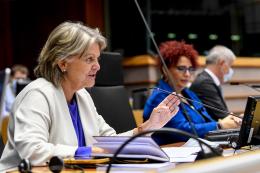
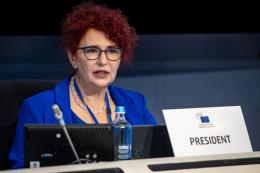
The September plenary of the European Economic and Social Committee (EESC) hosted a debate on EU cohesion policy, where all participants agreed that the recovery must address the socio-economic inequalities that the COVID-19 crisis has exacerbated.
In a plenary debate with Reporters without Borders and the European Federation of Journalists, the EESC reaffirmed its commitment to supporting the pluralism and freedom of the media and guaranteeing absolute safety for journalists, amid alarming developments across the EU which have in the past few years claimed several reporters' lives.
Evropa po krizi zaradi COVID-19 zdaj počasi okreva, zato je skrajni čas, da od besed preidemo k dejanjem in začnemo izvajati strategijo „od vil do vilic“. Evropski ekonomsko-socialni odbor (EESO) se odločno zavzema za podporo preoblikovanju evropskih prehranskih sistemov, da bodo okoljsko, gospodarsko in socialno bolj trajnostni, ter ugotavlja, da imajo potrošniki pri tem ključno vlogo. Hkrati poudarja, da je za spodbuditev odpornejšega in bolj vključujočega prehranskega sistema – in zagotovitev pravičnega deleža vsem – ključno sodelovanje med izvajalci dejavnosti v prehranski verigi (bolj kot konkurenca).
A strong emphasis on the EU's recovery, health union and digitalisation, a firm position on defending the rule of law and a focus on the future of Europe: these are the elements of this year's State of the Union that are very much welcomed by the European Economic and Social Committee (EESC) and that particularly align with its priorities.
The World Economic Forum's Jayant Narayan flagged up the figure in a debate on Artificial Intelligence at the European Economic and Social Committee's July plenary, saying that to compete Europe needs to invest in medium- to long-term actions to create an ecosystem where AI can thrive.
Skupno sporočilo za javnost predsednice EESO Christe Schweng in slovenskega zunanjega ministra Anžeta Logarja - Evropski ekonomsko-socialni odbor pozdravlja prednostne naloge slovenskega predsedstva Sveta in izraža pripravljenost za tesno sodelovanje z Ljubljano pri njihovem uresničevanju. Člani EESO so imeli na julijskem plenarnem zasedanju priložnost za razpravo o prednostnih nalogah s slovenskim zunanjim ministrom Anžetom Logarjem.
At the July plenary session of the European Economic and Social Committee (EESC), the president, ChristaSchweng, and members met with prominent speakers to discuss the future European economy after the pandemic.
The involvement of organised civil society and the EESC is crucial in ensuring the broad participation of citizens in the Conference on the Future of Europe (CoFoE), highlighted Christa Schweng, president of the European Economic and Social Committee, at the inaugural Conference Plenary in Strasbourg on 19 June. Ms Schweng took part in the plenary along with a delegation of 18 EESC members.
The presidentof theEuropean Economic and Social Committee (EESC), Christa Schweng kicked off the Committee's official activities relating to the Conference on the Future of Europe (CoFoE) with a live question and answer debate. #CoFoE - Bringing the European project back to citizens took place on Thursday 10 June and set out organised civil society's views and expectations regarding the Conference. It also highlighted the importance of engaging with people outside the Brussels bubble and brainstormed in preparation for the coming citizens' consultations.