
European Economic
and Social Committee
Meet our members | Anna Schoemakers: "Civil society is Europe’s backbone—our solidarity and harmony with nature drive real progress"
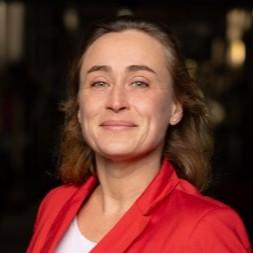
Anna Schoemakers is the General Director of AidEnvironment and has recently joined the EESC, belonging to Group III (Civil Society Organisations). She is a member of the sections for Agriculture, Rural Development and the Environment (NAT) and Transport, Energy, Infrastructure and the Information Society (TEN). She is a leader in the fields of climate action, sustainability, democracy, youth, and nature and agriculture.
As a new member of the EESC and the NAT section, what inspired you to join the Committee? What perspective or experience do you hope to bring to its work?
My motivation to join the European Economic and Social Committee comes from my drive for positive change and deep conviction that it is civil society organisations – not governments, politicians, or large corporations – that keep our societies moving forward and keep them developing and stable. It is the daily engagement of a lot of people choosing to live in solidarity with one another and in harmony with nature that forms the real backbone of Europe.
We are living through turbulent times, and in such times, it is our moral duty to stand up for peace, solidarity, and sustainability. That conviction, and the EESC presidency’s programme that expresses all of this, made me almost run towards this opportunity. I represent the nature and environmental organisations of the Netherlands. With them, I strongly believe, that the wisdom, creativity, and lived experience of civil society must be protected and reflected in European directives and policies. Too often, policies are shaped at a distance from the communities they affect. I’m making an effort to bridge that gap. I see it as my role to seek to have civil society voices not only heard but truly integrated. Hopefully it helps that I bring years of experience working at the intersection of peace, climate, and good governance. Above all, as a person I hope to bring positive energy, urgency, and a belief in collective responsibility.
You recently served as rapporteur for the first time in the NAT section. How would you describe this experience? What surprised you most, and what were the key lessons or challenges you encountered?
I simply jumped in and did it. When I spotted a topic within the ‘new work’ programme that I felt I could contribute to, I stepped forward. It was exciting to take on the role of rapporteur for the first time. I had never participated in a study group before, so I had no example to follow – which made it a true learning-by-doing experience. I am incredibly grateful for the support I received from the NAT team and my fellow study group members – thanks fellow members! Their openness, feedback and encouragement made it possible. The process was structured and formal, but also informal, collaborative and constructive. I discovered how much expertise and commitment exists within the NAT section. Serving as rapporteur was a leap – and I am very glad I took it.
What surprised me most was the energising engagement of my fellow study group members and especially also the engagement of Olatz Bulson-Roman from Environmental Youth Europe. European processes are known for being formal; deadlines are deadlines – which I respect. But behind that procedural formality, I experienced that there is a team that genuinely wants you to succeed. My learning curve was steep. I’m now discovering my ongoing lesson is learning how and when to ask for support. The NAT team holds a lot of experience and network knowledge. I am still discovering how to formulate the right questions to fully benefit from that expertise, as we are encouraged to.
Looking at your work on the Greendata4all opinion, how will this opinion contribute to better protecting the environment while also strengthening Europe’s data economy? How does it ensure that this data-driven transition remains fair, secure, accessible, and sustainable for civil society and future generations?
Working on the Greendata4all opinion connects directly to my professional background. For many years, I have worked with open, available spatial data protecting rainforests in the Amazon, the Congo Basin, and Indonesia. In Europe, open spatial data is an achievement to be proud of, like we are proud on the European Erasmus programme. Through the current INSPIRE data platform, we have multiple layers of spatial imagery that provide overviews into past, current, and future land use. Because land is scarce in Europe, governments must maintain a clear overview of what is happening on their territory.
Climate change is already affecting agriculture and the liveability of our cities. Modernising the INSPIRE platform into GreenData4All will mean that we continue to have data that allow us to anticipate, to plan ahead, to mitigate environmental harmful production activities, and to adapt to climate and land use change where necessary. Open and accessible environmental data strengthens both environmental protection and Europe’s data exchange which is attached to our European economy. It turns information into informed action.
For this transition to succeed, data must remain open and accessible. In these turbulent times we should speed up storing our data on European soil, implementing solutions for our environmental data footprint, and engaging youth to get our heads fully around how AI can or will interact with open data.
Plus, there is another issue to look at: openness in the sense of transparency can create tensions – some governmental actors may hesitate to expose certain land uses, for example defence-related activities. But in reality, it is naive to try to hold back information; much of this information is already visible from space. The question is not whether data exists, but how responsibly we manage and share it. And use it for the good. Transparency builds trust.
Civil society must continue to use the data, to play its essential role as watchdog, innovator, and guardian of long-term thinking. We must ensure that short-term economic gains never override long-term sustainability. The true guardians of the future are not insurance companies calculating risk, but younger generations demanding change. Many young people feel anxious about the climate and their future perspectives. The best cure for that anxiety is meaningful work and meaningful action. To act – not just to observe. Europe’s strength lies in our connectedness – across borders and generations. That is how we can make it fair, secure, and sustainable for generations to come.