
European Economic
and Social Committee
Reform the European Semester for the effective participation of organised civil society, asks EESC
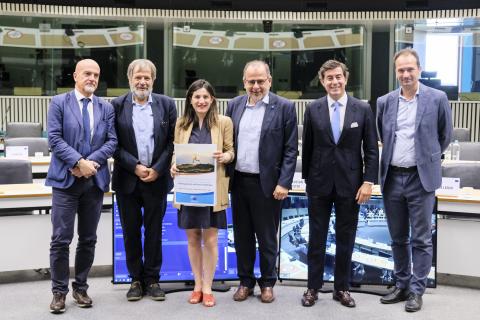
A resilient, sustainable and inclusive Europe is only possible if organised civil society is systematically involved in both national recovery plans and the Commission's new REPowerEU strategy. During its annual conference in June, the European Semester Group (ESG) renewed its call for a regulation or directive to ensure civil society participation, and proposed a permanent and common investment financing mechanism to enhance crisis preparedness and response capacity.
The conference of 2 June followed the recent adoption of a new Committee resolution on the involvement of organised civil society in the implementation and monitoring of national recovery and resilience plans (NRRPs). Member States must submit these plans to benefit from the Recovery and Resilience Facility (RRF), the EU's largest ever financial support programme. The RRF Regulation makes it clear that organised civil society should be involved in the implementation, monitoring, and adjustment of the NRRPs, however in practice this is rarely the case.
The conference picked up where the resolution left off and gathered speakers from EU institutions, organised civil society, Member States and research institutes to hold a discussion on the reform and future role of the European Semester, which will be overseeing the implementation of the NRRPs.
EESC President, Christa Schweng, opened by stating that our reflection on the EU's economic governance framework must consider both current and future challenges. The Europe of tomorrow must be based on a prosperity-oriented, inclusive, and green and digital economic model. Organised civil society has a crucial role to play in achieving this.
Elisa Ferreira, Commissioner for Cohesion and Reforms, continued: as we think about future crises and making Europe more resilient, we need to think not in terms of one master tool, but instead in terms of many tools and a well-stocked toolbox. In other words: we need diversification
.
A permanent EU instrument for crisis preparedness and response?
To succeed in the recovery and the green and digital transitions and to gain strategic autonomy, the EU will need massive public and private investments in the years to come. The NRRPs could serve as a basis for moving towards these common goals. In the first debate of the day, the panellists discussed whether these recovery plans should be made structural and permanent to ensure common investment in key areas. The renewed approach will be influenced by the current energy situation. Europe needs energy independence. Let us use this opportunity to transform our system,
stated Javier Doz Orrit, President of the European Semester Group. Moderator and ECO section President, Stefano Palmieri, insisted on the need to ensure a genuine structural transformation of the system
.
Reforming EU economic governance
The European Semester still plays a key role as the framework surveying and coordinating fiscal, macroeconomic and structural policies across the economic and monetary union. However, with the multiple new challenges facing the EU since its introduction in 2010, it needs to be updated, strengthened, and opened to European organised civil society,
explained ESG Vice-President Gonçalo Lobo Xavier. Continuing on this idea, Brikena Xhomaqi, co-chair of the EESC Liaison Group, insisted that recovery will succeed only if European organised civil society is systematically involved
. Joining the debate, MEP Dragoș Pîslaru commented that instead of trying to outlaw bad policies, the new Semester should be a visible voice of reason that supports an informed debate for sound policies
.
What’s next?
Luca Jahier, Vice-President of the European Semester Group, closed the conference by acknowledging the importance of the RRF and the NRRPs in ensuring the EU's energy autonomy and accelerating its clean energy transition. With these tools, we have perhaps done much more in these last 2 years than in the last 20 years,
he said. What is needed now is to ensure the effective and qualitative participation of organised civil society in the economic governance of the EU, invest more, and further accelerate the transition
.
Work organisation
Downloads
-
Reform the European Semester for the effective participation of organised civil society, asks EESC
Recommended for you
Sabiedrisko pakalpojumu līdzradīšana veselības nozarē būs ieguldījums līdzdalības demokrātijas stiprināšanā Eiropas Savienībā
News
Šajā pasākumā, ko organizēja Eiropas Ekonomikas un sociālo lietu komiteja (EESK) un Debrecenas Universitāte, tika uzsvērts, cik būtiska ir vispārējas nozīmes pakalpojumu līdzradīšana veselības un…
Eiropas Savienībai ir vajadzīgs rīcības plāns, lai nodrošinātu cenas ziņā pieejamus un kvalitatīvus mājokļus
News
Augsta līmeņa konferencē, ko Rīgā rīkoja Eiropas Ekonomikas un sociālo lietu komiteja (EESK), tika paustas bažas par cenas ziņā pieejamu mājokļu krīzi un izskanēja brīdinājumi, ka Eiropas Savienībai…
Migrantu instrumentalizācija un Ukrainas bēgļu krīze liek no jauna pievērsties migrācijas politikai
News
Valsts finansētā migrantu instrumentalizācija, kuras mērķis ir destabilizēt ES, un pašreizējais karš Ukrainā, kas novedis pie vēl nepieredzēta bēgļu pieplūduma, liek pārskatīt Eiropas migrācijas…
“JŪSU EIROPA, JŪSU LĒMUMI” 2023. gadā jaunieši prasa pārredzamāku, digitālāku un vienkāršotāku Eiropas Savienību
News
23. un 24. martā Eiropas Ekonomikas un sociālo lietu komitejā 14. reizi norisinājās pasākums “Jūsu Eiropa, jūsu lēmumi”, kurā piedalījās 105 skolēni no 35 skolām. Jaunieši bija ieradušies no visām…
#EnergyPoverty – enerģētiskā nabadzība sievietes skar vairāk nekā vīriešus
News
Ekonomisku, fizioloģisku, sociālu un kultūras iemeslu dēļ enerģētiskā nabadzība sievietes var skart vairāk nekā vīriešus. Ņemot vērā jaunākos satraucošos statistikas datus, Eiropas Ekonomikas un…