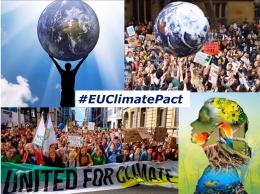
On one of the most important weeks of the year for climate action, with the fifth anniversary of the Paris Agreement, the European Council on Climate, and the launching on 16 December of the Climate Pact by the European Commission, the European Economic and Social Committee (EESC) calls upon ownership and empowerment of civil society as a precondition to success.
The European Economic and Social Committee (EESC) urges the European Commission to start a new discussion to make sure the green objectives and improved performance of the air traffic management system are covered in the new legislation. The consequences of the COVID‑19 crisis for aviation should also be addressed.
The European Economic and Social Committee advocates a set of common principles for public services to help ensure full compliance of all Member States with democratic norms and the rule of law.
The new EU Pact on Migration and Asylum was strongly criticised during a high-level conference held by the European Economic and Social Committee. Representatives of civil society, think tanks and the European Parliament found that the new pact does not deliver the changes needed to create a proper common European migration and asylum system.
Transporta, enerģētikas, infrastruktūras un informācijassabiedrībasspecializētāsnodaļas (TEN) rīkotajātīmekļseminārāEESKlocekļinorādīja, ka ES ūdeņražastratēģijasnākotnespamatāizšķirošisvarīgsbūspilsoniskāssabiedrībasieguldījums.
EESKTransporta, enerģētikas, infrastruktūras un informācijassabiedrībasspecializētāsnodaļas (TEN) jaunāpriekšsēdētājaBaibaMiltovičatikās ar EiropasKomisijaspriekšsēdētājasizpildvietniekuValdiDombrovski un izklāstījaspecializētāsnodaļasdarbaplānu 2020.–2023. gadam, kurāprioritāte ir zaļaisvirziens.
Holistic strategies and harmonisation of action plans for integration could be the way to go, EESC members explain. EU Member States deal with integration policies in widely different ways, based on their specific circumstances and migration histories. Yet the specific needs of women and children striving to overcome discrimination or obstacles to their integration are not always fully taken into consideration. However, the EESC put forward ways to address these shortcomings in an opinion presented at the October plenary session.
Estimates show that almost half of European adults have low or outdated skills, which makes the need for them to upskill and reskill ever more relevant
In an annual conference held entirely online on 3-4 November, the European Economic and Social Committee (EESC) voiced its determination to help make the Circular Economy Platform a real hub of the collective effort to build a circular economy in Europe.
The EESC warns that EU diversity policies should focus on all aspects of the lives of migrants and ethnic minorities to counter their discrimination, which has been further worsened by the COVID-19 crisis.