The Civil Society Organisations' Group organised a photography exhibition in collaboration with the City of Culture of Galicia in the framework of its conference on EU food sovereignty: the role of agriculture, fisheries and consumers. The subject of the exhibition supported and complemented the Group's and the EESC's work on resilient and sustainable European food systems. The Group invited the Galician artist, Adrián Baúlde, to present parts of the series Mariscadoras.
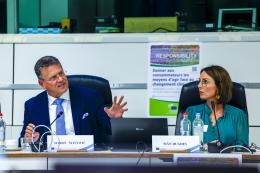
Maroš Šefčovič, Executive Vice-President of the European Commission, chose the conference Empowering consumers on climate change, hosted by the Civil Society Organisations' Group of the European Economic and Social Committee on 11 October, for his first green dialogue. Mr Šefčovič first spoke about the green dialogues at last week's European Parliament Committee on the Environment, Public Health and Food Safety hearing confirming that he would be responsible for the European Green Deal.
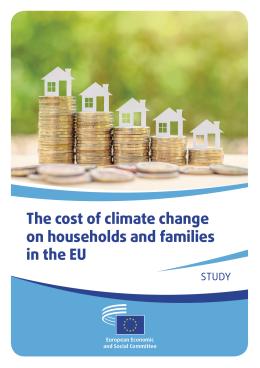
This study investigates the major climate-related risks for households in the EU by quantifying the relationship between a set of selected climate-hazards metrics, households’ income by source, and sector-specific expenditures, capturing both the climate induced cost of impacts and adaptation measures. This analysis is complemented with the assessment of mitigation policy costs for households using a mixed modelling approach.
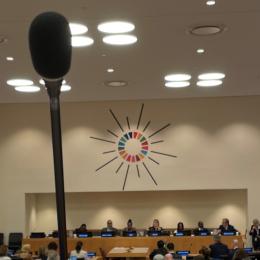
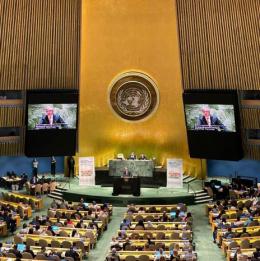
The SDG Summit was held on 18-19 September 2023 in New York with the aim to review the implementation of the 2030 Agenda for Sustainable Development and the 17 Sustainable Development Goals (SDGs). Peter Schmidt, President of the NAT section, attended the summit and called on the EU to redouble efforts and accelerate the implementation of SDGs.
This year again, as the advisory body representing Europe's organized civil society, the EESC engaged in the High-Level Political Forum on Sustainable Development (HLPF) to advocate for the voice of European citizens and promote sustainable development policies aligned with the EU's priorities.
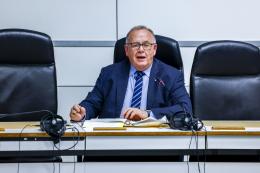
The hearing aims to gather the views of different civil society actors on the steps the EU should take to establish a comprehensive, just transition policy framewor.
An exhibition organised by the Civil Society Organisations' Group of the EESC in the context of its conference 'EU food sovereignty: the role of agriculture, fisheries and consumers'
-
Location
CINC building, City of Culture of Galicia, Monte Gaiás