
European Economic
and Social Committee
NEWS ON OUR ACTIVITIES: Domantas Tracevičius participates in annual conference of the ECESP

Can the EU deliver a meaningful Circular Economy Act?
The 2026 annual conference of the European Circular Economy Stakeholder Platform (ECESP) took place on 22-23 April in Brussels. Organised jointly by the European Commission and the European Economic and Social Committee (EESC), this was already its ninth edition.
Ten EESC members participated, including EESC President Séamus Boland, EESC NAT Section president Stoyan Tchoukanov, Sustainable Development Observatory president Maria Nikolopoulou and Domantas Tracevičius from the Civil Society Organisations’ Group. Some of the delegates were also involved in the work on the EESC’s upcoming exploratory opinion on the future Circular Economy Act, for which the Civil Society Organisations’ Group president Cillian Lohan serves as rapporteur.
This year’s conference focused on building a competitive and fair circular Europe. Discussions explored the ambitions and policy direction of the Circular Economy Act (CEA), alongside investment needs and global developments.
Opening the conference alongside Commissioner Jessika Roswall, Séamus Boland stressed the importance of the circular economy in today’s unstable geopolitical context. He highlighted that more efficient resource use, waste reduction and sustainable innovation can strengthen Europe’s industrial base while ensuring a fair and inclusive transition.
In 2024, the EU’s circular material use rate reached 12.2%, around 1 percentage point higher than in 2015. However, large differences remain among Member States, with some countries at around 2% and the leading country exceeding 30%. Total material use per capita stood at approximately 13.4 tonnes, only slightly lower than a decade ago. Although EU citizens generated more waste during this period, recycling rates also increased.
Over the years, several European Commission initiatives to strengthen the circular economy have been weakened by irresponsible business lobbying. A recent example is the
call by 138 CEOs from the single-use packaging industry and other sectors
to delay implementation of the Packaging and Packaging Waste Regulation (
PPWR
). I hope the Commission will now succeed in proposing a meaningful Circular Economy Act, because Europe’s future is at stake
, stated Domantas Tracevičius in the context of the ECESP’ annual conference.
Background
As global environmental crises escalate and the EU generates 2.2 billion tonnes of waste annually, a circular economy is not just an option—it is a necessity. The model revolutionises how we manage resources, eliminating waste by keeping products and materials in use through recycling, reusing, and repairing, unlike the outdated ‘take-make-dispose’ approach.
In 2014, the EESC recognised this need and took decisive action. In 2017, in partnership with the European Commission, the EESC launched the European Circular Economy Stakeholder Platform (ECESP). The ECESP unites civil society, businesses, trade unions, think tanks and public bodies in a shared mission: to accelerate Europe’s transition to a resource-efficient circular economy.
Since its inception, the ECESP has become the driving force behind Europe’s circular transition. It houses nearly 800 examples of successful circular practices, offering concrete solutions to stakeholders and companies ready to implement sustainable initiatives.
Today, the ECESP is a global leader in circularity, inspiring action worldwide and playing a pivotal role in international forums such as the World Circular Economy Forum (WCEF) and COP conferences.
The EESC plays a critical role in connecting stakeholder insights directly to EU policy, ensuring that the circular economy stays at the heart of the legislative agenda. Flagship events like #EUCircularTalks and the platform’s annual conference are vital forums for gathering input and addressing challenges.
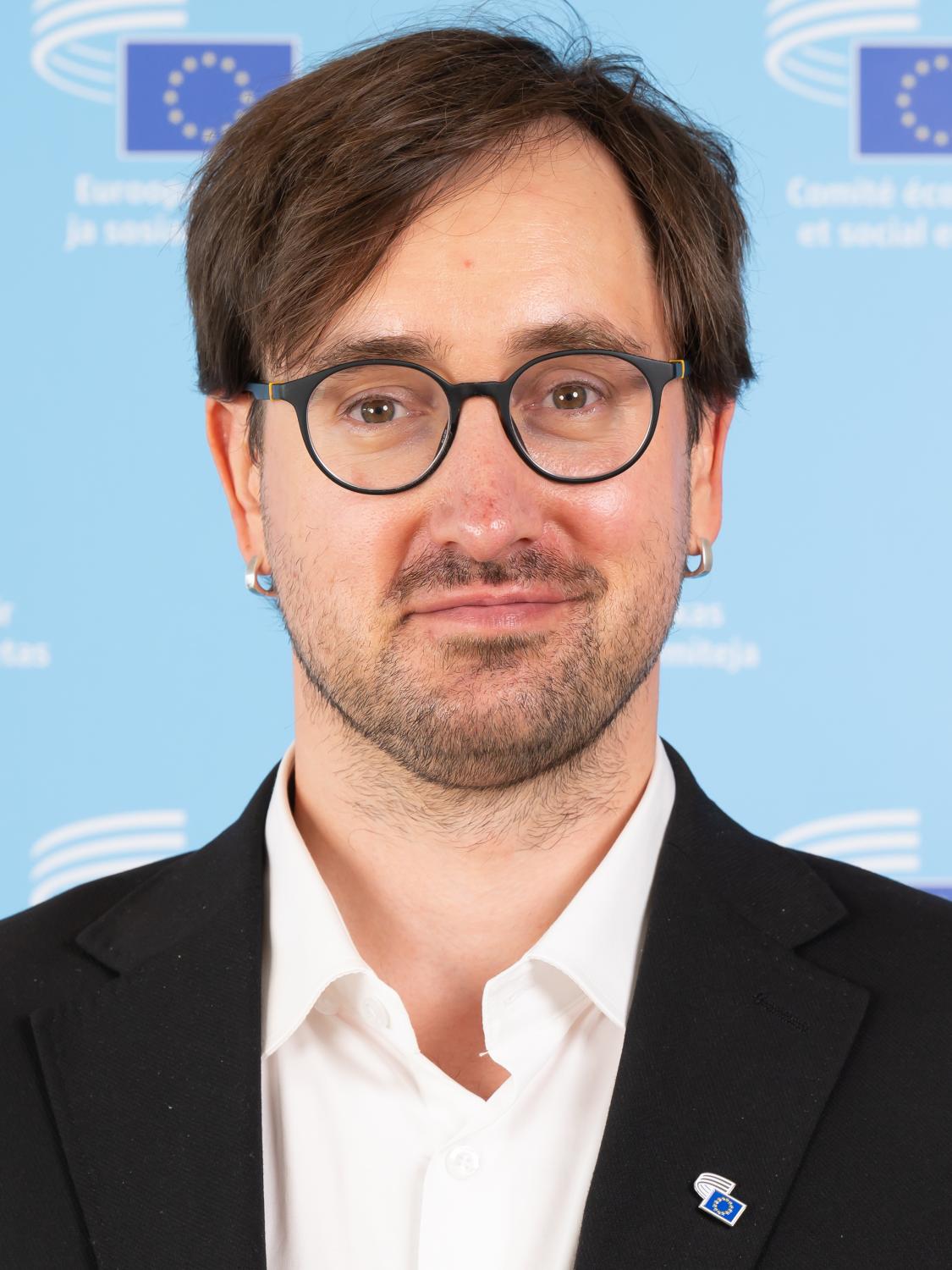
Domantas TRACEVIČIUS (Lithuania)
Member, EESC Civil Society Organisations' Group
Director, Lithuanian NGO Circular economy
© EU/EESC