The EESC is organising this public debat to discuss how civil society partners can use a results-orientation approach in cohesion policy for the next programming period. The principles of multi-level governance and shared management are contradictory or complementary to the results-focused cohesion policy ?
argues that, to be competitive in the area of general-purpose AI, Europe must invest in secure connectivity and resilient backbone infrastructure as well as in a resilient supply chain to ensure that the effects of generative AI can be harnessed for European actors and aligned with European values and needs;
recommends organising dialogues with stakeholders, including the social partners, about codes of practice in workplaces and workers' rights in the context of GPAI;
stresses that coordinated European and national investment in innovation and mobilisation of the tools of competition policy are needed in order to combat a market concentration dominated by large, often non-European, digital companies and to help develop EU value chains and value creation in AI.
This resolution presents recommendations of the European Economic and Social Committee to the legislature 2024-2029. They are based on discussions with social partners and civil society organizations from all walks of life, including young people during the first EESC Civil Society Week, and contain a comprehensive set of actionable steps to strengthen and safeguard democratic principles.
With the launch of the 2025 European Semester cycle the European commission has published the "2025 European Semester - Autumn package" in December 2024. The 2025 European Semester - Autumn Package outlines economic and social policy priorities for the EU to ensure sustainable prosperity and competitiveness. It highlights the EU’s recent resilience while emphasizing the need to address structural barriers to growth. The EU is committed to ensure sustainable prosperity and competitiveness while strengthening its social market economy and safeguarding its sovereignty, economic security and global influence. The EESC's opinion on the 2025 European Semester - Autumn package is due to be adopted at the EESC plenary session of February 2025.
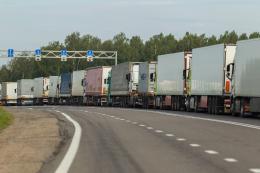
For Bulgaria and Romania, the costs of not being full members of the Schengen area are counted in billions of euros. The transport and tourism sectors of both countries are most affected and checks at land borders create huge barriers for Romanian and Bulgarian companies, restricting their competitiveness and preventing them from fully reaping the benefits of the single market
In view of Europe's current security challenges, in particular with the armed conflict caused by Russia’s full-scale aggression against Ukraine, defence funding places a significant burden on the budgets of many EU Member States, worsening their fiscal position.
At the same time, the resources that Member States are currently able to allocate to the development of defence capabilities still seem to be insufficient.
As Europe needs to develop defence capabilities in a more integrated way, there is a need to significantly increase investment in European defence infrastructure and technological innovation to improve preparedness to respond to threats.
How to eradicate skills poverty among the most vulnerable? On 10 July, the Civil Society Organisations’ Group of the European Economic and Social Committee held a thematic debate exploring this question. The debate saw the launch of a new exploratory study on this same issue.
points out that there is still a long way to go to reach the final objectives of decarbonisation and transition to a more sustainable economy, objectives that were set out by the Commission in its original Green Deal formulation. Companies need much more certainty, global agreement, guidance, sophisticated accountability methods and, ultimately, support from legislators;
highlights the urgent need for public funds to be strategically allocated to goals that are jointly agreed on by European policy-makers and civil society. This initiative must be closely interlinked with the industrial strategy;
emphasises that Member States need EU-level support and civil society input to assist companies through guidance, benchmarking and shared learning capacities to adopt and carry out the structural reforms flowing from the Green Deal: bolstering employment rates, enhancing access to skills and labour, and promoting flexibility and efficiency in labour markets.