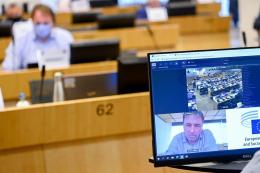
This brochure presents the EESC's opinions, position papers, resolutions and statements calling for the necessary measures to be taken at EU level, or commenting on those that have already been put forward, in order to tackle the economic effects of the COVID-19 pandemic. We pushed for a reconstruction and recovery plan that lives up to this unprecedented challenge.
Following the outbreak of the COVID-19 pandemic, the European Economic and Social Committee (EESC) played a central role in bringing the consensual views of organised civil society in the EU to the attention of policy-makers and contributing to the rapidly evolving economic policy response at European level.
In this regard, we believe that now is the time for the EU institutions to make decisive steps in approving swiftly the new Facility and putting in place the necessary implementation mechanisms at European and national level, so that the hardest hit Member States, citizens and businesses can benefit from the relevant EU funding when they need it most.
Against this background, and on the occasion of the first meeting of the EESC's Section for Economic and Monetary Union and Economic and Social Cohesion (ECO) in our new term-of-office (2020-2025), we are organising a thematic debate on this issue between European policy-makers and civil society representatives.
The debate will take place on Thursday, 19 November 2020 from 14.30 to 16.40 as an online event, webstreamed live on the EESC website.
The EESC welcomes the fact that the Recovery and Resilience Facility regulation confirms the importance of genuine civil society involvement in the development of national plans and advocates for the establishment of binding conditionality for such consultation. To support economic development the EESC considers the full operation of the Single Market as well as fiscal policies and support measures crucial, while calling for the establishment of new fiscal rules that reflect social and economic realities after the pandemic. New instruments to combat tax evasion, undeclared work and the shadow economy are also called for. The EESC also welcomes the inclusion of the green and digital transitions, but regrets the insufficient attention paid to social issues. Efforts to move rapidly towards a green and digital economy must not result in a further increase in poverty and greater social exclusion.
The European Economic and Social Committee (EESC) adopted a Resolution on its contribution to the European Commission's 2021 work programme at its July plenary session. The document welcomes the proposals made by the European Commission to overcome the COVID-19 crisis and sees the next year as an opportunity to restructure and improve the EU’s economy and society.
The EESC considers that the European Union must overcome the COVID-19 crisis by building a new model for society, one which will make our economies more green, just and resistant to future shocks. European recovery funds must enable businesses, innovators, workers and investors to affirm their role as world leaders in the expanding clean energy markets.
The European Economic and social Committee (EESC) supports the Commission's intention as set out in its Communication: integration of the electricity system with the heat and transport system is vital to reach the goals of climate neutrality, security of energy supply, including reduction of energy imports, and the goal of affordable prices for Europe's consumers and the European economy.
Download format:
Download — Udvalgets udtalelse: EU Strategy for Energy System Integration