European Economic
and Social Committee
European Economic
and Social Committee
The European Economic and Social Committee (EESC) is the voice of organised civil society in Europe.
Find out more about its role and structure at http://www.eesc.europa.eu/en/about
The EESC issues between 160 and 190 opinions, evaluation and information reports a year.
It also organises several annual initiatives and events with a focus on civil society and citizens’ participation such as the Civil Society Prize, the Civil Society Days, the Your Europe, Your Say youth plenary and the ECI Day.
Find the latest EESC opinions and publications at http://www.eesc.europa.eu/en/our-work/opinions-information-reports/opinions and http://www.eesc.europa.eu/en/our-work/publications-other-work/publications respectively.
The EESC is active in a wide range of areas, from social affairs to economy, energy and sustainability.
Learn more about our policy areas and policy highlights at http://www.eesc.europa.eu/en/policies
The EESC holds nine plenary sessions per year. It also organises many conferences, public hearings and high-level debates related to its work.
Find out more about our upcoming events at http://www.eesc.europa.eu/en/agenda/our-events/upcoming-events
Here you can find news and information about the EESC'swork, including its social media accounts, the EESC Info newsletter, photo galleries and videos.
Read the latest EESC news http://www.eesc.europa.eu/en/news-media/news and press releases http://www.eesc.europa.eu/en/news-media/press-releases
The EESC brings together representatives from all areas of organised civil society, who give their independent advice on EU policies and legislation. The EESC's326 Members are organised into three groups: Employers, Workers and Various Interests.
Find out more about our Members and groups at http://www.eesc.europa.eu/en/members-groups
The EESC has six sections, specialising in concrete topics of relevance to the citizens of the European Union, ranging from social to economic affairs, energy, environment, external relations or the internal market.
Find out more at http://www.eesc.europa.eu/en/sections-other-bodies
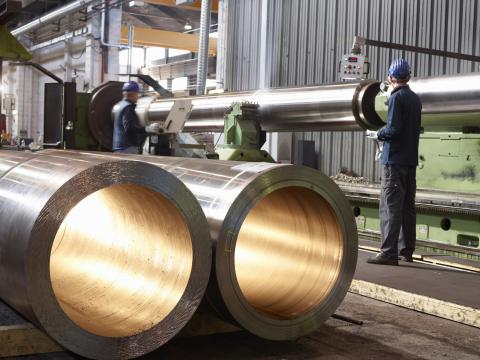
Posvetovalna komisija za spremembe v industriji (CCMI) je 9. novembra na seji na daljavo razpravljala o jeklarski industriji EU. V razpravi, ki ji je predsedoval novi predsednik CCMI Pietro Francesco De Lotto, so se člani komisije osredotočili na vprašanja presežnih zmogljivosti in razogljičenja v mednarodnem jeklarstvu. Govorniki so spregovorili o izzivih, s katerimi se sooča evropska jeklarska industrija: načrt okrevanja po COVID-19, razogljičenje proizvodnih procesov, zaščitni ukrepi EU in trgovina.
Jeklo je osnovna dobrina v vseh razvitih državah in državah v razvoju. Pandemija COVID-19 je sprožila vprašanja o odvisnosti v globalni dobavni verigi, predvsem zato, ker so številne države odvisne od ene same.
Prekomerna proizvodnja kitajske jeklarske industrije vzbuja zaskrbljenost, saj Kitajska zdaj obvladuje več kot polovico svetovnega tržišča. Združene države Amerike so leta 2018 uvedle zaščitniške tarife, da bi zmanjšale odvisnost svojega gospodarstva od kitajskih surovin. Ameriški ukrep je močno prizadel evropski trg, saj so ZDA pomemben kupec jekla, izdelanega v EU.
Obenem si države po vsem svetu prizadevajo zmanjšati svoje emisije toplogrednih plinov in pojavlja se vse več pobud v smeri krožnega gospodarstva.
Pietro Francesco De Lotto je razpravo sklenil z besedami: „Zagotoviti moramo konkurenčnost jeklarskih sektorjev, ki spoštujejo okoljske standarde, potrebne za prehod, hkrati pa se soočajo s tekmeci iz drugih regij sveta, ki takšnih standardov ne poznajo ali ti niso zadostni. To velja tudi za standarde glede delovnih pogojev in pravic delavcev.“
EESO se zato zavzema za vzpostavitev enakih konkurenčnih pogojev za evropske in neevropske proizvajalce izvoznike. (tk/ks)